
Just Eat has apologized after its experimental AI image tool produced bizarre food pictures, raising concerns about whether customers can trust AI-generated photos to accurately represent the meals they order.
Just Eat has paused the rollout of an experimental AI-powered image service after it generated a picture of bacon and eggs floating in a glass of cola instead of showing an Irish breakfast sandwich.
The affected restaurant in Northern Ireland serves a range of soda breads, but its menu ended up displaying sausages, bacon, and fried eggs submerged in fizzy drinks.
While the images have attracted attention for their absurdity, the incident highlights a more serious problem: AI can create convincing images that do not accurately represent the products being sold.
Just Eat apologizes for bizarre AI-generated food photos
The images were produced during a trial of Just Eat’s AI-powered system, which was designed to generate or enhance food photography automatically.
The bacon-and-eggs-in-cola picture was not the only questionable result. Other examples shared on the uknewestfoods Instagram page also showed the technology struggling to represent food correctly.
One frustrated user on X joked about the possibility of receiving similarly inaccurate food, writing:
“I swear if my salt and pepper chips come like this I’m going to cause murder”
In response to the incident, a Just Eat spokesperson told The Independent that the company had been trialling AI-enhanced images and apologized for the inaccurate pictures.
The company said it was removing the affected images and had paused the rollout while it further developed the tool to better serve restaurants and customers.

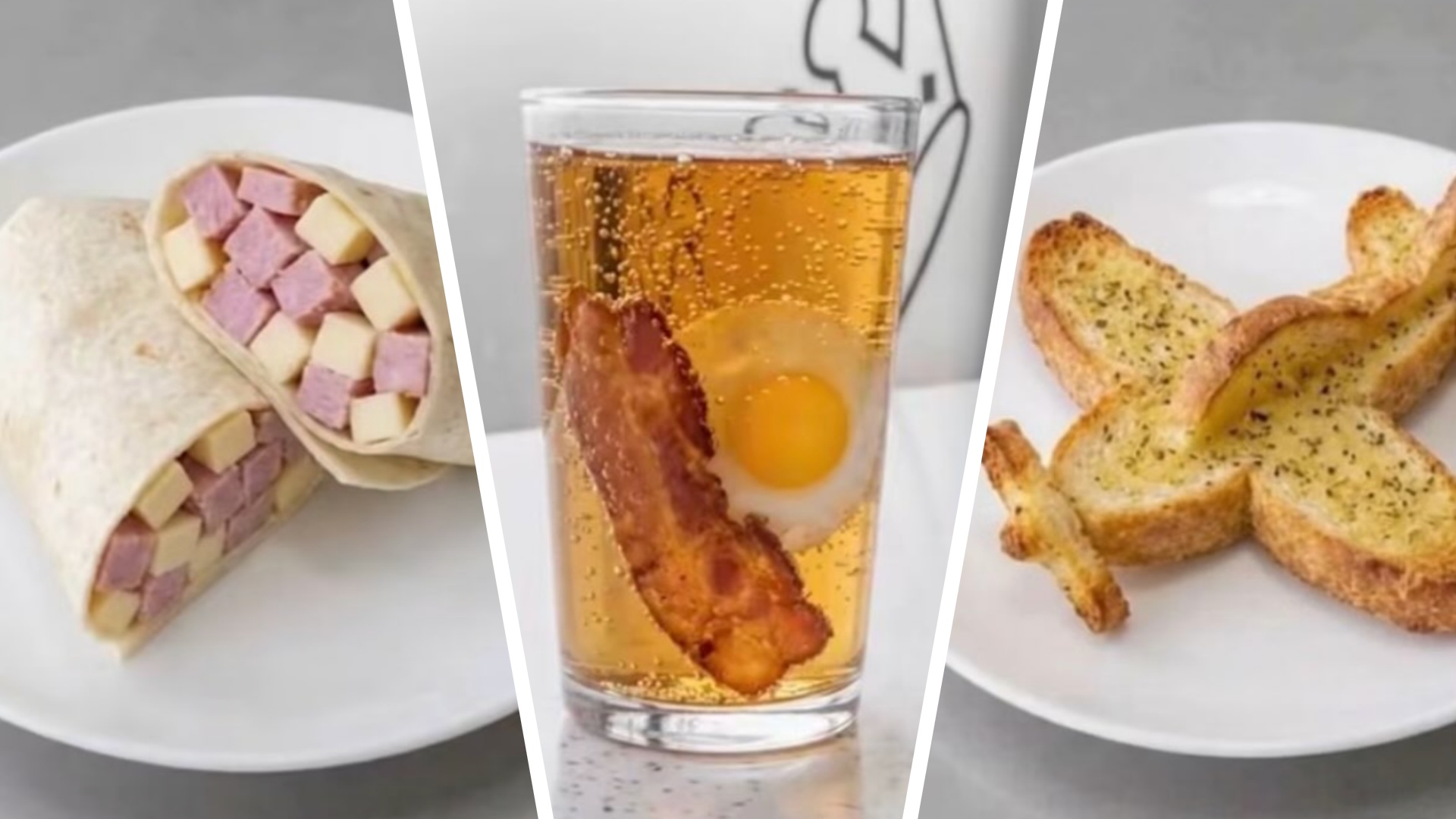
The bigger problem: believable images can be misleading
The most obvious AI mistakes are easy to recognize. Few customers would confuse a glass of cola containing fried eggs with a normal breakfast sandwich.
More subtle errors are a different matter.
An AI-generated image might look entirely realistic while showing a burger with the wrong toppings, a larger portion than the restaurant actually serves, or ingredients that are not included in the dish.
Customers could make purchasing decisions based on these images without realizing that they are inaccurate.
That makes the issue more than a question of funny AI failures. Food photographs help customers understand what they are paying for, and misleading pictures can create expectations that the actual meal fails to meet.
A realistic image is not necessarily an accurate representation of a product.
DoorDash is experimenting with AI food images, too
Just Eat is not the only food delivery company exploring AI-generated imagery.
DoorDash recently opened its text-to-order AI agent for testing. Customers can text what they want, and the system selects a dish and responds with a picture.
However, Bloomberg News testers reportedly encountered several errors, including images that did not match the recommended dishes.
These examples suggest that accurately connecting generated images to specific menu items remains a challenge.
Even when an AI model produces attractive food photography, it must still ensure that the picture matches the restaurant’s actual ingredients, preparation, and portion size.
Why AI struggles to represent specific dishes
Michael Bortinger, director of marketing and partnerships at Tastewise, explained that an image model does not inherently understand a particular dish in the way a person might.
Instead, it generates an image based on patterns learned from examples associated with a prompt or category.
For example, a model asked to generate a burger might create a convincing image based on common visual features of burgers. But that does not mean the result will match a particular restaurant’s recipe.
A restaurant may use a specific bun, a particular combination of toppings, or a distinctive presentation. A generic AI-generated image can overlook those details while still looking realistic.
Improving image quality may make the result more convincing, but it does not automatically make it more faithful to the real dish.
Is AI-generated food photography a good idea?
There is a clear business incentive for automating food photography. Taking, editing, and uploading pictures of individual menu items requires time and money, especially for restaurants with large menus.
AI could reduce that workload and help businesses create images more quickly.
The difficulty is that food photography has a practical purpose: it helps customers decide what to order.
If AI changes the ingredients, invents toppings, or misrepresents portion sizes, it risks misleading customers even when the restaurant has no intention of doing so.
A more sensible approach may be to use AI to enhance genuine food photographs, provided the technology does not change the dish’s actual appearance or contents. Restaurants should also verify images before publishing them.
The wider lesson for AI adoption
The Just Eat incident illustrates a recurring challenge with generative AI: automating a task does not guarantee that the result will be accurate.
AI can help businesses work faster, but its output still needs to be checked when customers rely on it to make purchasing decisions.
For food delivery platforms, a less polished but accurate photograph may be more useful than a beautiful image that promises a meal the restaurant does not actually serve.
Final verdict
Just Eat’s bacon-and-eggs cola disaster is amusing, but the more serious concern is what happens when inaccurate images look completely believable.
AI-generated food photography could help restaurants save time and money, but only if the images accurately represent the meals customers will receive.
For customers, the priority is simple: show me the food I’m ordering, not an AI’s interpretation of it.