In early September, Facebook groups used by Grab ride-hailing and delivery drivers across Vietnam filled with calls for a two-day boycott of the platform, driven by complaints about high commissions and a lack of transparency over fares.
An anonymous post urged drivers to switch off the app on September 12 and 13, encouraging them instead to spend the time with their families or service their vehicles. The message stressed that the action should remain peaceful, lawful and free of any disruption to public order.
Mass boycott calls are not new among Vietnam’s platform drivers. Previous campaigns have included drivers gathering outside company offices, but they attracted limited public attention and failed to produce significant regulatory changes.
What has changed, according to Do Hai Ha, a University of Melbourne researcher who has studied Vietnam’s gig economy since 2017, is the broader public response.
“The organization hasn’t changed much,” Ha told Tech Policy Press, but drivers have become more cautious about how they express dissatisfaction. At the same time, he said, public sympathy and media coverage have increased, creating greater pressure for government action.
Government scrutiny increases

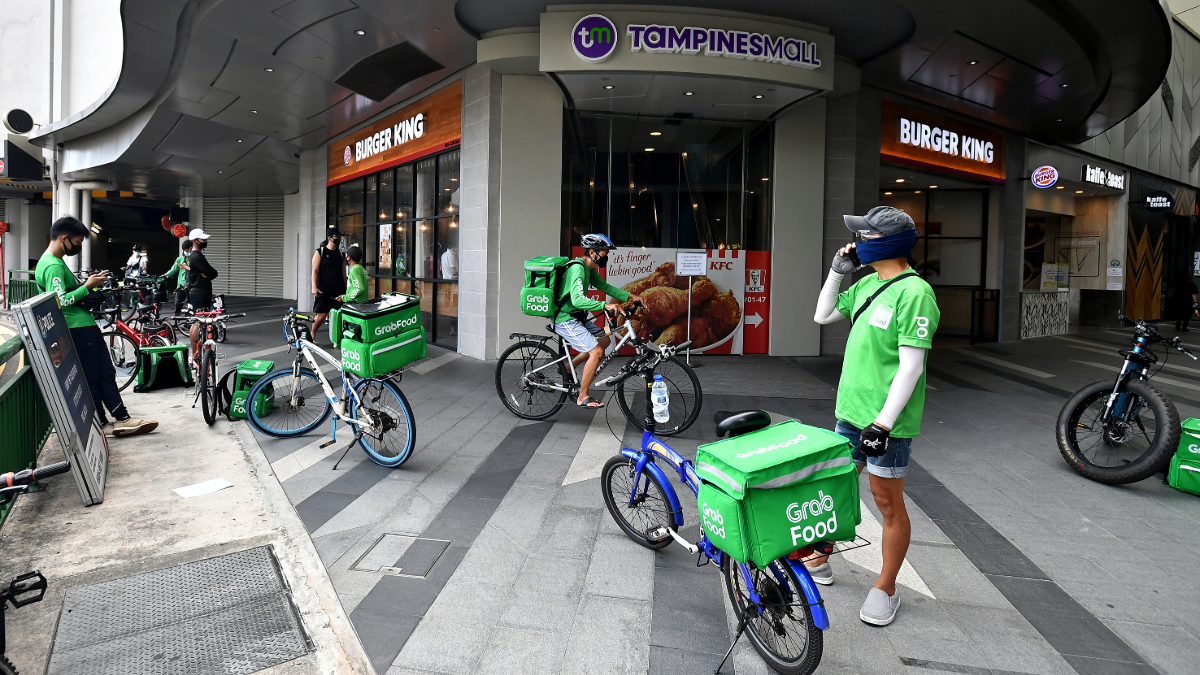
GrabFood delivery riders outside a Burger King restaurant at Tampines Mall. (Singapore Press via AP Images)
On September 11, Vietnam’s Competition Commission, under the Ministry of Industry and Trade, asked Grab and competing platforms to provide details of how fares are calculated. It also encouraged drivers and passengers to submit evidence.
If the commission finds evidence of unfair competition, the matter could potentially lead to legal proceedings, although the extent of any further action remains uncertain.
Vietnam currently has no dedicated regulatory framework governing platform work. Drivers are generally classified as “driver-partners” rather than employees, meaning they do not automatically receive the protections associated with formal employment.
Ha said the fact that the Competition Commission, rather than a labor authority, became involved illustrates the uncertainty surrounding the status of platform workers.
In June, the Ministry of Home Affairs said technology-platform drivers would not be added to the country’s compulsory social insurance system. Instead, they could participate in the voluntary scheme.
For the issue to be treated primarily as a labor matter, Ha said, it would need to be established that drivers lack sufficient bargaining power with platforms, potentially justifying measures such as collective bargaining rights, minimum pay standards and social insurance.
A quieter form of protest
The September boycott appeared considerably less visible than previous campaigns.
On the morning the action began, there were no drivers gathered outside Grab’s Hanoi office. An anonymous campaign account had accused the company of taking commissions of between 40% and 50%, while Indonesia introduced an 8% commission cap for ride-hailing platforms in July.
Pham Mi Sen, deputy head of the Ho Chi Minh City App-based Drivers Association, said driver earnings had declined over time. He cited motorcycle delivery rates falling from 3,000 dong per kilometer in 2015 to 2,500 dong in 2026.
“With the rising cost of living, drivers have only one option: they have to increase their working hours,” he said.
However, Mi Sen also described the boycott initiative as sporadic and spontaneous rather than a coordinated campaign representing most drivers.
Le Tan Luu, chair of the Binh Tan App-based Drivers Association, urged members to remain calm and rely on evidence and established procedures when raising complaints.
While the size of the boycott was difficult to determine, Van, a full-time Grab driver in Ho Chi Minh City, said he noticed receiving more ride requests during the weekend. He continued working because, as he put it, otherwise he would not be able to earn enough to live.
Other drivers chose to participate. Duy Nam, a 24-year-old Grab driver in Hanoi, switched off the app and tried rival platform Tada, which had pledged to take zero commissions.
He said the action was not intended as a revolution but as an expression of drivers’ frustration over what they see as an excessive platform cut.
As an example, Nam showed a Grab trip in which a passenger paid 17,000 dong while he received 9,000 dong. On a 78,000-dong Tada trip, he said he received 72,000 dong after VAT and income tax deductions.
The cautious approach reflects the risks surrounding public protest in Vietnam, where disturbing public order can carry criminal penalties. On September 14, police fined a YouTuber for posting unverified claims that Grab drivers were switching off the app en masse.
Police also warned against sharing posts describing the situation as a “protest” or claiming that Grab had been “paralyzed” without a clear source. Grab said the platform continued operating normally during September 12–13, according to police.
Users join the conversation
Some of the strongest public support came not from drivers but from Grab customers and media outlets.
Coverage from Vietnamese and international media focused heavily on declining driver earnings before the boycott even began. On Threads, users expressed solidarity with drivers, shared proposed letters to Grab and government agencies, and encouraged others to support drivers who stopped working.
The campaign also reflected a broader relationship between Southeast Asian consumers and platform workers.
Since the pandemic, ride-hailing and delivery drivers have become increasingly embedded in everyday life, providing transportation, food, groceries and other essential services across densely populated cities.
Mi Sen said customers have gradually become more aware of the pressures drivers face, including long working hours and platform systems that can influence earnings and incentives.
That awareness has also appeared elsewhere in Southeast Asia. Last year, users in Malaysia, Singapore, Thailand and Vietnam used ride-hailing and delivery apps to send food and essentials to drivers involved in protests in Indonesia.
Regional regulation is moving ahead
Vietnam is facing growing pressure to address platform work as the number of ride-hailing and delivery workers continues to expand.
Elsewhere in the region, governments have already begun establishing specific protections. Singapore’s Platform Workers Act introduced social-security protections for platform workers, while Malaysia’s Gig Workers Act came into force in March 2026. Indonesia introduced an 8% commission limit for ride-hailing platforms in July.
Internationally, the International Labour Organization adopted Convention 193 on decent work in the platform economy in June. The convention says employment classification should primarily consider the facts surrounding how work is performed and how platform workers are paid, while taking into account the specific nature of digital platform work.
These developments provide potential reference points for Vietnam, although Ha said meaningful reform would ultimately need to come from within the country.
That pressure is beginning to emerge.
On September 29, National Assembly member Tran Thi Dieu Thuy proposed requiring digital platforms to contribute to social insurance for their drivers during discussions on amendments to Vietnam’s Social Insurance Law.
Earlier, on September 15, the Ho Chi Minh City Federation of Labor’s Laborer Counseling and Support Center held a workshop on social protection for ride-hailing drivers. Drivers and researchers discussed concerns that the flexibility associated with platform work can be misleading, with some workers instead feeling compelled to work excessively long hours to maintain their income.
For Mi Sen, the central issue is straightforward: drivers want the government to clearly define their status.
“We drivers want to have a clear classification of where we stand in this society,” he told Tech Policy Press. “We want equality with other workers.”
And if platforms continue to classify drivers as partners, he argued, those workers should at least have the ability to negotiate their rates, working hours, incentives and penalties.