
Google has sent one of its artificial intelligence chips into space for the first time, launching a prototype orbital computing satellite aboard a SpaceX rocket from California as part of its Project Suncatcher initiative.
Built by Planet Labs, the satellite will test whether Google’s Tensor Processing Unit, or TPU, can operate reliably in orbit. The experiment will examine how the chip handles continuous power requirements, cooling and AI workloads in the harsh conditions of space.
Testing AI Hardware Beyond Earth
Travis Beals, the Google executive overseeing Project Suncatcher, said the company had already tested the technology on Earth but needed an actual spaceflight to understand how the hardware performs in orbit.
Once the satellite is operational, its TPU will run in 15-minute intervals to limit pressure on the spacecraft’s power and thermal-management systems.
The satellite uses a standard Planet Labs platform. Google and Planet are also developing a more advanced demonstration mission expected to launch next year, featuring two satellites specifically designed for computing workloads. The spacecraft are intended to communicate with each other through laser links.
Project Suncatcher is part of Google’s longer-term plan to develop large-scale computing infrastructure in orbit. The company envisions an orbital data center made up of 81 satellites flying in close formation and processing workloads in parallel.

Beals said communication speed and latency between TPUs would become increasingly important for running large, multi-rack workloads. Google is therefore designing the concept around AI workloads that could emerge several years from now rather than focusing solely on today’s computing demands.
A major challenge remains the cost of launching enough hardware into orbit. Google’s latest peer-reviewed research on orbital data centers, which is set to appear in Joule, examines how declining launch costs could affect the viability of the concept.
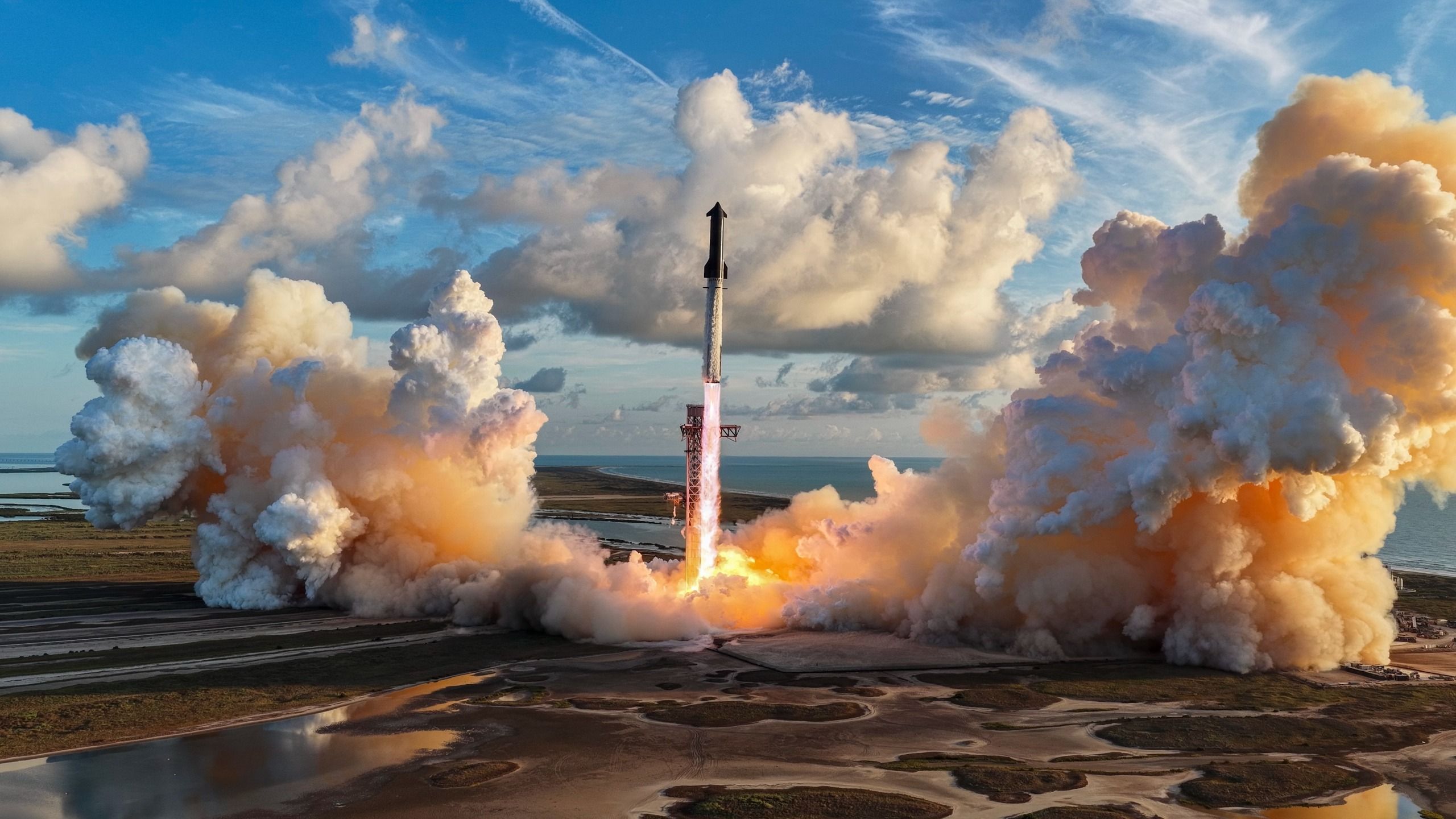
The research estimates that SpaceX could eventually reach launch prices of around $200 per kilogram by 2035, based on an assumed learning curve of roughly 20 percent annually since the Falcon 1 era. Google researchers estimate that reaching such costs could require Starship to launch about 370,000 tons of payload over the next decade, equivalent to roughly 1,800 launches if each mission carries 200 metric tons.
That would represent a dramatic increase from Starship’s current flight frequency.
Google has also been testing whether its chips can withstand radiation in space. After discovering that an earlier test configuration provided more shielding than the chips would receive in orbit, the company repeated radiation testing using a particle accelerator.
The new tests produced somewhat more errors in the chips’ logic circuitry, but Google said the error rate remains low enough for typical inference workloads. Beals estimated roughly one error per million operations, while acknowledging that the rate could become more problematic for massive training runs involving thousands of chips operating for months.
Google expects the hardware to support substantial inference workloads during a satellite’s planned five-year lifespan.