
Meta is facing criticism after its experiment with paid link-sharing on Facebook reportedly began restricting government agencies and nonprofit organizations, despite the company saying these groups should be excluded from the test.
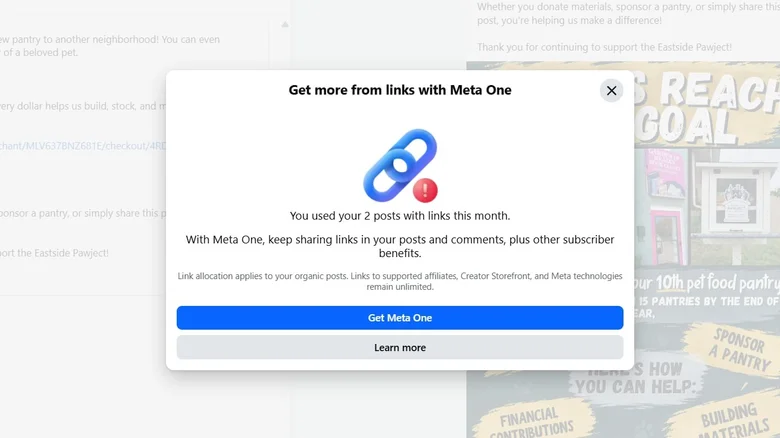
The restrictions limit some affected pages to just two links per month. To share more, administrators are being prompted to subscribe to Meta One plans, with prices ranging from around $50 per month for limited additional links to nearly $500 for unlimited sharing.
The change has raised concerns among organizations that rely on Facebook to distribute public information, promote community events, recruit volunteers and attract donations.
Government Pages Struggle to Share Essential Information
Daniel Starks, communications manager for Greenville, Texas, oversees nearly a dozen Facebook pages operated by the city. He said the city library’s page recently received a notification that its monthly allowance of two links had been exhausted.
To continue sharing links, the page was prompted to purchase a Meta One subscription costing $50 or more per month.
Starks said links back to the city’s website are central to its communications. Concerned that other city pages could face similar restrictions, he instructed staff to stop including links in Facebook posts and instead direct followers to URLs in the comments.
He described the situation as particularly troubling for government agencies that need to distribute important information to residents. The library page had previously been verified and identified itself as a government institution.

Small Nonprofits Face Unexpected Costs
Nonprofit organizations are also reporting problems with the experiment.
Bethany English, co-president of the Indianapolis-based East Side Pawject, discovered the restriction while preparing a Facebook post about an event. The organization had already used its two-link monthly allowance and was prompted to subscribe to a paid plan.
The nonprofit helps people locate pet food pantries, find donation drop-off points and learn how to volunteer or contribute to fundraisers. Its Facebook page, which has just under 1,000 followers, is an important channel for connecting with the local community.
However, paying $150 per month for a subscription that allows 20 Facebook links would be difficult for the small organization to justify.
English is considering alternatives, including creating more Facebook events and asking board members to share links through their personal profiles, which are reportedly exempt from the restrictions.
She warned that the long-term consequences could be significant if small nonprofits can no longer use the platform as they have in the past.
Meta Says the Experiment Is Still Evolving
A Meta spokesperson confirmed that the company is testing whether sharing links on Facebook should be included as part of a Meta One subscription.
The spokesperson did not directly explain why government and nonprofit pages were encountering restrictions, saying only that Meta would continue adjusting the experience based on user feedback and what it learns from the experiment.
The company has been testing paid link-sharing for nearly a year. The feature was initially incorporated into Meta Verified subscriptions and is now promoted as a benefit of its newer, AI-focused Meta One plans.
According to the report, the subscription options include:
- $14.99 per month: No additional Facebook link-sharing allowance, although the plan includes a dedicated link page for Instagram bios.
- $49.99 per month: Up to eight Facebook links per month.
- $149.99 per month: Up to 20 Facebook links per month.
- $499.99 per month: Unlimited Facebook links.
For organizations accustomed to sharing website links freely, these fees represent a significant change to a long-established platform feature.
Nonprofits Question the Value of Paid Link-Sharing
Jeff Bannister, marketing manager for SparkPoint, a nonprofit in North Carolina that promotes public health and stronger social connections, also reported that the restrictions had affected his organization.
Bannister questioned the value of paying $50 per month for only eight links, arguing that the cost could be difficult to justify even for larger businesses.
SparkPoint is exploring ways to collaborate with other local nonprofits and share information across their networks. However, moving away from Facebook presents a challenge because so many people in the community still use the platform.
David Diskin, president of California Freethought Day, reported a similar problem just days before his organization’s annual civic-engagement event in Sacramento.
He was offered plans costing $40 per month for eight links, $119 for 20 links or $399 for unlimited sharing. The restriction was later removed, allowing the organization to post links again, but Diskin said the reversal came only after its major fundraiser had passed.
The experience has left affected organizations uncertain about whether the restrictions will return or how they should plan their communications.
Confusion Over Who Is Exempt
One of the biggest concerns is the apparent inconsistency in how the restrictions are applied.
Some users say they can still post links in comments, while others report being unable to do so. The restrictions have also appeared on pages that identify themselves as nonprofits and have completed verification processes to access Meta fundraising tools.
Meanwhile, the company’s subscription descriptions and help information reportedly do not clearly explain that link-sharing limits are part of an ongoing experiment.
For nonprofits and government agencies, the uncertainty makes it difficult to decide whether to change their social-media strategies, budget for subscriptions or find alternative ways to reach their audiences.
A Bigger Challenge for Community Organizations
Facebook remains an important communication channel for local governments and small nonprofit groups. It allows them to distribute announcements, publicize events, connect with volunteers and direct supporters to websites where they can find further information or make donations.
If the restrictions continue to affect these organizations, some may need to rely more heavily on email newsletters, their own websites, partnerships with other community groups or alternative social platforms.
For now, Meta says it will continue evaluating the experiment. But the reports from affected organizations highlight a central concern: charging for a basic feature such as sharing links could create additional barriers for groups that depend on social media to provide services and keep their communities informed.