


































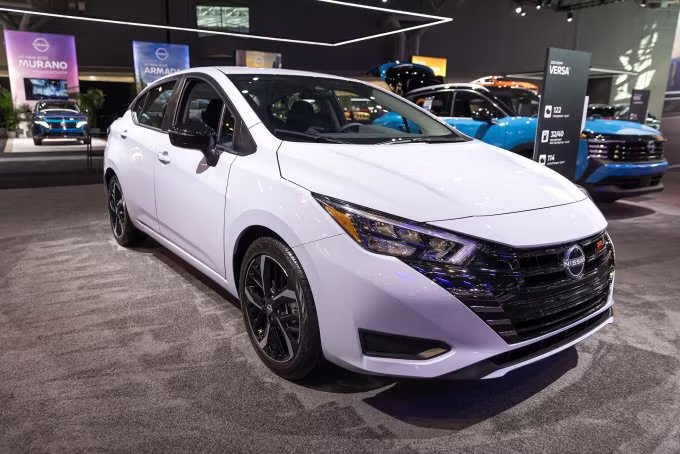
In 2024, US buyers could choose from three cars priced under $20,000. Now, there are none. Data released Monday show how the disappearance of cheaper models is affecting consumers: New car buyers paid an average of $50,326 in December, a record high, according to Kelley Blue Book, a Cox Automotive brand. Edmunds reported a slightly lower record average of $49,466. Both figures indicate that many buyers are paying well over $50,000 for a new vehicle and will likely continue to do so.
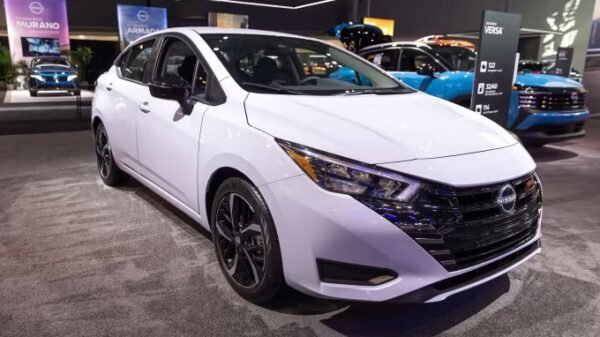
The rising average price is not solely due to automakers’ higher sticker prices or demand for larger vehicles. It is also driven by the declining availability of low-cost options. The most recent example is the Nissan Versa, which debuted nearly 20 years ago with a starting price of around $12,550. Nissan ended production of the Versa in December.
The lack of affordable vehicles puts car ownership out of reach for many Americans and highlights the widening gap in economic inequality. At the same time, luxury car sales continue to thrive, illustrating a K-shaped economy in which higher-income consumers spend freely while lower-income households struggle. Ivan Drury, director of insights at Edmunds.com, said, “As we hack away at these entry-level vehicles not being available, you can say that virtually every car on the road that is brand new with those dealer plates is a ‘luxury purchase.’”
Affordability concerns have persisted since the pandemic, when supply chain issues drove prices upward. Erin Keating, executive analyst at Cox Automotive, said during a December webinar that pandemic-related shifts “fundamentally restructured pricing dynamics,” adding that higher prices are “now the new baseline.”
The 2025 Nissan Versa, priced around $18,000 in October, was the last new car to cost less than $20,000, according to Drury. Other low-cost vehicles have disappeared in recent years, including the Mitsubishi Mirage, discontinued in August 2024, and the Kia Forte, replaced by the more expensive K4 in March 2024. Many of these models were manufactured abroad, where labor costs are lower. Tariffs on imported cars and auto parts, including 25% imposed by former President Donald Trump, have raised production costs. Automakers absorbed much of these costs to avoid discouraging buyers, but slim profit margins likely led to the discontinuation of inexpensive models.
The least expensive new car available today is the 2026 Hyundai Venue, with a manufacturer’s suggested retail price of $20,550. Drury said affordable models with limited profitability are more likely to be dropped, while competitors like Toyota may gain buyers seeking entry-level vehicles, regardless of brand loyalty.
The shift toward higher-priced cars has also affected dealerships. Lower-income buyers are being pushed out of the market, while wealthier consumers continue to drive sales, Keating said. Those unable to afford new vehicles are increasingly turning to used cars or holding onto older vehicles. Without reliable public transport, those without cars face challenges commuting to work, running errands, or transporting children. Households earning less than $75,000 annually accounted for 26% of sales last year, down from 37% in 2019, according to Cox Automotive analysis.
Meanwhile, buyers with incomes over $150,000 now make up more than 40% of new car sales, up from about 29% in 2019. Wealthier Americans have benefited from stock market gains, rising wages, and higher home values, while lower-income households face slower job growth, high debt, and inflation-related losses in spending power. Monthly payments have become a key factor for buyers; Tyson Jominy, senior VP of data and analytics at J.D. Power, said a $500 monthly payment that previously covered a Toyota Highlander now only gets a compact car like a Toyota Corolla.
Overall car prices are expected to decrease by about $500 on average in 2026, signaling a slightly more affordable market. Automakers will also likely increase incentives to attract buyers, competing with one- or two-year-old vehicles. Drury noted, “Once we see incentives pile on for those new cars, it trickles on down. So hopefully the used market can give consumers a place to go if they are just completely turned off.”