






































The energy transition is one of the most crucial challenges of our time. Innovative technologies are pivotal in driving change as we strive for a more sustainable and planet-friendly future. In this context, Dutch nanoparticle technology startup VSParticle has emerged as a trailblazer, revolutionizing material innovation and significantly contributing to the energy transition.
Redefining Material Development with Nanoparticle Technology
VSParticle has secured €14.5 million in funding to scale its groundbreaking nanoparticle technology. This innovative approach enables printing new materials composed of various elements, addressing sustainability challenges and accelerating the energy transition. By breaking down materials into nanoparticles and re-composing them, VSParticle has significantly reduced material discovery cycles from months to hours.
Catalyst-Coated Membranes (CCMs): Enabling Green Hydrogen Production
One of VSParticle’s key focuses is developing catalyst-coated membranes (CCMs). These membranes play a crucial role in green hydrogen production, a promising avenue for sustainable energy. Through their nanoparticle technology, VSParticle aims to enhance the efficiency and affordability of CCMs, thereby advancing the energy transition.
Gas Sensors: Revolutionizing Pollution Detection
Pollution detection is another vital aspect of the energy transition. VSParticle’s nanoparticle technology has the potential to revolutionize gas sensor production, enabling more accurate and efficient pollution detection. By leveraging the unique properties of nanoparticles, VSParticle’s approach promises advancements in pollution monitoring, contributing to a healthier and more sustainable environment.
Nanoparticle Generator and Nanoprinter: Unlocking Inorganic Chemistry’s Potential
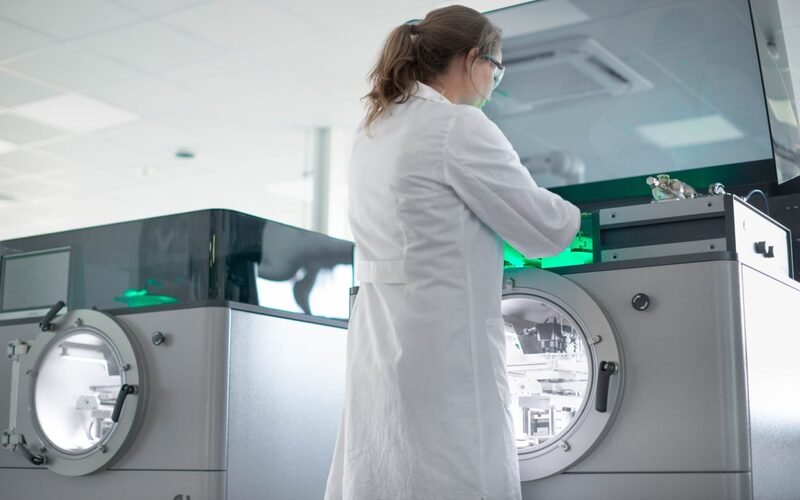
VSParticle’s nanoparticle generator, VSP-G1, is a game-changer in material development. It enables quick material changes by producing universal building blocks in the form of nanoparticles. These nanoparticles serve as the raw materials for VSParticle’s NanoPrinter, the VSP-P1, which combines them to create entirely new materials.
Combining the VSP-G1 nanoparticle generator and the VSP-P1 NanoPrinter significantly reduces the time required for material production and discovery. This accelerated process holds immense potential for unlocking the remaining 99% of inorganic chemistry’s possibilities, driving innovation, and paving the way for sustainable energy solutions.
Advantages of VSParticle’s Nanotech Approach
VSParticle’s nanoparticle technology presents numerous advantages that position the startup at the forefront of material innovation for the energy transition. These advantages include:
Affordability and Scalability
VSParticle’s technology rapidly creates material combinations, making production more affordable and scalable. This affordability supports the European Union’s green hydrogen goals and fosters a sustainable energy future.
Reduced Time to Market
By significantly reducing the time required for material production and discovery, VSParticle’s technology accelerates innovation. This efficiency ensures new materials can reach the market faster, expediting the energy transition and driving positive change.
Unlimited Inorganic Possibilities
VSParticle’s nanoparticle technology unlocks the vast potential of inorganic chemistry. With the ability to break down materials into nanoparticles and recombine them, VSParticle opens up endless possibilities for developing new and innovative materials, fueling advancements in various industries.
Conclusion
VSParticle’s nanoparticle technology represents a significant breakthrough in material innovation for the energy transition. By leveraging the power of nanotechnology, VSParticle accelerates the development of new materials, addresses sustainability challenges, and contributes to a more sustainable and planet-friendly future. With their focus on catalyst-coated membranes and gas sensors, VSParticle’s efforts align with crucial aspects of the energy transition, enabling advancements in green hydrogen production and pollution detection. By unlocking the remaining potential of inorganic chemistry, VSParticle sparks innovation and sets the stage for a more sustainable and energy-efficient world.