






































While headlines about AI have mostly focused on job losses, a quieter story is unfolding in warehouses, construction sites and server rooms across America — one where the technology is creating some of the most in-demand and well-paid roles in the country, and none of them require a computer science degree.
The four biggest hyperscalers — Alphabet, Microsoft, Meta and Amazon — have committed nearly $700 billion combined in capital spending this year to build out AI data centers. Amazon alone announced last month it was putting $12 billion into a new facility in Louisiana, creating 540 full-time on-site jobs and 1,700 additional roles for electricians, technicians and security specialists. Meta invested $27 billion last year in a joint venture to build its Hyperion data center, also in Louisiana, a facility expected to consume more electricity than the entire city of New Orleans.
All of that infrastructure has to be physically built and maintained — and that’s where the opportunity lies. Sander van’t Noordende, CEO of Randstad, the world’s largest recruitment firm, told CNBC that the real bottleneck holding back global tech growth isn’t chips, energy or capital. It’s people. “The severe scarcity of the specialized talent required to build it,” he said, is the constraint that matters most.
The numbers back that up. Between 2022 and 2026, demand for robotic technicians rose 107%, according to a Randstad analysis of 50 million job postings. Vacancies for cooling system engineers grew 67%, and industrial automation technician roles were up 51%. Even traditional construction and electrician listings rose 27%.
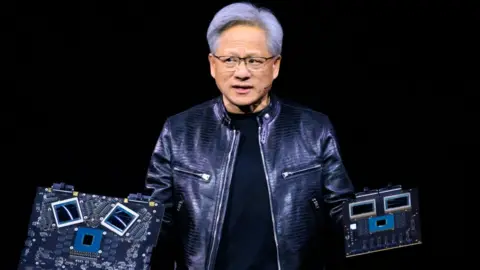
The pay is following the demand. Specialised professionals moving into high-level data center roles are typically seeing pay increases of 25% to 30%, according to staffing firm Kelly Services. Advertised wages for HVAC engineers alone have risen 10% to 15% over the past four years, and six-figure salaries are increasingly achievable across the sector. Nvidia CEO Jensen Huang predicted in January that such salaries would become standard for workers building what he calls AI factories.
Mike Mathews, digital infrastructure leader at professional services firm Marsh, describes these emerging roles as “new-collar” jobs — a blend of blue-collar and white-collar work that he believes is genuinely new in the economy. “The data center space will be the first time when we’ve had highly compensated, high-skilled trades workers physically working next to network engineers who have college degrees,” he told CNBC. He sees that as a meaningful social shift, and a positive one.
The challenge is that there simply aren’t enough people to fill these roles, and the gap is widening. The US could face a shortfall of 1.9 million manufacturing workers by 2033, according to data from the National Association of Manufacturers. The Associated Builders and Contractors estimates nearly half a million new workers will be needed in 2027 alone. Roughly one in four workers globally is approaching retirement age, and the pipeline behind them isn’t keeping up.
Geography makes it worse. Unlike software developers who can work from anywhere, electricians and equipment technicians have to be on-site. When a major data center goes up in a region, it can drain the local talent pool almost overnight. Companies are responding with apprenticeship programmes, community college partnerships, military veteran pipelines and internal training academies — and BlackRock launched a $100 million initiative earlier this month to invest in trades workforce development.
There’s one more wrinkle. After Iranian drone strikes hit Amazon Web Services data centers in the UAE earlier this month, workforce consultants are already asking how much of a hazard premium will need to be built into compensation packages to attract workers to facilities that could become targets. It’s an uncomfortable question — but one the industry is starting to take seriously.