













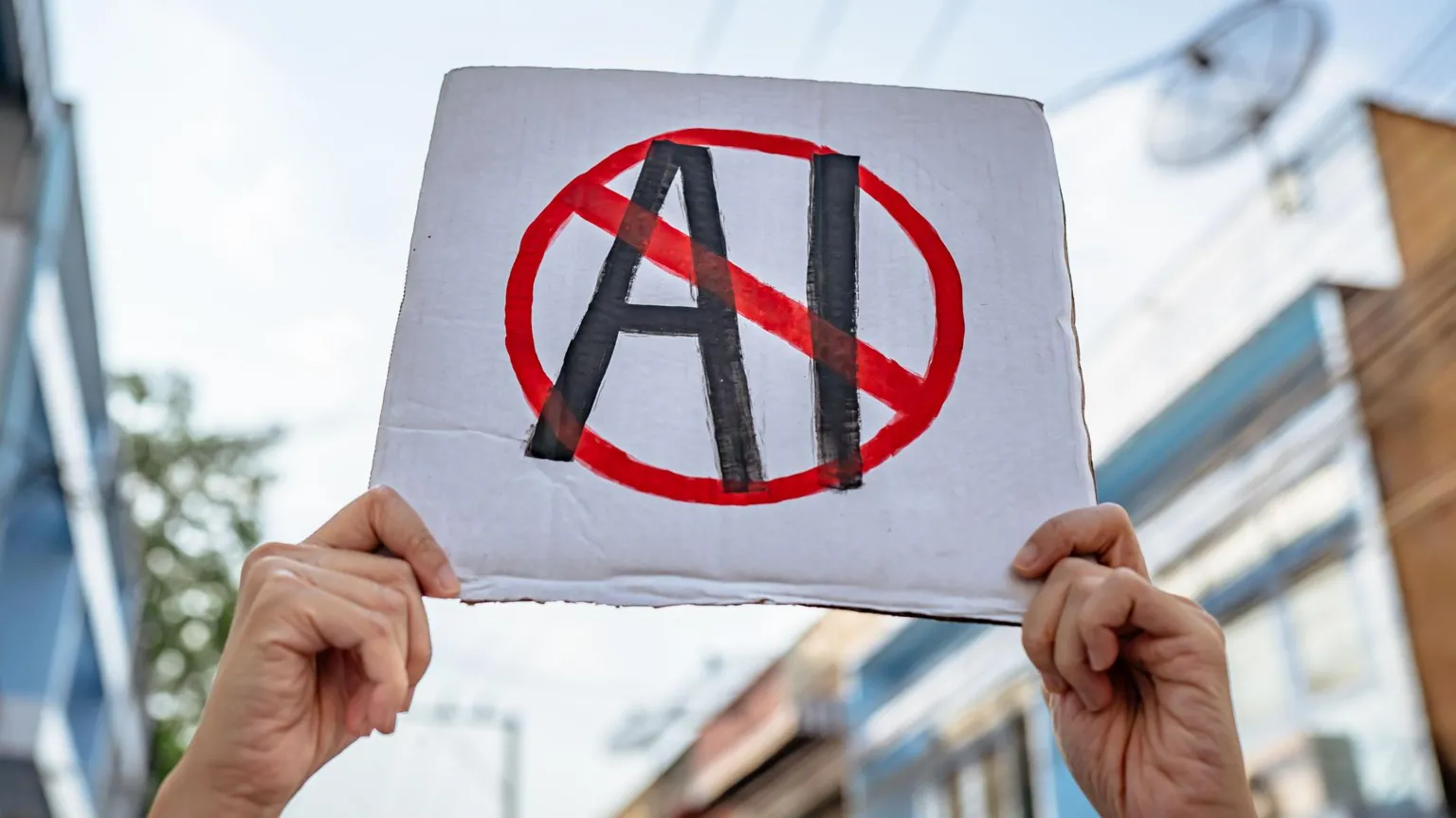
Organisations around the world are racing to create a widely recognised label for products and services that are genuinely “human-made” in response to growing concerns over AI replacing human work. Labels such as “Proudly Human,” “Human-made,” “No A.I,” and “AI-free” are appearing on films, books, websites, and marketing materials. The aim is to help consumers identify content or products created without AI involvement and to place an economic value on human labour and creativity.
Some systems allow users to download badges freely, while others, like Not By AI and Books by People, offer stricter vetting processes involving auditors and AI-detection software to verify that no AI was used. Challenges remain, as AI is increasingly integrated into everyday tools, making it difficult to draw clear boundaries between AI-assisted and fully human-created work. Experts suggest that a universal definition and certification process are needed to ensure trust, rather than relying on inconsistent or self-applied labels.
Currently, industries such as publishing, film, music, and visual arts are leading the push for AI-free certification. For example, Faber and Faber has added a “Human Written” stamp on some books, and Proudly Human audits content throughout the production process to confirm its human origin. The overarching goal is to provide consumers with transparency and ensure that truly human-created content is recognised and valued.