







































New York — Big Tech may be approaching a reckoning similar to Big Tobacco’s legal collapse decades ago.
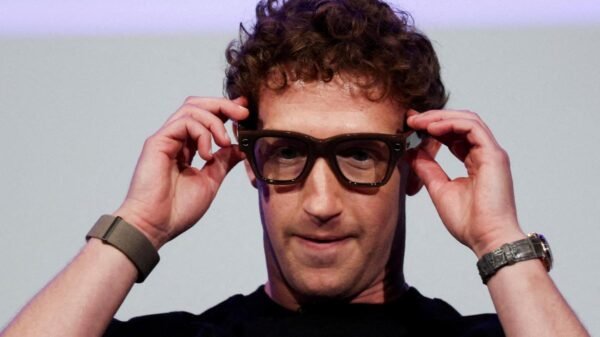
This week, Mark Zuckerberg, chief executive of Meta, testified before a jury for the first time over allegations that social media platforms harm young users. His appearance in court comes more than four years after internal company documents were leaked by whistleblower Frances Haugen, revealing that Meta was aware its products could negatively affect mental health.
Documents presented to a jury in Los Angeles on Wednesday appeared to reinforce long-standing concerns: that Meta knew preteens were using its platforms; that its systems were engineered to maximize time spent scrolling; and that expert recommendations aimed at improving safety were often ignored. Meta has pushed back strongly, arguing that the documents shown in court are selective and outdated.
The trial still has weeks to run, and its outcome remains uncertain. But legal experts say it marks the beginning of a broader campaign of litigation — modeled explicitly on the tobacco lawsuits of the 1990s — that could force sweeping changes across the technology industry.
Those tobacco cases eventually led to public warnings, consumer education campaigns, and a sustained decline in smoking rates, said Joseph McNally, a former federal prosecutor in California and now director of emerging litigation at McNicholas & McNicholas.
“There are a lot of parallels,” McNally said. “The outcome of these social media cases could very well change how people interact with these platforms and how companies design them.”
Echoes of Big Tobacco
The Los Angeles case centers on claims brought by a now-20-year-old woman, identified as Kaley, and her mother. They argue that four major social media companies deliberately built addictive products that hooked Kaley when she was a child, contributing to anxiety, depression, and other mental health struggles.
Meta and YouTube deny the allegations. Snap and TikTok settled with Kaley before the trial began, though they remain defendants in hundreds of similar lawsuits nationwide.
Testifying last week, Adam Mosseri, head of Instagram, said he believed excessive use—even 16 hours a day—could be “problematic.”.”matic.”atic,” but stopped short of calling it “clinically addictive.” Meta and other technology companies maintain that there is no definitive scientific evidence proving social media causes addiction or mental health disorders.
For lawyers experienced in tobacco litigation, that argument sounds familiar.
John Uustal, who has successfully represented plaintiffs against cigarette manufacturers, said the similarities are striking — particularly the insistence that the product is not addictive.
“Once you admit addiction — legally, morally, and from a public relations standpoint — you’re finished,” Uustal said.
Unlike tobacco, Meta and its peers argue that social media also provides meaningful benefits, including creativity, connection, and community. While some researchers agree, others have nevertheless called for warning labels similar to those required on cigarette packaging.
Kaley’s lawsuit is considered a “bellwether” case among more than 1,500 similar civil claims. Its outcome could shape how those future cases are litigated or settled.
A widening legal front
Meta is also facing trial in New Mexico in a separate lawsuit accusing the company of enabling child sexual exploitation on its platforms. The company has described the claims as “sensationalist” and “distracting.”
Later this year, the first of hundreds of lawsuits filed by U.S. school districts against social media companies is also expected to go before a jury.
The tobacco litigation followed a similar pattern, with lawsuits brought by individuals, governments, and institutions over decades. Those cases gradually exposed internal documents and tested new legal strategies that eventually tipped the balance against the industry.
Kaley’s case also introduces a legal approach that sidesteps Section 230, the U.S. law that generally protects tech companies from liability for user-generated content. Instead, her lawyers are focusing on product design — arguing that harm resulted from how the platforms were built, not from specific posts or videos.
Safety measures — and skepticism
All four companies involved say they have taken steps to improve safety, including parental controls, stricter privacy settings for minors, content restrictions, and tools to limit screen time and notifications.
Many families argue those measures still shift too much responsibility onto parents and children, and they hope court rulings could push lawmakers toward stronger online safety regulations. Internal company documents introduced at trial have also raised doubts about how effective or widely used some of those safeguards actually are.
Lawsuits, experts say, can sometimes bring change faster than legislation — particularly when powerful industries invest heavily in lobbying.
“In the U.S., that’s often how progress happens,” Uustal said. “Across industries, lawsuits raise the cost of inaction until fixing the problem becomes the cheaper option.”
What happens next
Jurors have not yet heard full arguments from Meta’s or YouTube’s defense teams, which are expected to present their cases in the coming weeks. Whatever the verdict, the decision is likely to influence legal strategies on both sides in future trials.
More bellwether cases are expected. Different juries, plaintiffs, and fact patterns could produce varying outcomes. Repeated losses by plaintiffs could weaken the value of similar cases, McNally said, while losses by tech companies could expose them to billions of dollars in damages and force fundamental platform changes.
The jury could also find one company liable and another not. The allegations and defenses against Meta and YouTube differ in key ways.
Kaley’s case may be especially challenging because of her difficult upbringing. Meta argues that her mental health struggles stem from childhood circumstances, not social media use. Her lawyers counter that those circumstances increased the company’s duty to protect her.
“The evidence will show Kaley faced serious challenges long before she used social media,” a Meta spokesperson told CNN, adding that the company has a “longstanding commitment to supporting young people.”
Zuckerberg testified that Meta has strengthened measures such as age verification over time — an argument suggesting the company took safety concerns seriously, said Kimberly Pallen, a partner at Withers specializing in complex civil litigation.
So far, YouTube has played a smaller role in testimony. The platform argues it functions more like an entertainment service than a social network. Kaley’s legal team plans to call YouTube vice president of engineering Cristos Goodrow to testify. YouTube’s lead attorney, Luis Li, has said Kaley is not addicted to the platform and that usage data shows minimal engagement with features described as addictive.
“As much as this case is framed as a turning point for social media,” Pallen said, “the plaintiff still has to prove her claims.”