





































India’s Chandrayaan-3 mission marks a significant milestone in the country’s space exploration endeavors. The Indian Space Research Organization (ISRO) developed this ambitious mission to achieve a controlled landing on the moon and showcase India’s growing prowess in space exploration. In this article, we delve into the details of Chandrayaan-3, its objectives, and the significance of this mission.
Chandrayaan-3: India’s Lunar Mission
Chandrayaan-3, the successor to the Chandrayaan-2 mission, is an essential step in India’s pursuit of further lunar exploration. This moon vehicle, carrying a lander, propulsion module, and rover, is designed to safely land on the lunar surface and conduct a series of scientific experiments to enhance our understanding of the moon’s composition. The mission’s primary objectives are as follows:
Safe and Soft Landing
The foremost objective of Chandrayaan-3 is to achieve a safe and soft landing on the moon. Building upon the learnings from previous missions, ISRO has meticulously designed the lander and improved various aspects, including landing legs, fuels, solar cells, and sensors. By accomplishing a successful landing, India will join an exclusive group of countries that have achieved this feat, including the United States, Russia, and China.
Lunar Rover Exploration
Chandrayaan-3 carries the Pragyan rover, equipped with two spectrometers that aim to analyze materials from the ancient lunar crust. These instruments will provide valuable insights into the moon’s geological composition and aid in understanding its evolution. The rover’s mobility will enable it to traverse the lunar surface, gathering data and capturing detailed images for further analysis.
Scientific Observations
Conducting scientific observations is another crucial objective of Chandrayaan 3. The mission will analyze the moon’s composition, particularly through the Spectro-polarimetry of the Habitable Planet Earth (SHAPE) payload. This payload will better measure spectral and polarimetric radiation to understand habitable Earth-like planets and their potential signatures. Such research is vital to unraveling the mysteries of the universe and advancing our knowledge of celestial bodies.
Chandrayaan-3 Launch and Timeline
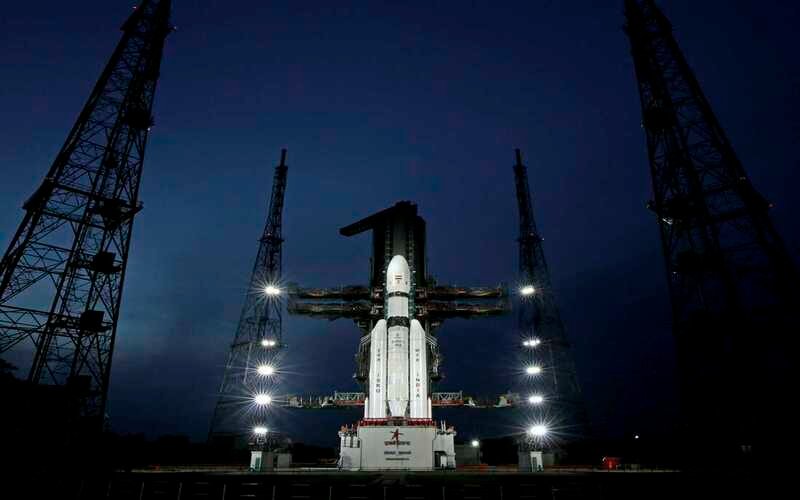
The Chandrayaan-3 mission launched successfully from the Satish Dhawan Space Center in Sriharikota, Andhra Pradesh, India, on July 14, 2023. The Launch Vehicle Mark-III, or LVM3, carried the spacecraft into an elliptical Earth orbit before setting course for the moon. The mission aims to achieve a lunar landing near the moon’s south pole around August 23.
India’s Space Program: A Journey of Innovation
India’s space program has come a long way since its inception six decades ago. From its humble beginnings as a newly independent republic, India has become a significant player in space exploration, bolstered by its burgeoning population, technological advancements, and growing innovation hub. Over the years, India has demonstrated its commitment to scientific progress and has successfully undertaken several space missions.
Significance and Future Prospects
Chandrayaan-3 is significant for India’s space sector and the global scientific community. A successful landing on the moon’s surface will advance our understanding of lunar geology, boost national pride, and showcase India’s technological capabilities on a global stage. Furthermore, Chandrayaan-3 paves the way for future lunar missions and potential collaborations with other space-faring nations.
Conclusion
India’s Chandrayaan-3 mission marks a major milestone in the country’s space exploration journey. With its focus on a safe lunar landing, rover exploration, and scientific observations, Chandrayaan-3 demonstrates India’s commitment to pushing the boundaries of scientific knowledge and fostering technological advancements. This mission showcases India’s capabilities and contributes to the global pursuit of unraveling the moon’s mysteries. As Chandrayaan-3 progresses toward its lunar landing, the world eagerly awaits the invaluable insights it will provide and the possibilities it will unlock for future lunar exploration.