






























Sigma’s new FP2 combines a remarkably compact body with 24.5MP photography, 6K video recording, and a modular design. However, the lack of in-body image stabilization and the cost of essential accessories mean it won’t suit every photographer or filmmaker.
Sigma has never been afraid to approach camera design differently, and the new FP2 continues that tradition. As the successor to the original Sigma FP, the camera builds on the concept of creating one of the world’s smallest full-frame mirrorless systems while introducing several meaningful upgrades.
Announced on October 23, 2026, the Sigma FP2 is priced from $2,199 in the US and £1,899 in the UK. Sales are scheduled to begin on November 11.
After spending nearly two weeks testing the camera, TechRadar’s cameras editor Timothy Coleman found plenty to appreciate, particularly its compact construction, intuitive controls, and impressive video capabilities. Nevertheless, the FP2’s unusual design involves compromises that potential buyers should consider before investing.
A Compact Camera With Serious Capabilities
The Sigma FP2 features a 24.5MP partially stacked full-frame CMOS sensor and supports video recording at resolutions of up to 6K at 60fps. It can also capture 4K slow-motion footage at up to 120fps, making it an appealing option for content creators and filmmakers.
Its open-gate recording capability allows users to capture footage across the sensor’s full recording area, providing flexibility when producing content for different aspect ratios and social media platforms.
Video creators can choose from 13 color-profile presets or use the L-Log profile for greater control during post-production. RAW video recording is also supported, although users must connect an external SSD because the format cannot be recorded directly to the camera’s internal memory or SD card.
For photography, the FP2 captures both RAW and JPEG images. Its electronic shutter supports continuous shooting at up to 20 frames per second, with a buffer capable of handling sequences of up to 180 frames before performance slows.
Autofocus has also received an upgrade. Sigma claims a 15% improvement in speed and accuracy compared with the original FP, alongside expanded subject detection. During testing, autofocus performed responsively on people and delivered smooth transitions when recording video.
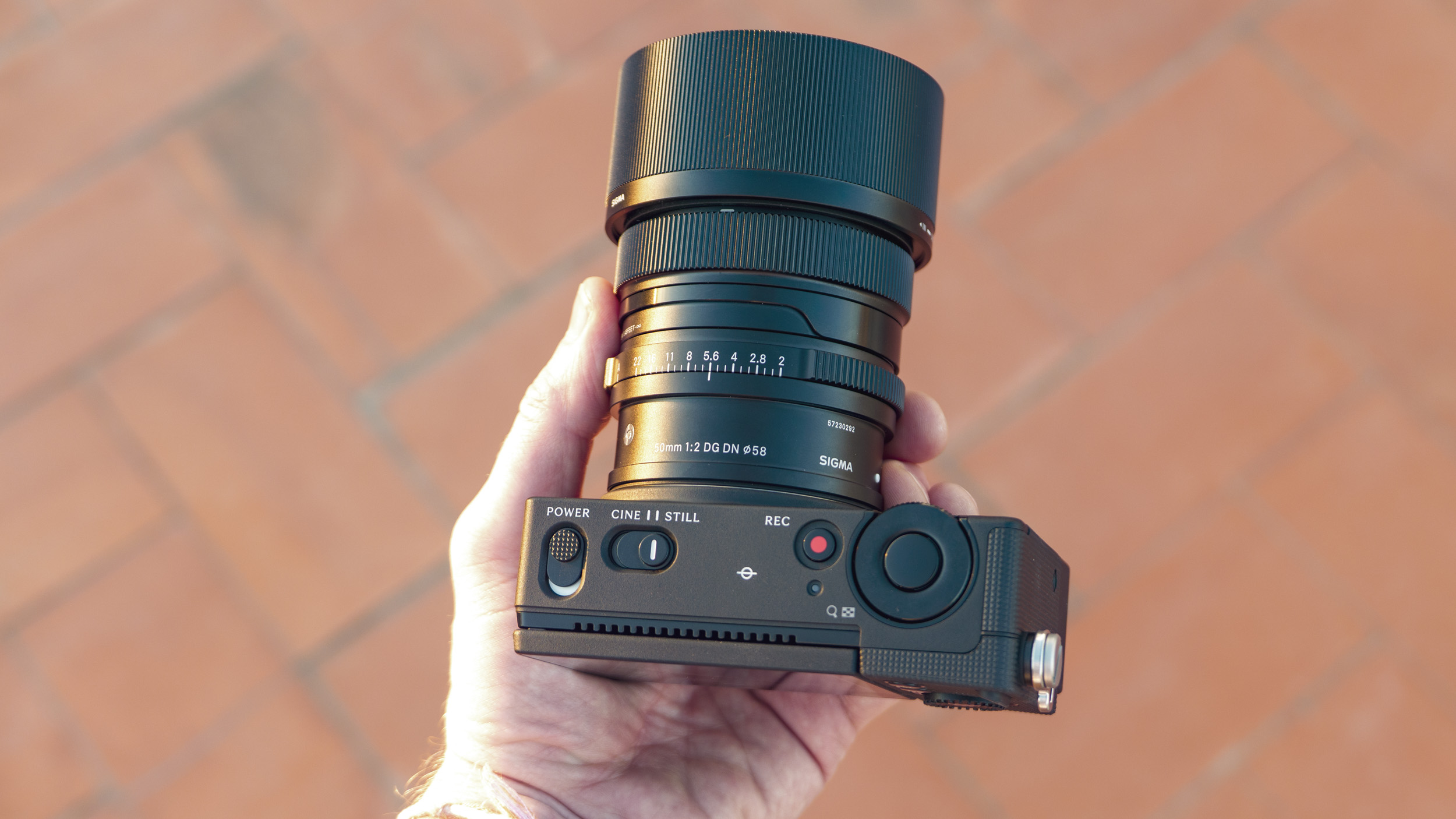
The tiny FP2 body makes regular lenses, like the 50mm F2 DG Contemporary, above, feel large by comparison (Image credit: Tim Coleman)
Design That Prioritizes Size and Simplicity
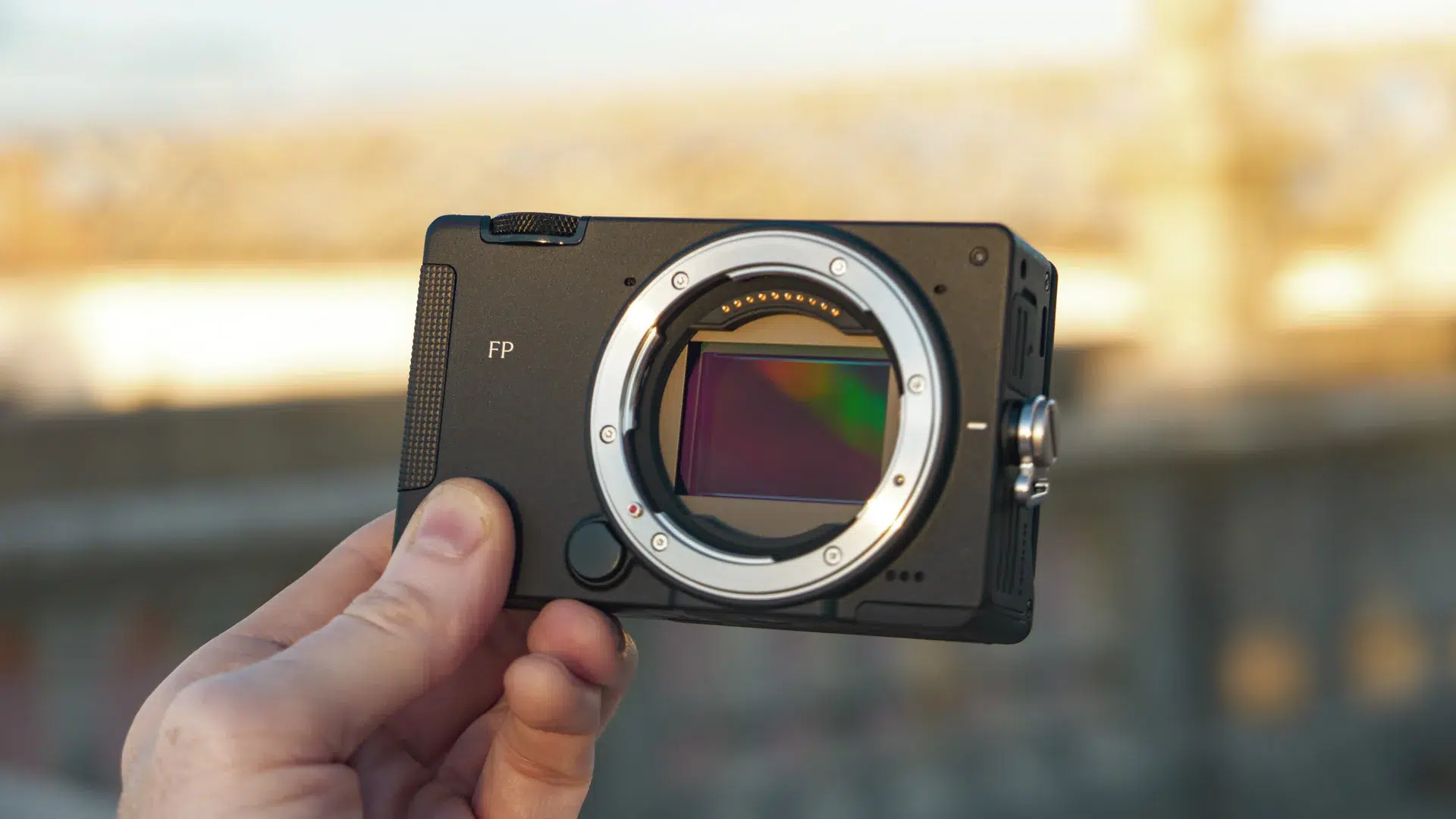
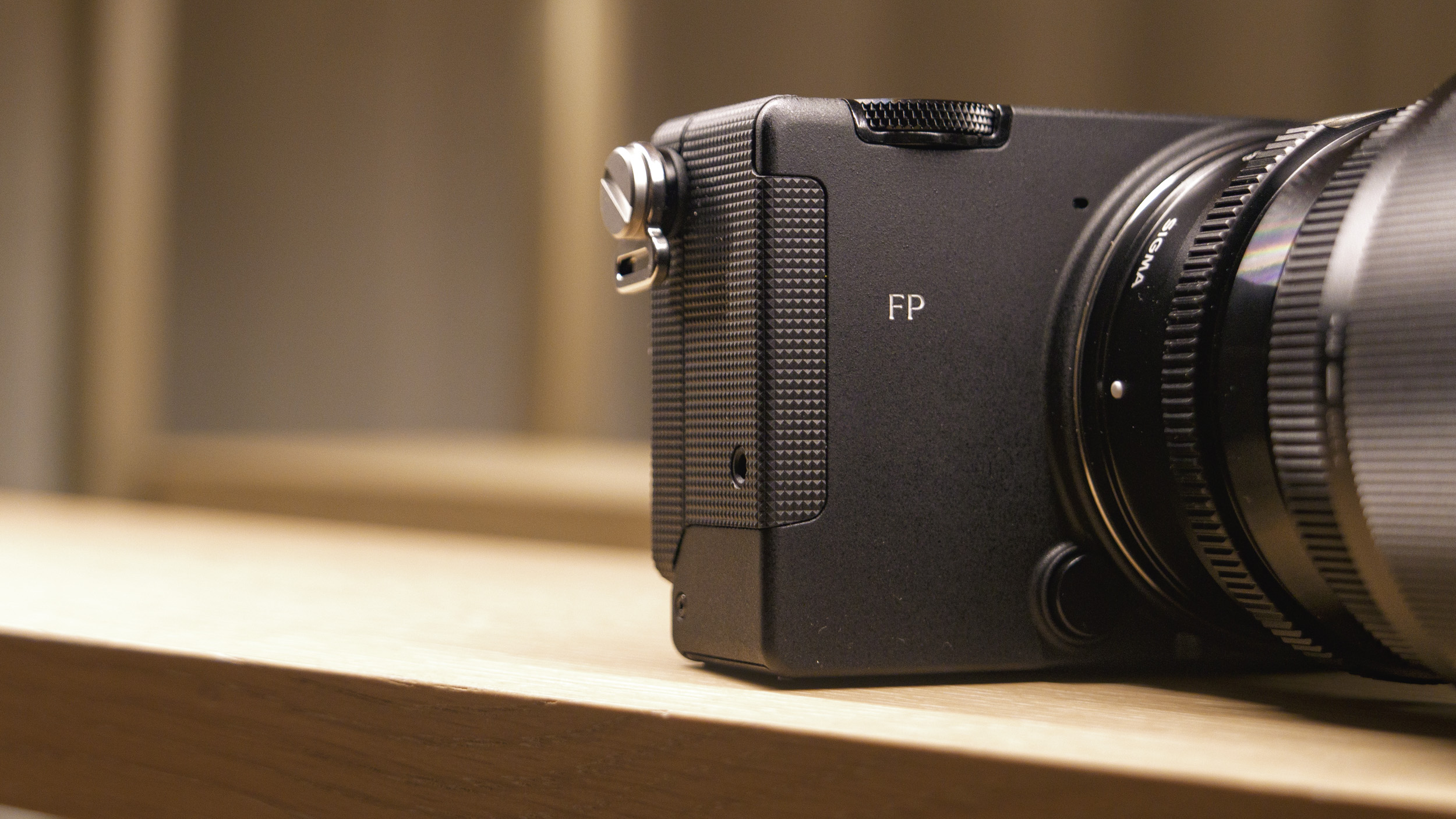
The FP2’s biggest attraction is its remarkably small metal body. Despite incorporating a larger battery and a tilting touchscreen, Sigma has maintained the camera’s minimalist dimensions.
Measuring approximately 112.8 x 69.9 x 41.8mm, the camera weighs around 460g with a battery and SD card installed. Its compact construction makes it particularly appealing to photographers who want full-frame image quality without carrying a conventional camera body.
Sigma has also refined the user interface. A dedicated switch separates photography and video modes, while each mode retains its own settings. Physical controls include an exposure dial and conveniently positioned buttons, including direct access to color profiles.
The rear display measures 3.15 inches and features a 2.1-million-dot tilting touchscreen. This is a notable improvement over the original FP’s fixed display, allowing users to compose shots from more challenging angles.
The tilting mechanism also exposes ventilation openings that help manage heat during high-resolution video recording.
Another welcome addition is 70GB of usable internal storage alongside a conventional SD card slot. During testing, the built-in memory worked reliably, offering a convenient way to capture images without immediately relying on removable storage.
An Optional Viewfinder Adds Flexibility
One of the FP2’s defining characteristics is its modular construction. The camera does not include a built-in electronic viewfinder, helping Sigma keep the body exceptionally small.
However, users can add the optional EVF-21 electronic viewfinder, which offers a detailed 5.76-million-dot display and tilting functionality for waist-level shooting.
The reviewer found the viewfinder particularly useful when photographing, especially after repeatedly instinctively raising the camera to eye level.
The modular approach makes sense for users with different priorities. Videographers can keep the camera in its smallest configuration, while photographers can attach the viewfinder when needed.
Additional accessories include a hot-shoe unit, base plate, LCD viewfinder, and battery charger. The camera also provides mounting points for accessories and strap loops, demonstrating attention to practical details.
However, these extras increase the overall cost, and accessories designed for the original Sigma FP are not necessarily compatible with the FP2.
Here’s the EOS R8 Mark II with its dedicated EC-G2 grip attached. The grip purely bulks out the camera — it doesn’t feature a battery (Image credit: Tim Coleman)
Battery Life and Handling
Battery performance is another significant improvement. The FP2 uses the same battery type found in recent full-frame Panasonic Lumix models, including the S1 II and S9.
Sigma rates the camera for approximately 370 still photographs or 130 minutes of video recording. For such a compact device, this is a useful improvement over what its size might suggest.
The camera’s solid metal construction also contributes to a reassuring feel, while its straightforward controls make it relatively easy to operate.
However, the small body comes with ergonomic limitations. Unlike conventional mirrorless cameras, the FP2 has no sculpted handgrip, leaving users to hold its flat front surface.
This is manageable with smaller lenses, but larger optics can make the combination feel awkward. Even relatively compact prime lenses can appear substantial when mounted on such a small camera.
The absence of in-body image stabilization is another important drawback. Although the camera produces excellent-looking footage, recording handheld video without stabilization can be challenging.
Users can address this limitation by mounting the camera on a gimbal or recording gyroscopic data for stabilization during post-production. Nevertheless, both approaches introduce additional considerations into the shooting process.
Image Quality and Video Performance
During testing in Lisbon, the FP2 delivered pleasing photographs and video footage when paired with Sigma’s 50mm F2 DG Contemporary lens.
Its 24.5MP sensor provides ample resolution for everyday photography, portraits, and travel images, while the selection of color profiles gives creators considerable flexibility when working with video.
The L-Log option is particularly useful for those planning to grade footage during editing, while the built-in presets provide a more straightforward route to finished content.
The autofocus system also performed well during the review, particularly when tracking people. However, the reviewer had limited opportunities to evaluate its performance with other subjects, including animals, so its full tracking capabilities remain to be assessed.
For photographers, the camera’s DNG RAW format offers broad compatibility with popular image-editing software.
The biggest limitation remains stabilization. Without in-body image stabilization, handheld video requires a steadier technique, and users shooting while walking or moving may need additional equipment to achieve smooth results.
RAW video also requires an external SSD, adding another component to a system whose primary appeal is its small size.
Pricing and Available Kits
The Sigma FP2 starts at $2,199 in the US and £1,899 in the UK, with sales beginning November 11, 2026.
Buyers can choose the camera body alone or purchase it in a kit with additional equipment.
The optional EVF-21 viewfinder adds approximately $500 or £500 when purchased alongside the camera. A kit featuring the 50mm F2 DG Contemporary lens is priced at $2,749 or £2,419.
These prices make the FP2’s value proposition more complicated. While the body offers impressive specifications for its size, photographers who want the best shooting experience may need to budget for the viewfinder and other accessories.
The additional expense is particularly relevant because the FP2’s modular accessories are not universally interchangeable with those of the original FP.
Alternatives Worth Considering
Two competing cameras stand out for buyers who want compact full-frame systems.
Panasonic Lumix S9: The Lumix S9 offers a similarly compact L-mount design, 6K video recording, versatile color profiles, and in-body image stabilization. It is also available at a lower price, making it an attractive alternative for video-focused users. However, it does not offer the FP2’s modular viewfinder option.
Nikon ZR: The Nikon ZR combines a 24.5MP partially stacked sensor with in-body stabilization, 6K recording, and advanced RED RAW video features. Its large four-inch display is another advantage for filmmakers, although its design and lens system differ from Sigma’s approach.
Both alternatives provide features that may be more practical for certain users, particularly those who prioritize stabilized handheld video.
Verdict: A Distinctive Camera With a Specific Audience
The Sigma FP2 is an ambitious update to an already unusual full-frame camera. Its compact metal body, improved battery life, tilting display, internal storage, and versatile 6K video capabilities make it an appealing tool for photographers and filmmakers who value portability and creative flexibility.
Its modular design is also genuinely useful, allowing the camera to adapt to different shooting situations rather than forcing every user into the same configuration.
However, the missing in-body stabilization, lack of a built-in viewfinder, limited selection of truly compact lenses, and additional accessory costs prevent it from being an obvious choice for everyone.
For filmmakers working with rigs, gimbals, or controlled setups, the FP2 could be a compelling creative tool. Travel photographers and enthusiasts who appreciate minimalist hardware may also find plenty to love.
For buyers who want an all-in-one camera with comfortable handling, stabilized video, and everything included in the box, more conventional alternatives may offer better value.
Final takeaway: The Sigma FP2 is a remarkable example of compact camera engineering. It delivers impressive image-making capabilities in an unusually small package, but its appeal ultimately depends on whether buyers are willing to embrace its modular design and work around its limitations.
Source: TechRadar, hands-on review by Timothy Coleman, published October 23, 2026.