



























Elorian, a Palo Alto-based artificial intelligence startup valued at $300 million after raising $55 million in seed funding before launching a product, has introduced its first AI model, Glimpse.
The model is launching as a research preview with API access and a chat interface. Its central goal is to address a persistent limitation in multimodal AI: although modern models have made significant progress in language and coding, they can still struggle to interpret complex visual information accurately.
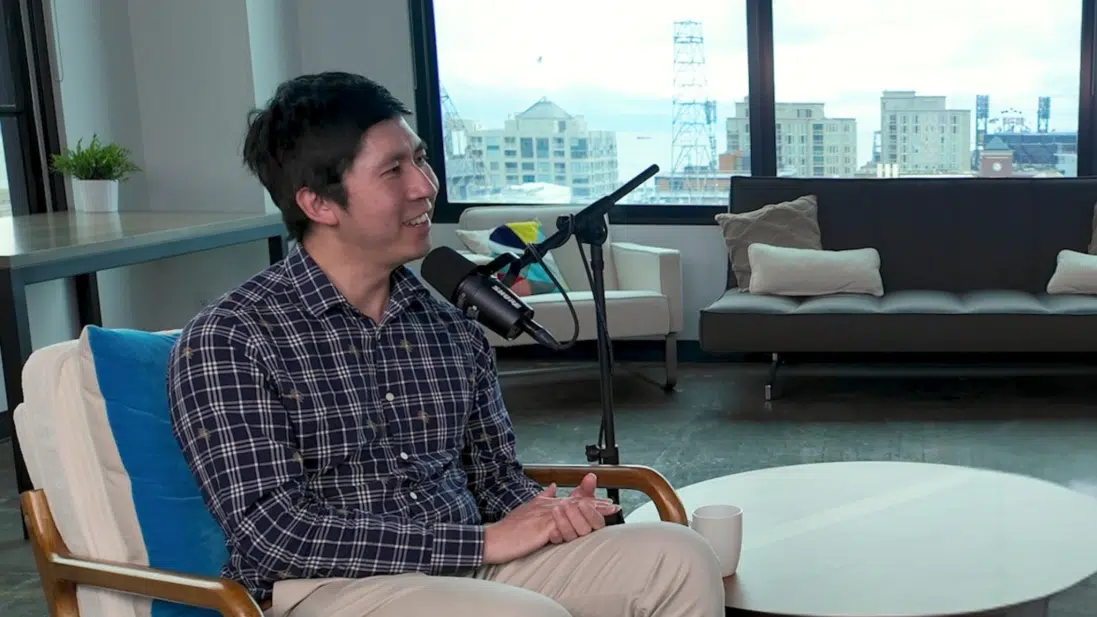
Led by CEO Andrew Dai, a former Google DeepMind researcher, Elorian is developing a system that can repeatedly inspect images and video while reasoning through a problem, rather than relying solely on its initial interpretation.
A Different Approach to Understanding Images
Many multimodal AI models process an image once, convert its contents into tokens and then use that representation to reason about what they have seen. Elorian argues that this can make it difficult for models to investigate visual details they may have missed.
Glimpse takes a more interactive approach. During its reasoning process, the model can return to the original visual material, crop specific areas, extract individual frames from a video, or run code to measure and compare details.
Elorian calls this capability a “visual scratch space.” The idea is similar to a person zooming in on a photograph to verify a detail before drawing a conclusion.
By revisiting the original evidence, the model can investigate objects, symbols and relationships within a scene instead of relying entirely on its first impression.
A Board Game Revealed a Key AI Limitation
For Dai, one example of the limitations of existing AI systems came during a game night with friends.
Last year, he photographed a board game after playing and asked a leading AI model to determine who was winning. The model could not provide the answer.
Dai explained that board games often rely on specialized visual languages, including symbols, icons and arrangements that experienced players can interpret without extensive written instructions.
“To an adult, it’s quite easy to understand what’s going on with minimal text, but these models aren’t able to intuit what the symbols mean,” he told TechCrunch.
He also questioned why AI models struggle with tasks that people can perform by interpreting visual instructions alone, such as assembling furniture from IKEA diagrams without written explanations.
The experience helped illustrate the problem Elorian wants to solve: AI systems need to do more than recognize visual elements. They must also understand how those elements relate to one another and what they mean in context.
A Smaller Model With Ambitious Performance Claims
The idea of allowing AI models to crop and zoom into images during reasoning is not entirely new. OpenAI introduced similar capabilities to its o-series models in 2025.
Elorian’s approach differs in that visual inspection is central to Glimpse’s design rather than simply an additional feature. The company says a small team trained the model using a few hundred GPUs, and that it is substantially smaller than the frontier models used in its comparisons.
According to Elorian’s evaluations, Glimpse outperforms GPT-6 Astra on scientific chart reasoning and short-form video captioning, while delivering competitive results on other visual reasoning tasks. These are company-reported benchmarks, and independent evaluations would help establish how consistently the model performs across real-world applications.
Glimpse Pricing and Access
Glimpse is available as a research preview through an API and chat interface. Its pricing is set at:
- Input tokens: $0.60 per million tokens.
- Output tokens: $3 per million tokens.
According to the reported comparisons, these rates are lower than those of some mid-tier models, including Sonnet and Sol, but higher than the prices of lighter-weight alternatives such as Haiku and Luna.
For businesses that process large volumes of visual data, Glimpse’s ability to inspect images and video during reasoning could offer a useful combination of performance and cost efficiency. Its practical value will depend on the accuracy, speed and expense of using it for specific workloads.
Backed by Major Investors
Elorian emerged from stealth approximately six months ago with a $55 million seed round that valued the company at $300 million before its first product launch.
The funding round was co-led by Striker Venture Partners, Menlo Ventures and Altimeter Capital. Nvidia and Google chief scientist Jeff Dean also participated.
The backing reflects investor interest in AI systems that can interpret complex visual environments, particularly as businesses explore applications beyond text generation and conventional software development.
Targeting Robotics, Research and Creative Industries
Elorian’s initial focus is on organizations that work with substantial amounts of video and visual information.
Potential customers include robotics companies, scientific laboratories, media organizations and creative businesses. These sectors often need AI systems to do more than describe an image. They may need to examine individual frames, interpret charts, identify specific objects or compare details across visual material.
Glimpse’s ability to revisit evidence during reasoning could help address some of these requirements, although its effectiveness will depend on performance in real-world settings.
From Visual Understanding to Physical Action
Elorian’s longer-term ambitions extend beyond helping AI systems interpret what they see. The company wants to develop models that can build an understanding of a scene and use that information to decide what to do next, including controlling robots directly.
This would connect visual perception with decision-making and action, potentially enabling machines to respond more intelligently to changing physical environments.
Dai said the company aims to develop “the world’s best visual reasoning model” next year, with the goal of leading across every visual reasoning benchmark.
If Elorian achieves that objective, Glimpse could become a step toward AI systems capable of more than recognizing objects or describing scenes. The broader ambition is to build models that can investigate visual evidence, understand their surroundings and use that understanding to guide decisions in the real world.