





























Macmillan Publishers reportedly threw a celebratory office party for an artificial intelligence assistant that employees later described as unreliable and largely useless. The experience has added to growing tensions between publishing staff, authors and executives over the industry’s push to adopt AI tools.
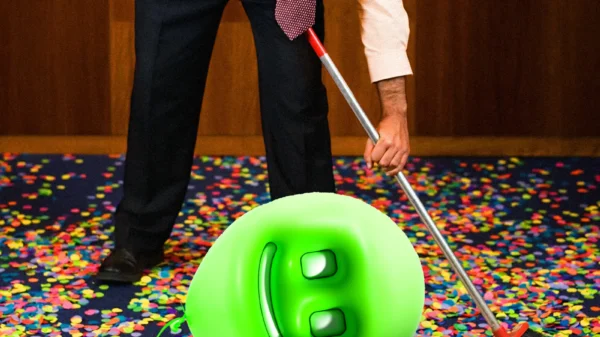
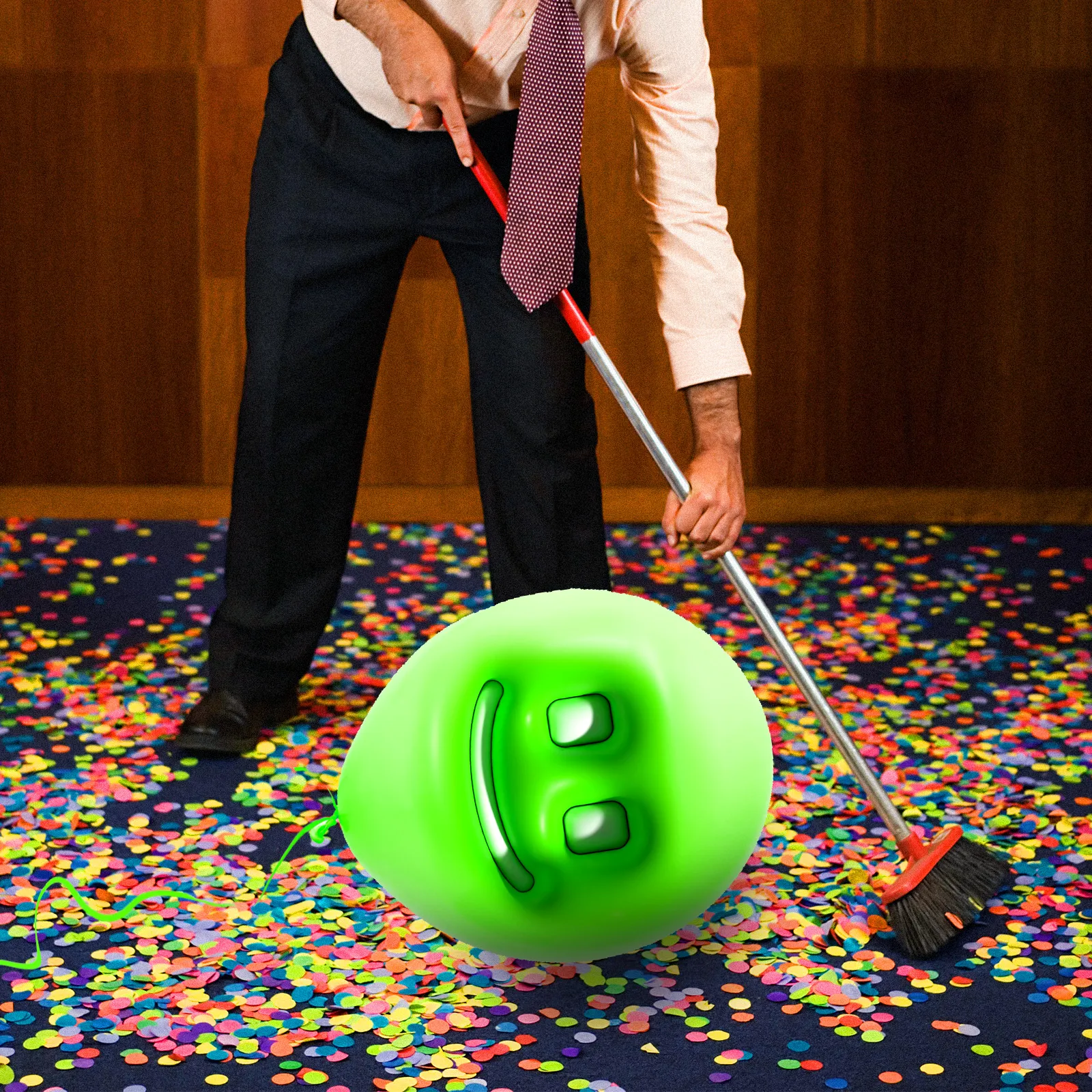
The assistant, called NOA — short for “No Ordinary Assistant” — was introduced in January 2024. According to employees who spoke to WIRED, the launch featured purple balloons, banners, illuminated lettering and doughnuts spelling out “NOA IS HERE” at the publisher’s Lower Manhattan headquarters.
However, several employees reportedly found the assistant’s name insulting, particularly because many of them worked as human assistants themselves. Others said the software failed to deliver meaningful benefits despite management’s encouragement to use it.
An AI assistant that struggled to win over staff
NOA was developed by German software company Chaptr, which is backed by Holtzbrinck, Macmillan’s parent company.
When the tool was introduced, employees were told it offered a secure environment for entering proprietary information without sharing that data with third parties. Staff were also warned during training that the AI could generate inaccurate information, meaning its output needed to be checked by humans.
Despite those cautions, employees were encouraged to use NOA for a range of tasks, including drafting emails, writing marketing copy, researching markets and generating ideas.
Staff were reportedly instructed to enter only a percentage of authors’ manuscripts into the system. The assistant also allowed users to select different writing tones, including lighthearted, sarcastic, pessimistic and regretful.
One employee recalled a Chaptr representative emphasizing the importance of content to publishers during an early training session. The comment prompted the worker to question whether the company fully appreciated its core business: publishing literature.
By later in 2024, Macmillan was even encouraging employees to use NOA to prepare their performance-review goals. One internal email promoted a specialised prompt designed to generate those goals automatically.
Nevertheless, several employees told WIRED that the tool was ineffective and attracted little use. In October 2025, staff received a company-wide email announcing that Chaptr would discontinue NOA.
Google Gemini becomes the next experiment
After NOA’s discontinuation, Macmillan began exploring Google Gemini for business operations.
Some employees reportedly experimented with using Gemini to assess submission letters from literary agents. According to one editor, the resulting evaluations were of little practical value.
Macmillan disputed aspects of the account. Kelly Collins, the company’s vice president of communications and community, said the publisher uses Gemini for business purposes but denied that leadership had instructed staff to use it to evaluate agent submissions or for other parts of the publishing process.
Collins also said the reporting did not accurately reflect how NOA had been introduced and communicated to employees, although she did not specify which details were incorrect when asked by WIRED.
She said Macmillan takes a considered approach to AI, prioritising employee education and keeping people central to its work.
The dispute illustrates a broader challenge facing publishers: executives may view AI as a way to improve productivity, while employees who work directly with manuscripts, authors and marketing materials may find that the tools create additional work or fail to meet professional standards.
Penguin Random House faces similar tensions
Macmillan is not alone in encouraging staff to experiment with AI. Employees at Penguin Random House, the largest of the major US book publishers, have also reportedly been introduced to AI tools despite concerns about their impact on creative work.
Several employees told WIRED that they had participated in learning sessions involving ChatGPT Enterprise but generally avoided using it whenever possible.
One employee said the technology made their job more difficult. Others described receiving mixed messages from management, with some teams encouraged to explore AI while individual managers discouraged its use for tasks such as publicity writing and cover design.
In February, representatives from Hay House, a self-help publisher acquired by Penguin Random House in 2023, presented an internal slide deck describing ChatGPT Enterprise as a core tool for productivity, creativity and collaboration. The presentation identified idea generation, content development and storytelling innovation as potential sources of value.
Penguin Random House said its approach was guided by safeguards intended to protect authors’ and the company’s intellectual property while preserving human creativity and professional judgment.
The publisher also said its individual publishing groups and imprints could decide whether AI was appropriate for particular activities, including marketing, publicity and design.
The situation creates an apparent contradiction for the industry. Some major publishers are exploring AI internally while also pursuing legal action against AI companies over alleged copyright infringement. Macmillan, Hachette and Penguin Random House’s German-language division are among those involved in such disputes.
Bestselling authors say trust is breaking down
The tension extends beyond employees to the authors whose books underpin the publishing business.
Several bestselling writers interviewed by WIRED said their relationships with major publishers had deteriorated over the past year because of concerns about AI. Collectively, the authors interviewed had sold more than 30 million books.
One author said they received marketing material containing fabricated quotations attributed to their book. The author alleged that the publisher insisted the material had not been generated by AI, leaving them feeling that their concerns were being dismissed.
Another writer said that during contract negotiations, they could not persuade any of the major publishers to guarantee that AI would never be used in connection with their books.
For these authors, the issue is not simply whether a machine can produce acceptable copy. It is whether publishers are being transparent about how their work is handled and whether they remain committed to the editorial expertise and personal relationships that traditional publishing is supposed to provide.
Some authors also question the economics of publishers adopting AI while seeking compensation from technology companies for the alleged unauthorised use of copyrighted material.
Cost-cutting and staff reductions have intensified those concerns. Authors told WIRED that some editors appear to have less time to read manuscripts carefully, while AI-generated marketing descriptions sometimes bear little resemblance to the books they are meant to promote.
Other writers and literary agents said editors had asked them to prepare their own revision plans because of limited staff capacity.
Authors consider leaving traditional publishing
The growing frustration is leading some established writers to consider self-publishing future work.
Several authors say that, at a minimum, they want publishers to disclose when AI is used and explain what role it plays in the production and promotion of their books. Others believe publishers should establish shared principles governing the technology.
Author Mo Ryan, whose book Burn It Down: Power, Complicity, and a Call for Change in Hollywood was published by HarperCollins, expressed renewed interest in self-publishing in a post on Bluesky.
Science-fiction writer John Scalzi also criticised the use of AI-generated publicity. Scalzi, who signed a 10-book deal with Macmillan’s Tor Publishing Group in 2024, argued that AI-generated promotional material could damage a book’s prospects rather than help it.
For authors who already have substantial audiences, the appeal of traditional publishing may be diminishing if they believe publishers are outsourcing important parts of their work to machines.
Fantasy author Brandon Sanderson offers one example of an established writer pursuing an alternative model. Although he publishes some novels through Macmillan’s Tor Books, he raised more than $15 million through Kickstarter in 2022 to publish four books independently.
His success demonstrates that some authors can mobilise their readership directly, potentially reducing their dependence on traditional publishing companies.
Could AI make publishers less relevant?
The debate ultimately raises a difficult question about what publishers contribute beyond printing and distributing books.
Authors have long depended on editors, publicists, designers and marketing teams to help refine and promote their work. If those services become less personal or are increasingly delegated to AI systems, writers may begin to question whether the financial and contractual trade-offs of traditional publishing remain worthwhile.
One bestselling author interviewed by WIRED argued that publishers risk making both authors and themselves less relevant by trying to automate too much of the creative process.
For now, publishers maintain that AI can support their operations while human expertise remains essential. But the reported experiences at Macmillan and Penguin Random House suggest that introducing these systems is not simply a technological decision. It also affects workplace morale, intellectual-property concerns and the trust that connects authors with their publishers.
The collapse of NOA’s experiment offers a cautionary example: an AI tool may receive an elaborate launch and strong institutional backing, yet still struggle to earn the confidence of the people expected to use it.