






























Your computer memory is safe for now, but the growing demand from AI data centres, robotics and autonomous vehicles could make the global shortage even more severe.
Sam Altman has sparked controversy with comments suggesting that consumers do not deserve to use DRAM when it sits idle for much of the time. The OpenAI CEO reportedly argued that conventional users utilise their memory only around “5% of the time,” suggesting that supplies would be better allocated to data centres, where they could support cloud computing and AI workloads.
From Altman’s perspective, prioritising AI infrastructure could deliver greater efficiency, productivity and convenience for society. But for PC owners and gamers already struggling with rising memory prices, that argument is unlikely to be reassuring.
There is also an uncomfortable detail behind the debate: the AI industry has played a significant role in creating the very supply pressures now affecting consumers.
Did OpenAI help create the RAM shortage?
When OpenAI announced its Stargate data centre expansion in early 2025, estimates suggested the project could require as much as 40% of the world’s global supply of memory.
The situation was made worse by production cutbacks among major memory manufacturers. Several leading producers had reduced output in the preceding years in an effort to stabilise prices, leaving the market less prepared for the sudden increase in demand.
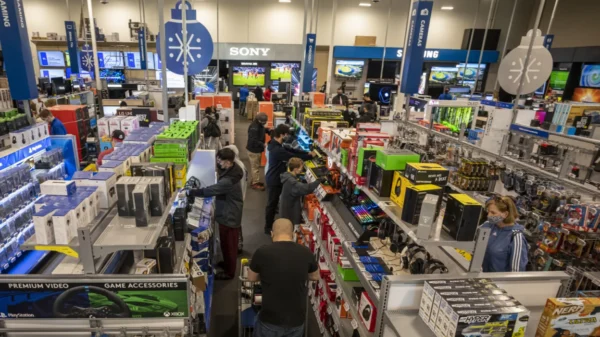
Now, with AI companies competing for increasingly limited supplies, ordinary consumers are feeling the consequences.
Is Sam Altman really going to steal your RAM?
Fortunately, there is little chance of Sam Altman personally turning up at your home to take memory out of your computer.
One Reddit user put the concern in rather dramatic terms by asking Google AI: “Is Sam Altman going to break into my house and steal my RAM?”
Google’s response was reassuring: “No, Sam Altman is not going to break into your house to physically steal your RAM.”
While your existing memory is safe, the wider supply situation is a different story. Several developments in the technology industry could make it increasingly difficult for consumers to find affordable RAM.
The shortage could continue until 2030
One of the world’s largest memory manufacturers, SK Hynix, has warned that the supply shortage could persist through 2030. That prediction suggests consumers may have to wait years before memory prices return to more affordable levels.
The expected public-market debuts of OpenAI and Anthropic within that period could add another layer of uncertainty. The companies controlling approximately 90% of global memory supply will have to decide how to allocate production as demand continues to shift.
Given the substantial revenue opportunities in the AI sector compared with the consumer memory market, manufacturers may increasingly prioritise high-bandwidth memory (HBM). This specialised technology is essential for AI training and inference, potentially leaving less production capacity for conventional PC memory.
AI’s impact on employment could further change demand
The pressure may not come exclusively from data centres. AI’s growing influence on the job market could also affect the balance between consumer and commercial memory demand.
Several companies have introduced hiring freezes as they adopt AI systems to automate repetitive tasks. If unemployment rises and fewer positions become available, consumer spending on computers and memory upgrades could weaken.
That could give manufacturers another reason to direct more of their production towards AI infrastructure rather than the traditional PC market.
Robots and autonomous vehicles are the next threat
The robotics industry is expanding rapidly, with developments ranging from humanoid robots competing in dedicated sporting events to fleets of compact machines operating inside warehouses.
As AI advances and robotics technology improves, machines could gain increasingly sophisticated motor control and become useful across manufacturing, hospitality and logistics. Businesses may see them as an attractive alternative to human labour because robots can operate continuously without needing rest.
Autonomous taxis and self-driving cargo trucks are also part of this emerging market.
However, all these machines need memory to power their AI systems. As robots and autonomous vehicles become more advanced, their demand for computing resources could add another source of pressure to an already strained supply chain.
For memory manufacturers, supplying large corporate customers and AI developers may prove considerably more profitable than expanding production for everyday consumers.
That leaves PC builders, gamers and anyone planning a computer upgrade facing an uncertain future. Even if the current shortage eventually eases, the growing memory requirements of AI, robotics and autonomous transportation could keep demand high for years to come.