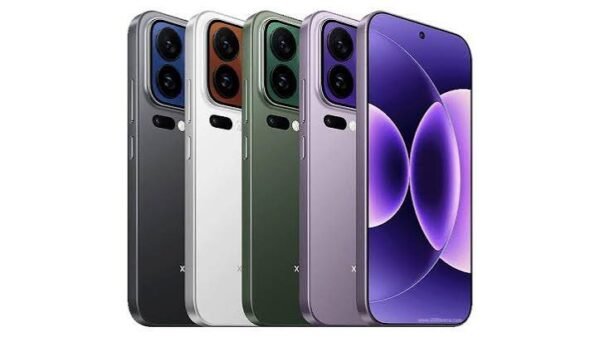

























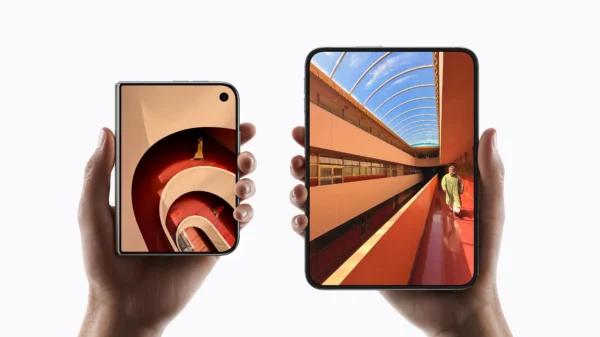




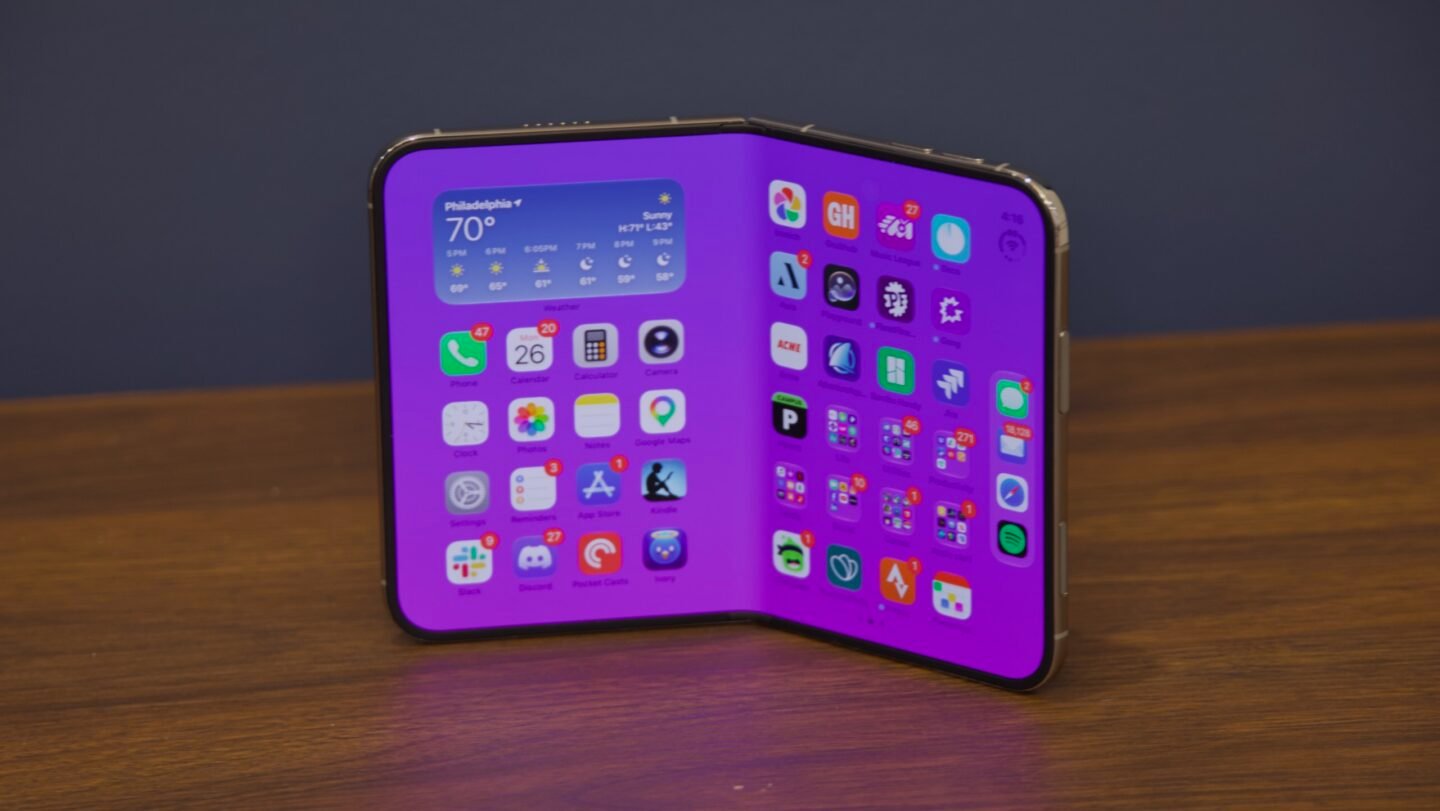
Apple’s first foldable iPhone, the iPhone Duo, promises to combine the convenience of a smartphone with the larger display of a tablet. Priced from $1,999, the device introduces a dramatic redesign of both the iPhone’s hardware and its software, creating a new way to interact with apps, multitask, and consume content.
The concept is appealing, but the execution is not without problems. While Apple has made impressive progress in reducing the visible crease that has plagued many foldable Android phones, the Duo’s bulky design, awkward controls, and lack of Face ID make it less enjoyable to use as a conventional smartphone.
Unfold it, however, and the story changes. The larger display transforms the Duo into a surprisingly capable miniature tablet, offering a more comfortable experience for reading, watching videos, and running two apps side by side.
The result is a technically impressive device that excels in tablet mode but struggles to justify its premium price as an everyday phone.
A Foldable iPhone That Takes Getting Used To
Foldable phones offer an obvious advantage: they allow manufacturers to expand screen sizes without creating devices that are impossible to carry in a pocket. Yet visible creases, bulky designs, and concerns about durability have made the category less appealing to some consumers.
Apple’s iPhone Duo attempts to address these issues. Its hinge feels solid, and the crease between the two halves of the display is so subtle that it rarely becomes distracting during normal use.
Nevertheless, the Duo introduces a learning curve that conventional iPhones largely avoid. Its unusual proportions, changing screen orientation, and relocated controls require users to adjust habits developed over years of using traditional smartphones.
When folded, the Duo has a shorter, wider screen and a compact footprint. Its titanium frame resembles Apple’s iPhone Air, while the camera section is protected by Ceramic Shield glass.
The design looks premium, but the phone can feel squat and cramped beside a conventional iPhone. It is also thick and heavy enough to make prolonged one-handed use tiring.
Goodbye Face ID, Hello Touch ID
One of the most significant changes is the removal of Face ID. Instead, Apple has integrated Touch ID into the power button, following an approach previously used on its iPads.
The arrangement works, but its position can make unlocking the phone awkward, particularly when using it with one hand. The power button sits on the right edge when the phone is folded, while the volume controls occupy the top edge.
The Duo also retains a dedicated Camera Control button rather than offering the customizable Action Button available on some other iPhones.
These decisions make the hardware feel as though it has been designed around the physical limitations of the folding mechanism rather than everyday ergonomics.

Apple’s rumoured $1,999 iPhone Duo introduces a different way to experience the iPhone, combining the convenience of a compact smartphone with the larger display of a tablet. But while its foldable design opens up new possibilities, the experience comes with a few compromises.
The crease is still noticeable

One of the biggest challenges with foldable phones is the visible crease running down the middle of the internal display. It can affect the viewing experience, particularly when looking at content against bright backgrounds or viewing the screen from certain angles.
The folding design also changes how the phone feels in everyday use. In its compact mode, the device is designed to function like a regular smartphone, although its unusual proportions can make some tasks feel less natural.
A different experience in phone mode

Using the iPhone Duo as a conventional phone comes with some compromises. The navigation layout, for example, may feel awkward for left-handed users because important controls are positioned towards the right side of the screen.
The device also reportedly lacks both Face ID and a fingerprint reader built into the power button. That could make unlocking the phone and authenticating certain actions less convenient than on existing iPhone models.
Unfold it for a bigger display

The experience improves when the phone is opened. Its 7.6-inch internal display provides considerably more room for browsing, reading, watching videos and working with apps.
The larger screen makes the device feel closer to a small tablet, offering more space for content without requiring users to carry a separate device. A matte nano-texture finish is another notable feature, intended to improve the viewing experience by reducing reflections.
Multitasking gets more room

The expanded display also makes multitasking more practical. Users can place apps side by side, making it easier to move between tasks without repeatedly switching screens.
For people who read documents while taking notes, browse the web while messaging, or manage several tasks at once, the additional screen space could be one of the phone’s biggest advantages.
More than one way to fold

The flexible design allows the device to be positioned in several ways beyond simply opening or closing it. It can be partially folded into different configurations, including a tent-like position, a bent-tablet setup or a laptop-style arrangement.
These positions could prove useful for watching videos, making video calls or viewing content hands-free. They also highlight the central appeal of foldable phones: one device can adapt to different situations.
Is the iPhone Duo worth the compromise?
The iPhone Duo’s appeal lies in its ability to combine a phone and a larger-screen device in one package. Its expansive display and multitasking capabilities could make it attractive to users who want more flexibility from their smartphone.
However, the visible crease, unconventional phone-mode ergonomics and reported omissions of familiar biometric features may give some buyers pause. At a reported starting price of $1,999, the device would need to deliver a consistently useful experience in both folded and unfolded modes to justify its premium positioning.