
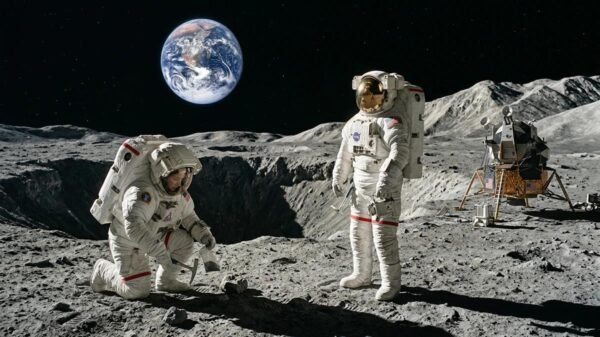




































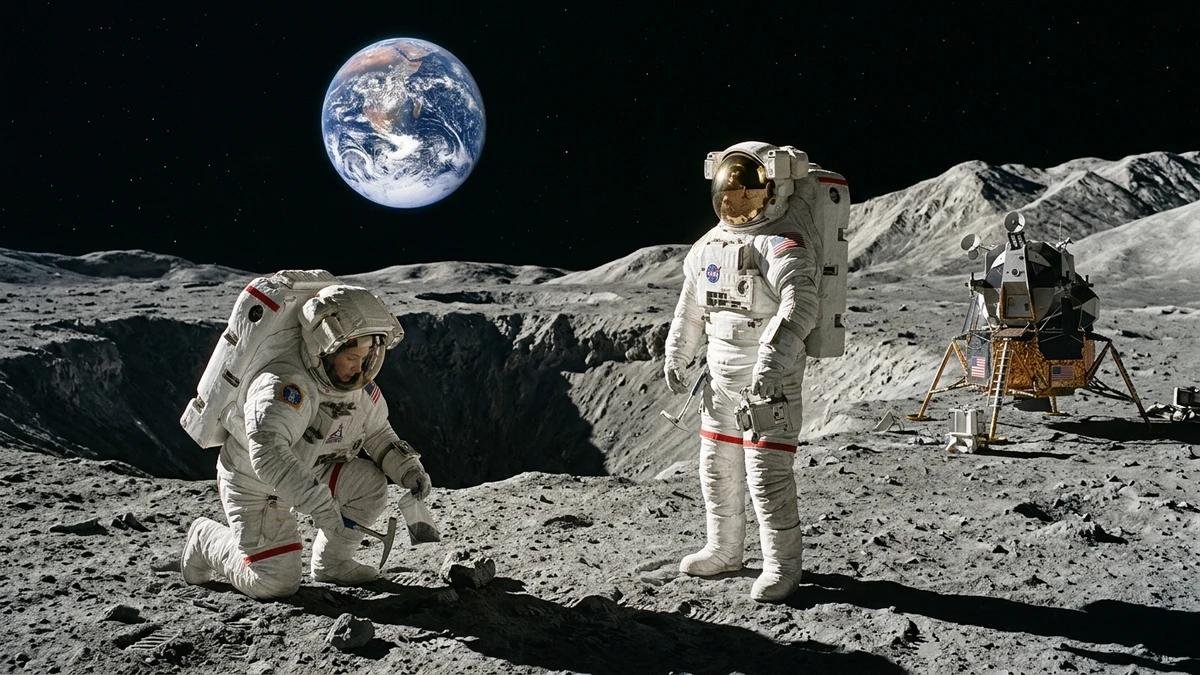
NASA has unveiled major changes to its Artemis lunar exploration program as it works toward returning astronauts to the Moon by 2028. The revised strategy aims to simplify mission operations, help commercial partners accelerate development and address a long-standing limitation in the Orion spacecraft’s ability to reach low lunar orbit.
During a news conference on October 23, NASA officials explained how the agency plans to coordinate its Orion spacecraft with lunar landers developed by SpaceX and Blue Origin.
Under the updated approach, Orion would dock with SpaceX’s Starship lander in high-Earth orbit before heading toward the Moon. Blue Origin’s plan would rely on four launches of its New Glenn rocket without requiring spacecraft-to-spacecraft refueling.
NASA continues to target summer 2027 for Artemis III, a demonstration mission involving Orion, Starship and Blue Moon near Earth. Artemis IV, which is intended to include a crewed lunar landing, remains targeted for 2028.
NASA Administrator Jared Isaacman expressed confidence in the revised plans, saying the agency has the mandate, resources and stakeholder support required to move forward. However, significant technical challenges remain, and meeting the proposed deadlines is not guaranteed.
SpaceX’s Starship Plan Gets a New Mission Architecture

One of the biggest changes concerns SpaceX’s Starship lunar lander. The updated plan calls for Starship to be refueled in low-Earth orbit before docking with Orion in high-Earth orbit.
The astronauts would then travel toward the Moon aboard Orion. Two of the four crew members would transfer to Starship for the descent to the lunar surface.
Previously, SpaceX had been expected to dock Starship with Orion in a near-rectilinear halo orbit around the Moon. That arrangement created additional energy requirements and technical complications. NASA’s cancellation of the Lunar Gateway earlier in 2026 helped remove the requirement.
However, orbital refueling remains one of the biggest uncertainties facing Starship.
A NASA safety panel recently estimated that approximately 22 tanker launches might be needed to supply enough propellant for a lunar mission. SpaceX founder Elon Musk disputed that estimate, suggesting the actual number could be six to eight launches.
NASA officials declined to confirm a precise figure, explaining that several factors remain uncertain, including Starship’s lifting capacity, the amount of liquid methane and oxygen lost through boil-off, and the efficiency of transferring propellant between spacecraft.
Isaacman described Musk’s estimate of six to eight launches as possible, but said it represented Starship’s “ultimate potential end state.”
That distinction matters: the lower figure is a potential future capability, not a confirmed requirement for upcoming missions.
Blue Origin Simplifies Its Moon Landing Strategy

Blue Origin has also redesigned its lunar mission architecture in response to NASA’s request for a faster route to the Moon.
The revised plan removes the need for spacecraft-to-spacecraft refueling during the initial missions. Instead, it relies on four launches of the company’s New Glenn rocket.
Three modified transfer stages would first be launched into low-Earth orbit. Based on Blue Origin’s Blue Moon Mark 1 lander design, these stages would help propel the lunar mission toward the Moon.
A subsequent New Glenn launch would carry the Blue Moon Mark 2 lander into orbit. The lander would rendezvous with the transfer stages before the combined spacecraft continued toward the Moon.
NASA also revealed a potentially important change to where Blue Moon could meet Orion.
The current plan shows the spacecraft docking in an elliptical lunar orbit approximately 8,500 kilometres above the Moon. However, NASA is working to preserve the option of docking in low-lunar orbit, only a few hundred kilometres above the surface.
According to Jeremy Parsons, NASA’s Artemis program manager, the lower orbit could reduce the propellant required to transport astronauts to the lunar surface and return them to orbit. The resulting weight savings could be used for other mission needs.
A lower orbit could also create more frequent and faster opportunities for astronauts to leave the lunar surface if an emergency required them to depart.
NASA Finally Addresses Orion’s Low-Orbit Limitation

One of the most significant announcements was NASA’s plan to work with United Launch Alliance on an extended version of the Centaur V upper stage.
Working alongside the core stage of NASA’s Space Launch System rocket, the upgraded upper stage would help Orion reach low-lunar orbit.
The development addresses a long-standing limitation in Orion’s propulsion capabilities. Its current service module does not provide enough performance for the spacecraft to travel from Earth to low-lunar orbit and return safely to Earth for a Pacific Ocean splashdown.
NASA previously relied on alternative mission designs, including the Lunar Gateway’s planned near-rectilinear halo orbit, which Orion could reach more easily. That approach placed additional demands on the lunar landers and the companies responsible for developing them.
The extended Centaur V could give NASA more flexibility by bringing Orion closer to the Moon and reducing some of the technical burden on its landing partners.
Isaacman said the agency was reviewing where its commercial partners were struggling and making changes to help them meet the schedule.
The revised approach reflects a broader effort to adapt the mission architecture to the capabilities of the spacecraft being developed, rather than expecting every partner to meet the original requirements without changes.
Can NASA Still Land Astronauts on the Moon by 2028?

Despite the revisions, NASA is maintaining its ambitious timeline.
Artemis III is still targeted for summer 2027, with a demonstration involving Orion, Starship and Blue Moon near Earth. Artemis IV remains scheduled for launch in 2028 and is intended to deliver astronauts to the lunar surface.
The revised architecture could make the missions more manageable, but several challenges remain:
-
SpaceX: Demonstrating reliable orbital refueling and establishing how many tanker launches Starship will require.
-
Blue Origin: Coordinating multiple New Glenn launches, transfer stages and the Blue Moon lander.
-
NASA and ULA: Developing and integrating the extended Centaur V upper stage so Orion can reach low-lunar orbit.
-
The overall program: Completing testing and integration quickly enough to maintain the planned launch schedule.
Each component must work as part of a complex mission involving multiple spacecraft, propulsion systems and launch operations. Delays in any major element could affect the broader timetable.
A More Flexible Path Back to the Moon

NASA’s latest changes show an effort to make the Artemis program more practical by reducing unnecessary complexity and giving its commercial partners greater flexibility.
The decision to develop an extended Centaur V upper stage is particularly important because it could help Orion reach lower lunar orbits, potentially making lunar landing operations easier for both SpaceX and Blue Origin.
Nevertheless, a revised plan is not the same as a completed capability. Orbital refueling, spacecraft integration and lander development remain demanding engineering tasks, and the 2028 target will depend on how quickly those challenges are resolved.
NASA has reaffirmed its goal of returning astronauts to the Moon by 2028, but the real test will be whether the revised mission designs translate into flight-ready hardware on schedule.