


























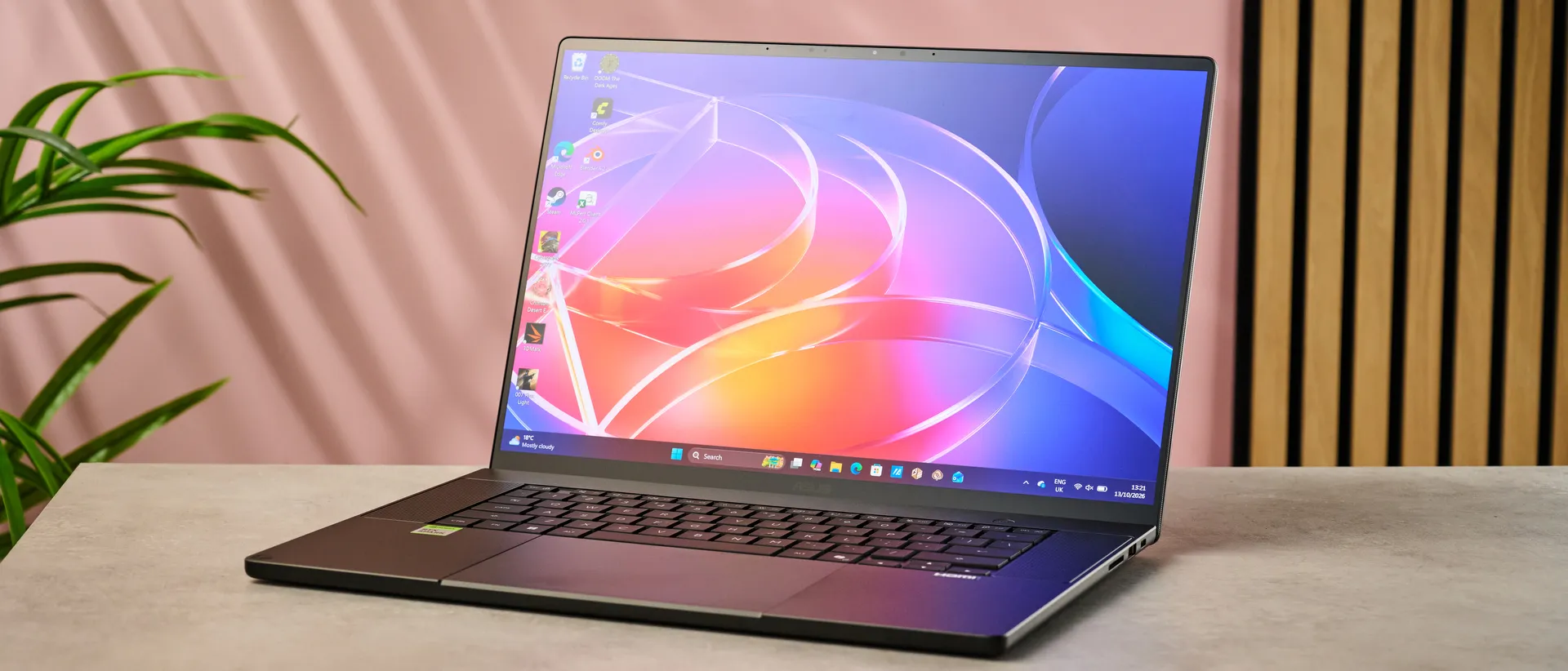
Asus is pushing the boundaries of what a portable workstation can do with the ProArt P16 RTX Spark, a premium laptop designed to combine artificial intelligence, creative production and gaming in one compact package.
Powered by Nvidia’s RTX Spark N1X system-on-a-chip, the laptop brings together a 20-core ARM CPU, a 6,144-core CUDA GPU and 64GB of RAM in its base configuration. The result is a versatile machine capable of handling demanding creative projects, running AI agents locally and delivering smooth gaming performance.
However, with prices starting at $4,399.99, this all-in-one approach comes at a considerable cost.
A Premium Design With a Stunning OLED Display
The ProArt P16 RTX Spark makes a strong first impression with its 16-inch OLED touchscreen. The base model features a 3K resolution of 2,880 × 1,800 pixels, a 120Hz variable refresh rate and peak brightness of 1,100 nits. Its full DCI-P3 color coverage also helps produce rich, vibrant colors suited to photography, video editing and digital artwork.
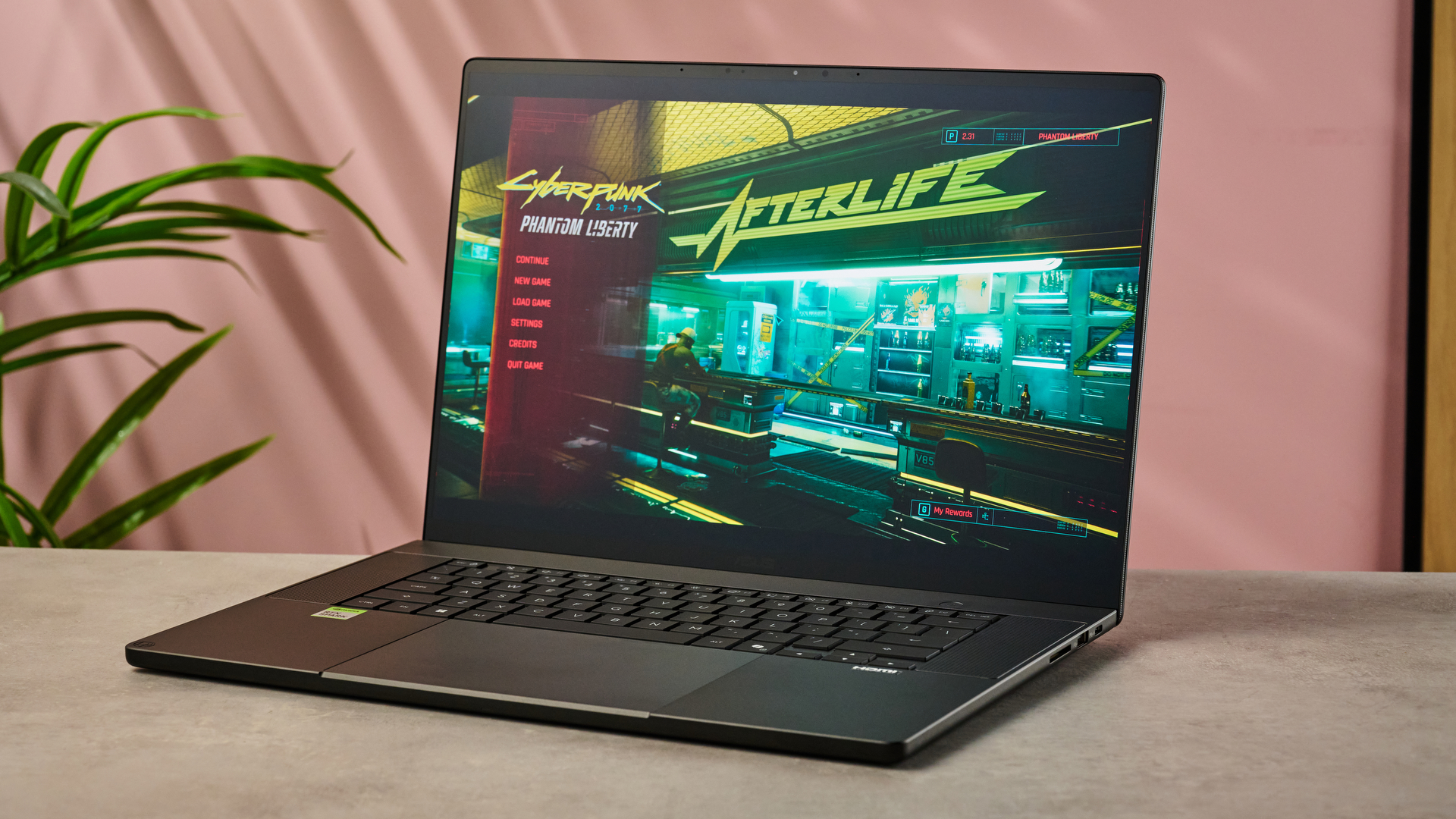
The laptop’s metal construction gives it a premium feel, while its slim profile and 1.77kg weight make it relatively portable for a powerful 16-inch machine. It is available in Nano Black and Neo White, with the tested black version offering a particularly understated appearance.
The keyboard is comfortable for extended typing sessions, although its limited key travel and unusual dual Enter-key layout may take some getting used to. The large haptic trackpad is accurate and responsive, but its right-click area can trigger too easily.
One notable weakness is the display hinge, which has more movement than expected from a laptop in this price category.
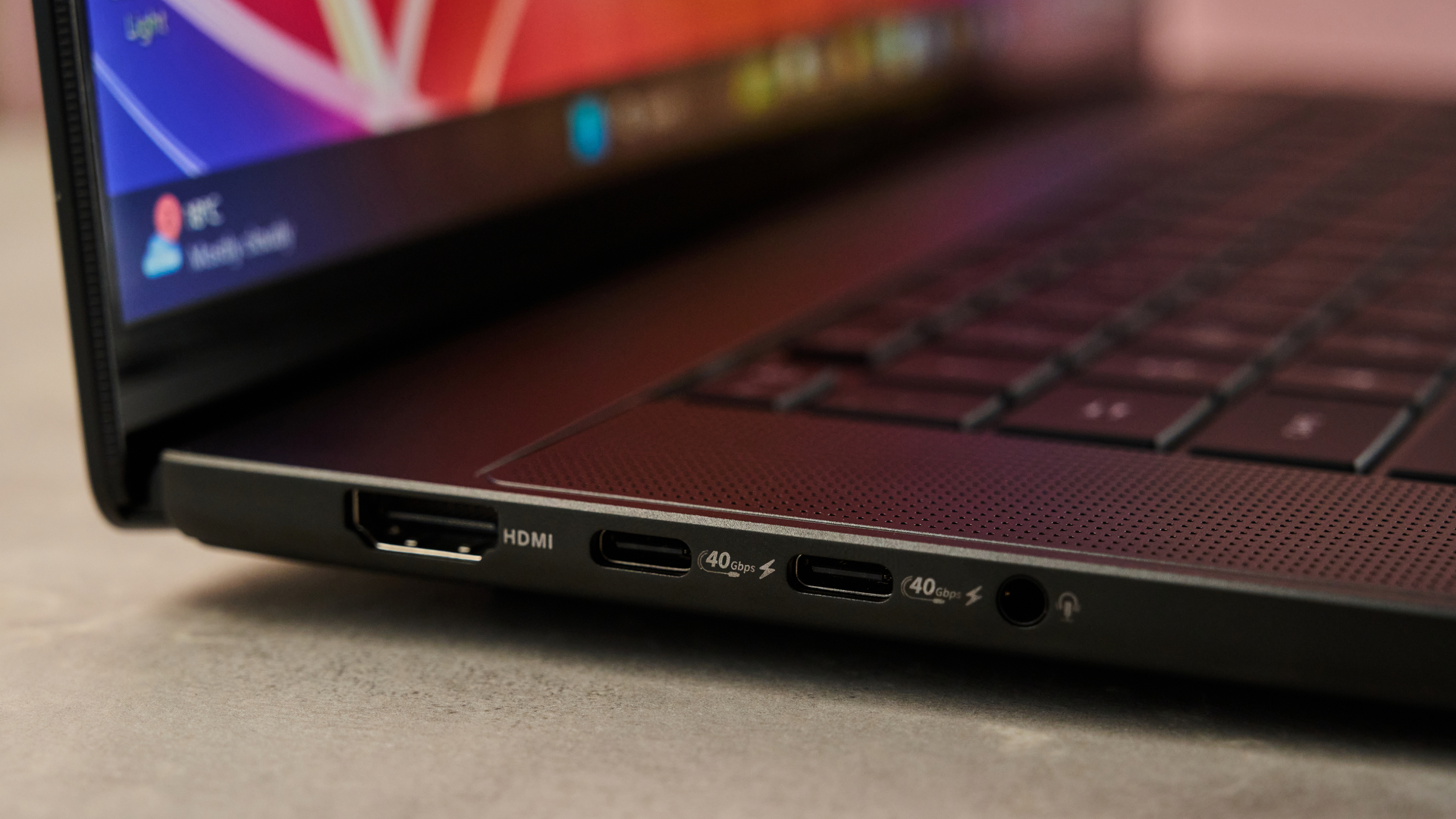
Connectivity is another strength. The laptop includes three USB-C ports, a standard USB port, HDMI 2.1, a 3.5mm audio jack and an SD Express 7.0 card reader. Wi-Fi 7 and Bluetooth 5.4 are also supported.
Nvidia’s RTX Spark Chip Powers Local AI Workflows
The laptop’s defining feature is its Nvidia RTX Spark N1X chip, which integrates the CPU, GPU and memory into a single system-on-a-chip architecture.
The tested configuration combines 20 ARM CPU cores with 6,144 CUDA GPU cores and 64GB of RAM, alongside 30GB of integrated memory for graphics and related workloads.
One of its most compelling applications is hybrid AI computing. Users can combine local AI models with cloud-based services, allowing selected tasks to run directly on the laptop while more demanding workflows can be delegated to online models.
This approach can help users retain greater control over sensitive information while benefiting from the additional capabilities of cloud computing.
In testing with local open-source AI models, the laptop handled basic data-analysis tasks reasonably quickly. Using an AI agent to organize web analytics into a pivot table and summarize key findings took approximately 12 minutes. Turning the information into a presentation took around 23 minutes, although the resulting slides needed further refinement.
More complex automation proved less straightforward. Creating an AI workflow to access emails and produce a daily digest took about 70 minutes, while automating benchmarking tasks required several attempts before the process became significantly more efficient.
These results demonstrate the potential of local AI agents, but they also highlight an important limitation: configuring and refining sophisticated workflows can consume considerable time.
The laptop also performed well in generative AI testing. Using ComfyUI, it completed selected image-generation model tests in 46.5 seconds and 16.2 seconds, while a video-generation test took 88 seconds.
Strong Performance for Photoshop and Video Editing
Creative professionals are another major audience for the ProArt P16 RTX Spark.
In benchmark testing, the laptop delivered competitive results in Adobe Photoshop and Premiere Pro workflows. Its Photoshop benchmark score reached 11,801, compared with 13,755 for the Apple M5 reference system. In Premiere Pro, however, the Asus achieved 76,234, outperforming the M5’s 69,887.
The laptop could not match the more powerful MacBook Pro M5 Pro, which scored 15,204 in Photoshop and 105,580 in Premiere Pro.
Real-world testing nevertheless demonstrated the Asus machine’s capabilities. A demanding 4K Photoshop document at 300dpi, containing numerous clipping masks and adjustment layers, ran smoothly. Applying filters and working with generative fills caused little noticeable slowdown, while reducing a file larger than 2GB to 2K resolution took approximately five seconds.
For creators who regularly work with large images, complex compositions and video projects, the ProArt P16 RTX Spark offers substantial processing power in a relatively lightweight design.
Gaming Performance Is Impressive, but Not Class-Leading
Nvidia’s graphics expertise gives the ProArt P16 RTX Spark a significant advantage over many productivity-focused laptops.
The machine can deliver smooth gaming performance, although its results generally place it closer to midrange gaming laptops than to systems equipped with Nvidia’s most powerful discrete GPUs.
In testing, Cyberpunk 2077 running at 1080p with Ultra ray-tracing settings averaged approximately 30 frames per second. On Medium ray-tracing settings, performance improved to a stable 60fps.
Doom: The Dark Ages ran at around 48fps on Ultra settings, while Gears of War: E-day exceeded 110fps in the reviewer’s testing.
These figures suggest that the laptop is capable of delivering enjoyable gaming experiences, particularly when settings are adjusted to suit the workload. However, buyers seeking the highest possible frame rates may get better results from dedicated gaming laptops with more powerful discrete graphics cards.
The key selling point is versatility: rather than excelling exclusively at gaming, the ProArt P16 RTX Spark balances gaming with AI computing and professional creative work.
Battery Life Can Last Through a Working Day
The laptop’s 99.9Wh battery delivers respectable endurance, although it falls short of some leading rivals.
During a continuous 1080p video playback test at 50% brightness and volume, the ProArt P16 RTX Spark lasted 11 hours and 23 minutes. In a productivity-focused PCMark 10 battery test, it reached 14 hours and 24 minutes.
That should be enough for a typical working day, especially for users focused on office applications, browsing and lighter creative tasks. More demanding AI workloads and gaming sessions will consume power more quickly.
The MacBook Pro M5 Pro lasted more than 21 hours in comparable testing, while the Samsung Galaxy Book6 Ultra also exceeded 15 hours in the reviewer’s battery benchmarks.
Asus includes support for 140W fast charging, which should help reduce downtime when the battery runs low.
(Image credit: Future)
Asus ProArt P16 RTX Spark: Price and Specifications
The laptop launched on October 9, 2026, and is available in two main configurations.
| Specification | Base model | High-end model |
|---|---|---|
| Price | $4,399.99 / £3,899.99 / AU$7,999 | $6,999.99 / £5,999.99 / AU$10,999 |
| Processor | Nvidia RTX Spark N1X, 20-core CPU | Nvidia RTX Spark N1X, 20-core CPU |
| Graphics | Nvidia Blackwell, 6,144 CUDA cores | Nvidia Blackwell, 6,144 CUDA cores |
| RAM | 64GB | 128GB |
| Storage | 1TB SSD | 2TB SSD |
| Display | 16-inch 3K OLED, 120Hz, 1,100 nits | 16-inch 4K OLED, 120Hz, 1,600 nits |
| Battery | 99.9Wh | 99.9Wh |
| Weight | 1.77kg | 1.77kg |
The base configuration already sits firmly in the premium laptop market. The higher-end version, with 128GB of RAM, a 4K OLED display and 2TB of storage, raises the price to nearly $7,000.
At these prices, buyers should carefully consider whether they need the machine’s combination of AI, creative and gaming capabilities or whether a more specialized laptop would offer better value.
How It Compares With the Competition
The Asus ProArt P16 RTX Spark competes with several high-end laptops, including Apple’s MacBook Pro M5 Pro and Samsung’s Galaxy Book6 Ultra.
The MacBook Pro M5 Pro is a particularly strong alternative for professional creators. It delivers better performance in the reviewer’s Photoshop and Premiere Pro benchmarks, along with substantially longer battery life. However, the Asus offers a stronger gaming proposition and is designed around Nvidia’s hybrid AI capabilities.
For gaming-focused buyers, the Asus Zephyrus G16 2026 is another option. Its dedicated GeForce RTX 5080 GPU delivers stronger gaming performance, although it does not offer the same integrated AI-focused approach.
The Samsung Galaxy Book6 Ultra, equipped with a GeForce RTX 5070, also outperformed the ProArt in some gaming tests and delivered longer battery life.
Ultimately, the best choice depends on whether the priority is professional creativity, gaming, AI development or a mixture of all three.
(Image credit: Future)
Verdict: A Versatile Powerhouse With a Premium Price
The Asus ProArt P16 RTX Spark earns praise for its gorgeous OLED screen, portable design and ability to handle an unusually broad range of demanding tasks. Its Nvidia chip makes local AI experimentation practical, while its strong Photoshop, video-editing and gaming performance gives it considerable flexibility.
Its weaknesses are equally clear. The hinge could be sturdier, the trackpad’s right-click behavior needs refinement, and battery life is good rather than exceptional. Most importantly, the price is difficult to justify for buyers who only need top-tier performance in one area.
The review awarded the laptop an overall score of 4 out of 5, with performance rated 4.5/5, design 4/5, battery life 4/5 and value 2.5/5.
Buy it if: You want one portable laptop for local AI agents, creative production and gaming, without carrying separate machines for each task.
Skip it if: You need the best possible gaming or creative performance for your money, or if your budget cannot comfortably accommodate its high starting price.
The ProArt P16 RTX Spark is best understood as a versatile all-rounder rather than a category leader. For users who genuinely need its combination of capabilities, it could be a compelling workstation. For everyone else, a more specialized laptop may deliver better performance per dollar.