

































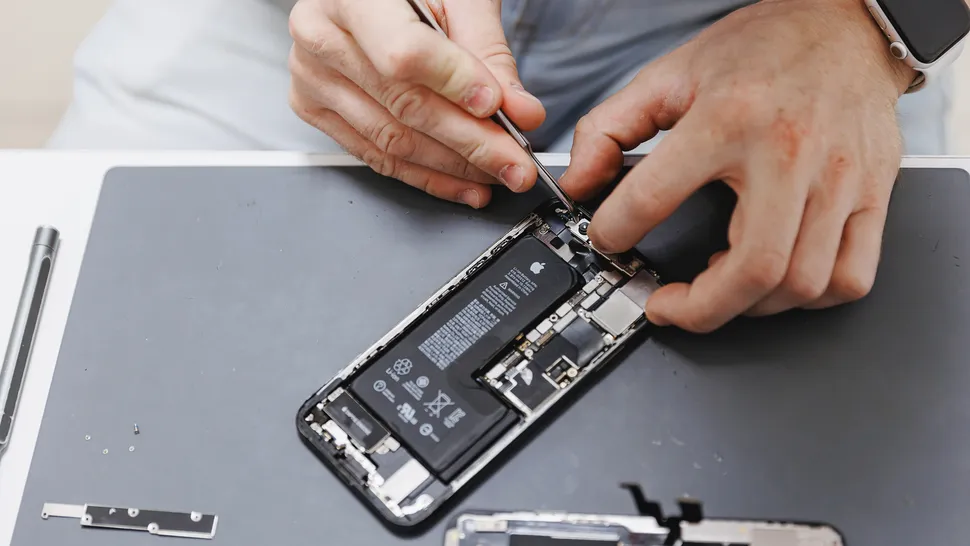
More than a year after Europe introduced tougher repairability requirements, access to spare parts and repair guides is improving. But high repair costs, difficult designs and gaps in compliance continue to stand in the way.
Repairing an ageing smartphone or laptop instead of replacing it has long been a priority for environmentally conscious consumers and technology enthusiasts. In June 2025, the European Union took a significant step towards that goal by introducing new Ecodesign requirements for smartphones and certain tablets.
The regulations place new responsibilities on manufacturers, covering spare-part availability, repair documentation and device design. Although laptops are not included in these specific rules, they are subject to other EU regulations.
More than a year later, the results are beginning to show. Consumers have better access to replacement components and repair information, but significant questions remain about how difficult and expensive it is to fix everyday devices.
To understand how much progress has been made, TechRadar spoke with experts from the European Consumer Organisation (BEUC), repair advocacy group iFixit and research firm IDC.
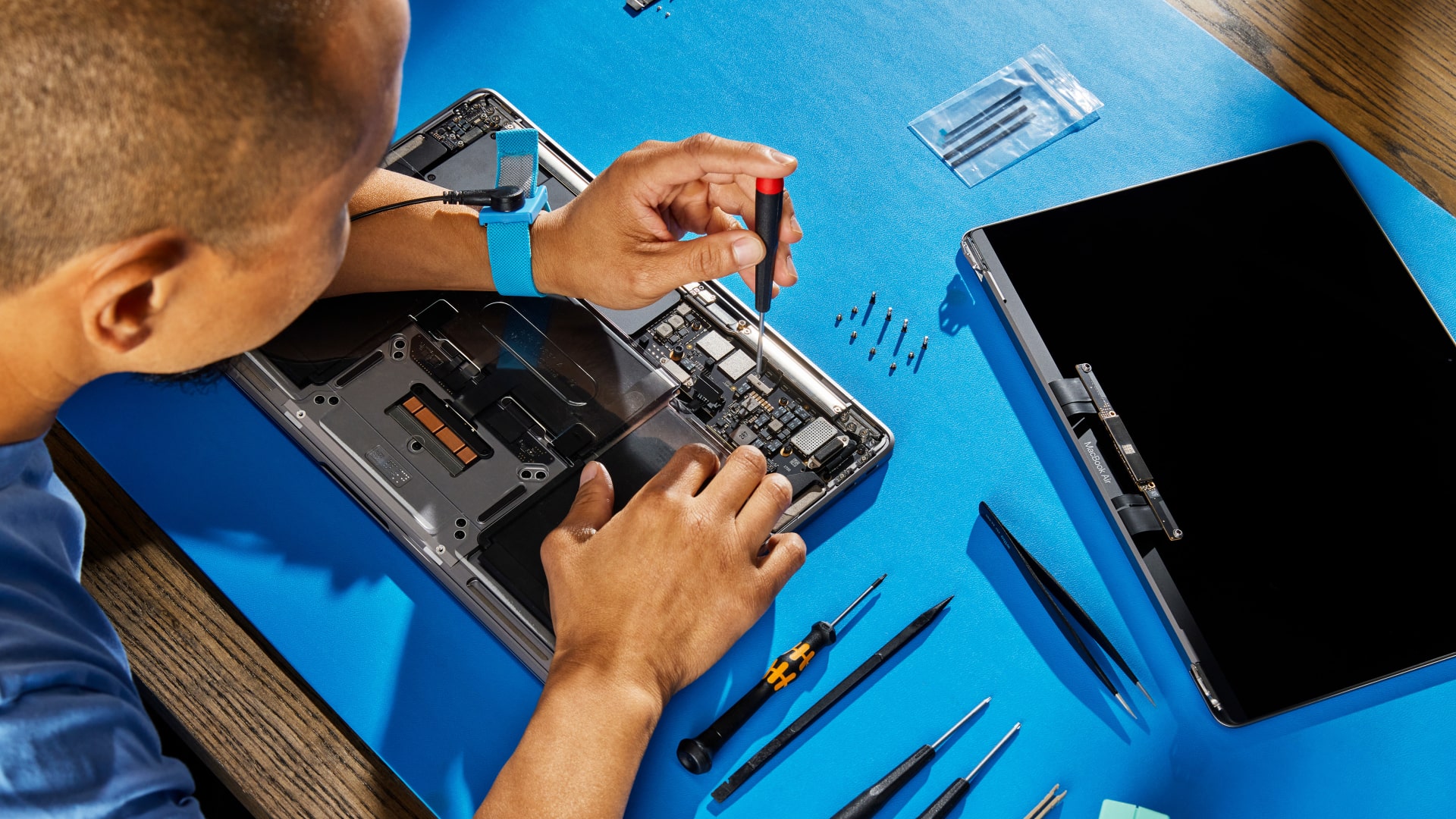
Europe’s Push for More Repairable Technology
The EU’s regulations do not require manufacturers to completely redesign their smartphones or make every device as easy to repair as a Fairphone. Instead, they concentrate heavily on ensuring that essential replacement parts and repair resources remain available.
Manufacturers must provide specified components, including batteries and screens, for at least seven years after a device model is withdrawn from the EU market. During the first five years, replacement parts must be delivered within five working days. That period increases to 10 working days for the final two years.
Companies must also make repair instructions and the necessary software tools accessible, while batteries are required to meet minimum durability standards.
One of the most visible changes for shoppers is the introduction of an A-to-E repairability rating on the EU’s updated energy labels. The rating considers factors such as how difficult a device is to disassemble and whether replacement parts are available.
A separate Right to Repair Directive also strengthens consumer protections for certain products. EU member states were required to implement it by July 2026, although laptops are not yet covered by the directive’s current scope.
The regulations could influence devices sold beyond Europe, too. According to Francisco Jeronimo of IDC, manufacturers are unlikely to develop entirely separate smartphone designs for individual markets, meaning improvements introduced to satisfy European requirements can benefit consumers elsewhere.
Better Access to Parts, but Repairs Remain Difficult
An investigation conducted by the European Consumer Organisation in June 2026 examined the availability of replacement parts and repair instructions across Europe, comparing smartphones with battery-powered vacuum cleaners.
Silvia Barlassina, BEUC’s ecodesign project coordinator, says the new requirements have improved consumers’ access to spare parts and repair information. However, she cautions that the rules have not been in place long enough to determine whether they have significantly increased the number of people repairing their own devices.
Access to components is only one part of the problem. Thomas Opsomer, an EU policy specialist at iFixit, argues that the regulations have done relatively little to change the fundamental design of mainstream smartphones.
Many devices still require users to heat the screen to loosen its adhesive before accessing internal components. For inexperienced owners, that process can be intimidating and carries the risk of damaging the phone.
A teardown of Apple’s iPhone 18 Pro illustrates the challenge. Although the device includes a screwed-in battery tray and modular cameras, reaching the battery still requires removing the display, which is glued in place.
During its examination, iFixit damaged the plastic display frame in three of the four phones it opened. The organisation noted that further testing would be needed to determine whether this was a widespread issue.
There are also concerns about whether manufacturers are consistently meeting their obligations to provide repair information and component pricing.
In a separate investigation published in September 2026, Right to Repair Europe and iFixit examined 2,334 smartphone-model records in the EU’s official product database. The findings revealed widespread gaps in the availability of repair instructions and spare-part prices.
Opsomer says 80% of the models examined were non-compliant, although that figure does not mean that 80% of smartphones sold were affected.
He also acknowledges that some major manufacturers have made substantial progress, particularly in providing instructions for people who want to carry out repairs themselves. Many of the remaining shortcomings appear to involve cheaper and less familiar smartphone brands, potentially leaving budget-conscious buyers with fewer options.
Another positive development concerns parts pairing: software restrictions that can prevent replacement components from working properly unless they are approved or recognised by the manufacturer.
Under the new requirements, manufacturers such as Apple must allow users and independent repair businesses to restore the functionality of replacement parts. Opsomer describes this as an important step towards removing barriers to independent repairs.

(Image credit: Peter Hoffmann)
The Cost of Repairing a Smartphone
Even when replacement parts are available, repairing a smartphone is not necessarily an affordable alternative to buying a new one.
The problem is becoming more significant as smartphone prices rise, with growing demand from AI data centres contributing to higher component costs, including memory chips.
BEUC’s research found that replacing the display on one high-end smartphone examined in its recent market check could cost more than €400. That represents approximately 30% of the device’s original retail price.
Research referenced in the European Commission’s impact assessment suggests that consumers are generally willing to spend around 20% of a product’s purchase price on repairs. The €400-plus figure is particularly concerning because it covers the replacement component alone, excluding labour and other expenses.
The EU’s A-to-E repairability ratings do not account for the actual price of replacement components or repair services. Barlassina argues that this limitation can leave consumers with an incomplete understanding of how affordable a repair will be.
Individual product prices highlight the difference.
Samsung’s Irish repair pricing page lists a recommended out-of-warranty screen replacement cost of €267 for the Galaxy S26 Ultra. The price includes a replacement battery, although additional work could increase the final bill.
Fairphone offers a considerably cheaper alternative for its modular devices. A replacement display for the Fairphone 6 costs €89.95, while a new battery is priced at €39.95. These prices cover the components alone, but the phone is designed to allow owners to replace them at home.
For iFixit’s Opsomer, the financial calculation remains central to whether consumers choose to repair a device.
When a phone breaks, owners weigh the cost of fixing it against what the device is still worth. That decision is also influenced by constant marketing encouraging consumers to upgrade to the newest models.
Making replacement parts available is important, but repair must also make financial sense.
Laptops Are Making Their Own Repairability Progress
Although laptops were not included in the EU’s June 2025 smartphone Ecodesign requirements, some manufacturers are making notable improvements.
Lenovo’s ThinkPad T14 Gen 7 received a provisional 10/10 repairability rating from iFixit. The organisation praised its accessible battery and replaceable USB-C ports, keyboard, RAM and storage. iFixit had also worked with Lenovo during the device’s design process.
Apple has made progress as well. The MacBook Neo received a 6/10 score from iFixit, making it the company’s highest-rated MacBook in approximately 14 years.
One important design change is the use of a screwed-in battery rather than an adhesive-mounted one. However, the laptop’s RAM and storage remain soldered to the motherboard, limiting the upgrades owners can perform.
These examples raise an important question: are manufacturers beginning to embrace repairability across the industry, or are these products still exceptions?
IDC’s Jeronimo believes the industry is moving in the right direction, but not quickly enough to call it a widespread transformation. He points to Apple and Lenovo as encouraging examples rather than evidence of a universal shift.
There is also a commercial incentive for manufacturers to make devices easier to repair. Consumers spending more money on smartphones and laptops increasingly expect their purchases to last longer.
Repairable products can retain their value for an extended period, potentially giving owners a better resale or trade-in price when they eventually upgrade.
Are Consumers Actually Prioritising Repairability?
Despite the improvements, repairability is not necessarily a major factor influencing what people buy.
IDC estimates that consumers now keep their smartphones for approximately 3.5 to 4.5 years on average. However, Jeronimo says longer ownership periods do not automatically mean people are choosing devices because they are easier to repair.
In an IDC consumer survey conducted in 2025, battery life, connectivity, price and build quality ranked above repairability among the most important smartphone purchasing considerations.
Governments are considering additional ways to encourage consumers to fix their products rather than replace them.
Under the EU’s Right to Repair Directive, member states must introduce at least one measure designed to make repairs more attractive. Possible approaches include financial support schemes and repair vouchers.
Countries have until July 2029 to inform the European Commission about the measures they have introduced, although they can act earlier.
Opsomer believes financial incentives would be the most effective option among the measures being considered.
A Promising Start, but More Work Remains
More than a year after the EU’s repairability requirements took effect, there are encouraging signs of progress. Replacement parts are becoming easier to obtain, repair documentation is improving and some manufacturers are designing products with maintenance and longevity in mind.
However, difficult disassembly procedures, expensive components and inconsistent compliance continue to make repairs less accessible than they should be.
For technology enthusiasts who want to keep their smartphones and laptops running for as long as possible, the situation is improving. The bigger challenge is turning repairability into a practical and affordable option for ordinary consumers.
The EU has made an important start. Now manufacturers and policymakers must ensure that fixing a broken device becomes a genuinely attractive alternative to replacing it.