


































From the secretive judging process to seven standout timepieces, discover what makes the Grand Prix d’Horlogerie de Genève (GPHG) one of the watch industry’s most prestigious awards, with two Singaporeans serving on this year’s jury.
The Grand Prix d’Horlogerie de Genève (GPHG) is widely regarded as one of the most prestigious events in the luxury watch industry. Often described as the Oscars of watchmaking, the annual awards celebrate exceptional craftsmanship, innovative technology and outstanding design.
But beyond the glamorous ceremony and coveted trophies, an interesting question remains: Who actually decides which watches deserve to win?
With its 2026 ceremony scheduled for November 7, the GPHG is once again bringing together some of the biggest names and most influential personalities in watchmaking.
Why Watchmaking Needs Awards
There are three major awards that stand out in the watchmaking industry. The first is the Louis Vuitton Watch Prize for Independent Creatives, a biennial competition celebrating independent watchmakers. The second is the Cartier Talents of Tomorrow Prize, an annual initiative that has recently expanded beyond watchmaking to include jewellery.
The third is the GPHG, which concludes the annual watch awards season with a high-profile ceremony in Geneva.
Much like the Emmys, Grammys and Oscars, these awards serve a purpose beyond celebrating excellence. They generate industry attention, introduce emerging talents to international audiences and give established watchmakers another opportunity to showcase their creativity.
The GPHG, in particular, recognises watches as cultural and artistic creations rather than simply luxury accessories.
Winning can also have a significant impact on a brand’s reputation, visibility and commercial success. For established names such as Audemars Piguet, Grand Seiko, IWC and TAG Heuer, receiving a GPHG award may not necessarily change retail prices. However, for independent watchmakers and smaller brands, the recognition can be transformative.
Japanese watchmaker Jiro Katayama experienced this after his Otsuka Lotec No. 6 won the Challenge Prize in 2024. Originally retailing for CHF 2,260 (approximately US$2,747 or S$3,500), a stainless steel version sold for US$60,300 (approximately S$77,200) at a Phillips auction in Hong Kong just days after the announcement. A unique blackened steel edition later achieved US$68,500.
However, the GPHG is not the ultimate authority on the world’s finest watches. Participation is voluntary, and brands must nominate their own timepieces and pay to enter.
The costs are also considerable. Brands pay an administrative fee of CHF 800 for each entry, followed by CHF 7,000 if a watch is selected for nomination, covering promotional expenses.
Some major manufacturers, including Patek Philippe and Rolex, generally choose not to participate.
This means that while the GPHG carries considerable influence, its winners do not necessarily represent every great watch available in the industry. That is part of what makes the competition interesting.
Who Decides Which Watches Win?
The 2026 judging panel has a notable Singapore connection.
Leading this year’s jury is Wei Koh, founder of the watch publication Revolution. Koh previously served on the GPHG jury in 2025.
Another Singaporean on the panel is Michael Tay, group managing director of The Hour Glass. Tay brings considerable judging experience, having previously served as jury president for the 2023–2024 Louis Vuitton Watch Prize for Independent Creatives.
The remaining members of the 24-person jury include watch journalists, editors, auction specialists, watch fair organisers, brand executives and experienced collectors.
But how are the winning watches selected?
The process begins with submissions from participating brands. The GPHG Academy, an international network of more than 1,000 watch industry professionals, can also nominate eligible timepieces.
For the 2026 edition, qualifying watches must have been launched between May 2025 and the end of October 2026. Each participating brand can submit up to six watches, with every timepiece assigned to just one category.
The arrangement is somewhat similar to major entertainment awards, where organisers and industry members can put forward potential nominees, but the studios and creators must agree to participate.
This year, the competition features 14 categories covering different areas of watchmaking, including time-only watches, chronographs, gem-set creations and mechanical clocks.
Another significant development is the removal of gender-based watch categories. For the first time in its 26-year history, the GPHG has eliminated these distinctions.
Not Every Award Is Reserved for Expensive Watches
One of the interesting aspects of the GPHG is its recognition of watches across different price ranges.
The Petite Aiguille category, which translates to “small hand” in French, is dedicated to watches priced between CHF 4,500 and CHF 10,000.
The Challenge category, meanwhile, recognises timepieces priced below CHF 4,500.
Beyond the 14 main categories, the most prestigious honour is the Aiguille d’Or Grand Prix, or Golden Hand Grand Prize. It is widely considered the competition’s equivalent of the Best Picture award at the Oscars.
Five additional distinctions are also presented: Audacity, Chronometry, Horological Revelation, Iconic Watch and the Special Jury Prize.
The selection process involves two rounds of voting.
During the first round, Academy members assess the submitted watches and rank their six preferred choices in each category. The six highest-scoring watches from each category advance to the final shortlist, producing 84 finalists.
The second round takes place behind closed doors in Geneva.
The jury meets to examine and evaluate all 84 shortlisted watches, with two notaries present to oversee the proceedings. After the jury completes its assessments, the wider Academy also casts its votes electronically.
The final results combine the scores from both groups. The jury accounts for two-thirds of the overall result, while the Academy contributes the remaining one-third.
To ensure a fair distribution of recognition, no single brand can receive more than two awards.
Votes are independently counted and verified by two notaries. Interestingly, the GPHG organisation itself receives only the final results and does not have access to individual voting records.
The GPHG’s influence extends well beyond Switzerland. Before the annual ceremony, nominated watches travel to selected international cities, giving collectors, enthusiasts and industry professionals the opportunity to see the creations up close.
These exhibitions allow visitors to appreciate the details, finishing and mechanical complexity of the nominated watches in person.
In 2026, the travelling exhibition visited Mumbai and Bangkok, bringing the shortlisted creations to Asian audiences ahead of the Geneva ceremony. London is also scheduled to host an exhibition of the winning timepieces in November.
Previous exhibition destinations have included Dubai, Istanbul, Shanghai, Hong Kong and Ho Chi Minh City.
Asia’s growing importance in the global luxury watch market makes the region an increasingly valuable destination for the GPHG’s international exhibitions.
Seven Standout Watches From the GPHG 2026 Nominees
From traditional Swiss craftsmanship to unconventional mechanical displays and imaginative artistic designs, this year’s nominees offer plenty to admire.
Seven watches, in particular, caught our attention. Beyond their individual technical achievements, they also reflect the growing international influence of independent watchmaking, with Asian brands such as China’s BEHRENS and Malaysia’s MING making their mark.
1. Audemars Piguet – Neo Frame Jumping Hour
Category: Essential
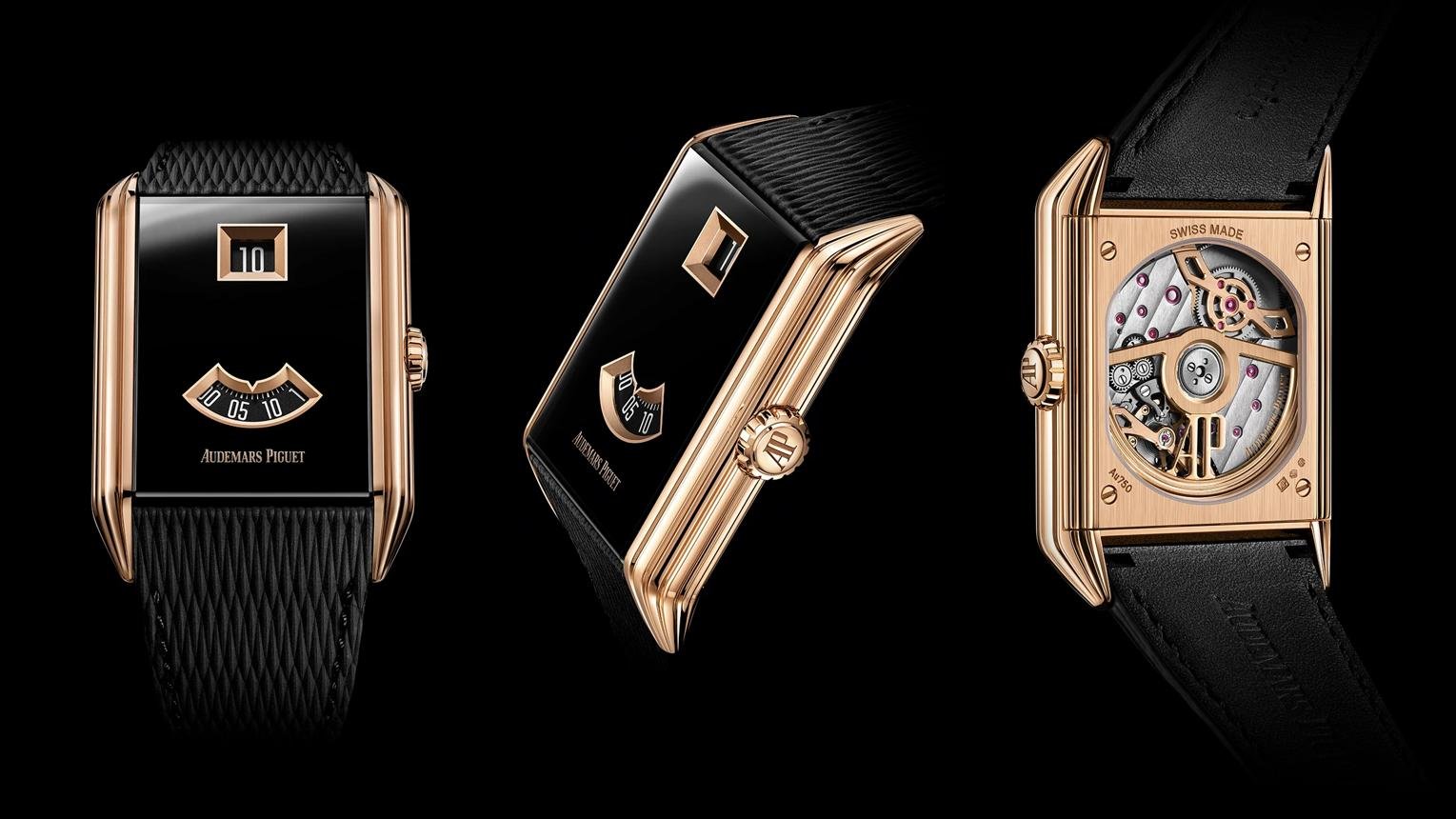
For a watchmaker with a history as extensive as Audemars Piguet’s, revisiting archival designs offers an opportunity to combine heritage with contemporary innovation.
The Neo Frame Jumping Hour draws inspiration from a 1929 Audemars Piguet creation but introduces an entirely new movement: Calibre 7122, the brand’s first self-winding jumping-hour calibre.
The hour display sits in an upper window, where the numeral changes instantly at the beginning of every hour. Below it, a retrograde mechanism powers the minutes display.
Its appearance is equally distinctive. The 18K pink gold case features elegant stepped gadroons surrounding a black PVD-treated sapphire dial that forms part of the case architecture. An integrated textured black calfskin strap completes the design.
With its combination of vintage inspiration and modern engineering, the watch would feel perfectly at home in a sophisticated Great Gatsby-inspired setting.
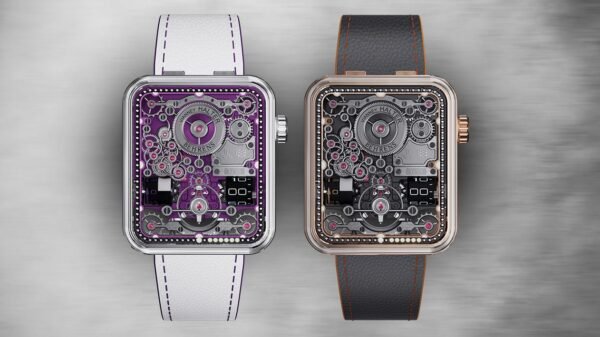
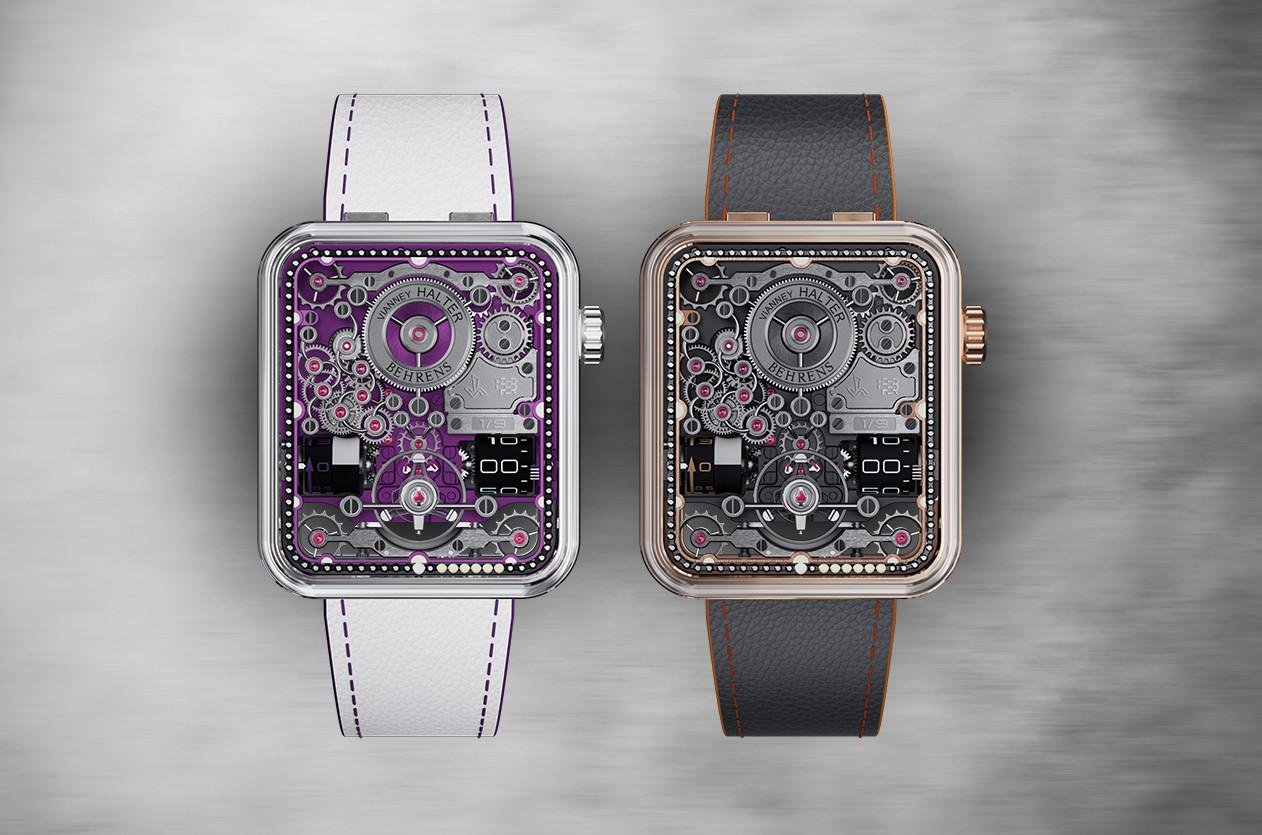
2. BEHRENS x Vianney Halter – Master Collection KWH
Category: Complication
What happens when industrial electricity meters, classic video games such as Snake and Tetris, and two creative watchmaking minds come together? The answer is the Master Collection KWH.
The collaboration brings together Chinese watchmaker Lin Bingqiang, founder of BEHRENS, and renowned French independent watchmaker Vianney Halter.
The inspiration reportedly began when Lin discovered an antique electricity meter during a visit to Halter’s workshop. Fascinated by its square shape and industrial appearance, he proposed creating a watch inspired by the object.
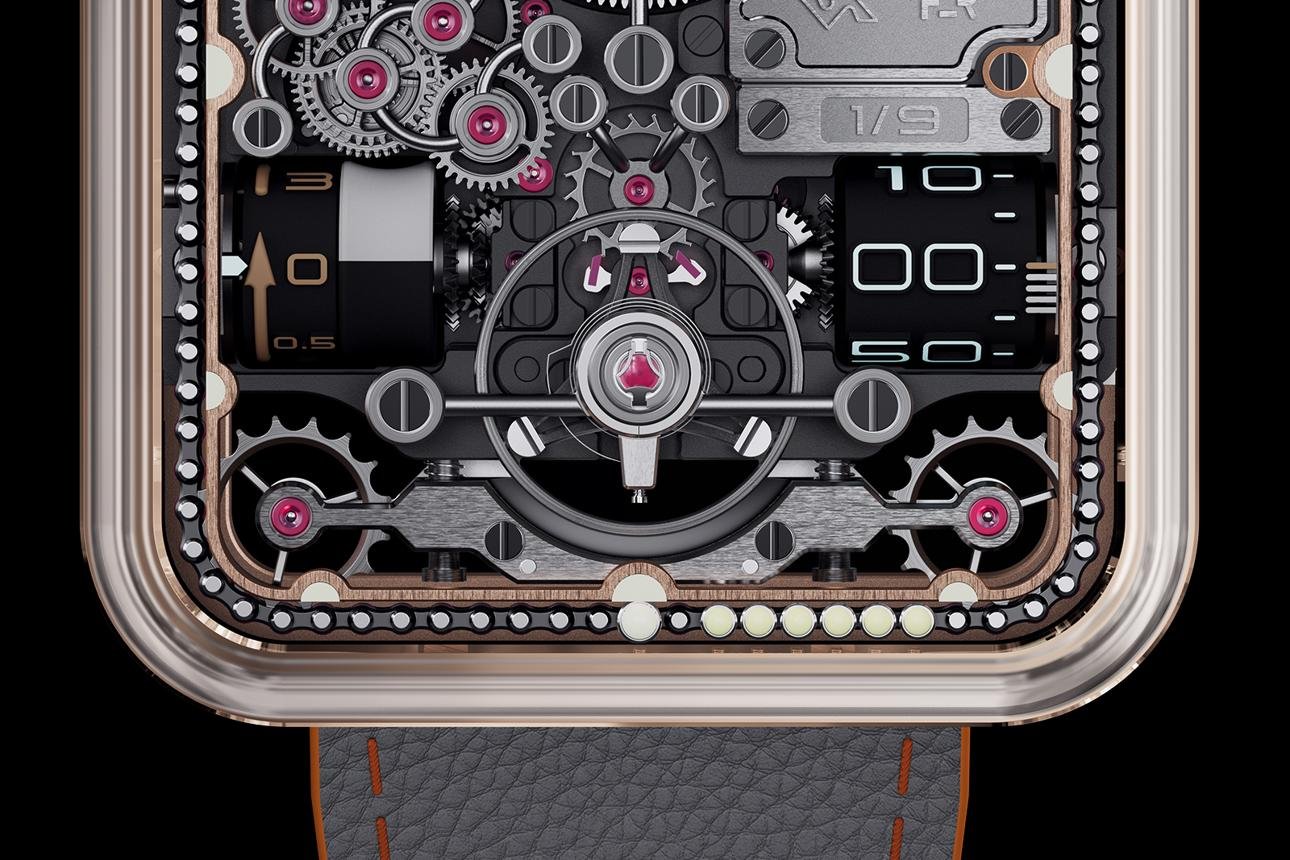
The result is a timepiece with an unmistakable steampunk aesthetic and an unusual way of displaying the time.
Instead of traditional hands, the watch uses a ruby-bearing micro-chain system that moves clockwise around the dial. The chain resembles a snake made up of seven luminous dots. To read the hour, the wearer follows the leading dot.
The minutes are displayed separately using an axle positioned on the right side of the dial.
It is an imaginative interpretation of mechanical watchmaking that demonstrates how unconventional ideas can produce fascinating results.
3. Chopard – Beehive Chiming Table Clock
Category: Mechanical Clock
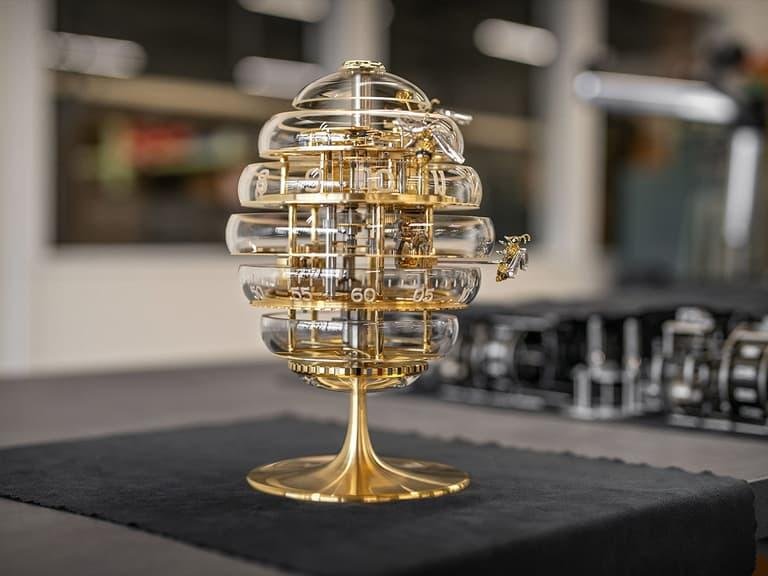
While many contemporary mechanical clocks embrace futuristic or cosmic designs, Chopard takes a different direction with its nature-inspired Beehive Chiming Table Clock.
The beehive is more than a decorative concept for the luxury watch and jewellery house. It represents an important part of the brand’s history and philosophy.
In the 19th century, founder Louis-Ulysse Chopard compared his workshop to a beehive, using it as a symbol of teamwork, dedication and collective craftsmanship.
The motif returned in 1996 when Karl-Friedrich Scheufele, whose family acquired Chopard in 1963, established a new manufacture in Fleurier, Switzerland.
Created in collaboration with specialist clockmaker L’Epée 1839, the table clock combines mineral glass, brass, stainless steel, ethically sourced gold and precious gemstones.
Its rotating glass discs display the hours and minutes, while a chiming mechanism marks the hours and half-hours.
Three gold bees decorated with precious stones adorn the clock, representing three generations of the Scheufele family.
The result is a mechanical creation that brings together technical expertise, family heritage and artistic expression.
4. Franck Muller – Round Triple Mystery Skeleton
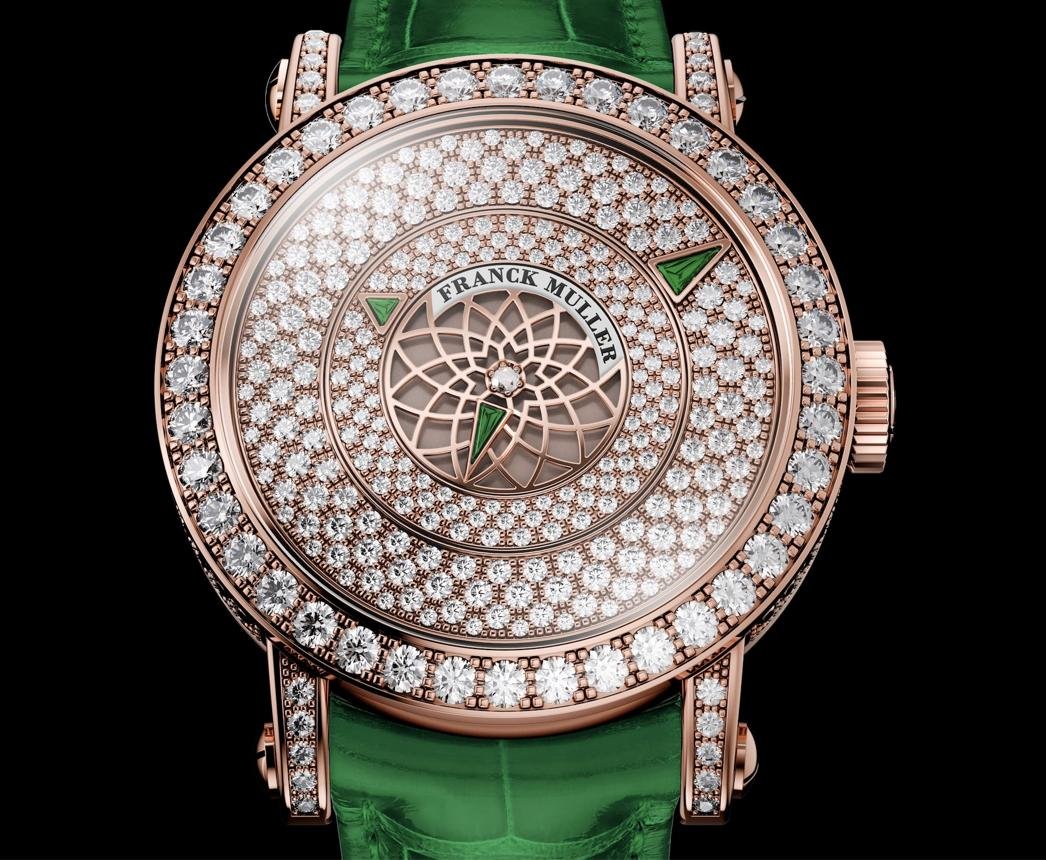
Category: Gemset
Mystery watch movements have existed since the 19th century, but Franck Muller’s Round Triple Mystery Skeleton offers a contemporary interpretation through its openworked construction.
The watch uses three separate concentric discs to display the hours, minutes and seconds. Each disc rotates at a different speed, creating the illusion that the displays are moving independently without traditional watch hands.
According to Franck Muller, one of the greatest technical challenges was developing a system that could drive the seconds disc while maintaining its stability and keeping its weight to a minimum.
Beyond the mechanical innovation, the watch is visually striking.
Diamond-set arabesque patterns sweep across the dial, creating an elaborate decorative effect that complements the openworked movement.
It is an unapologetically luxurious creation that combines intricate engineering with extravagant jewellery-inspired design.
5. Louis Vuitton – Tambour Taiko Arty Automata
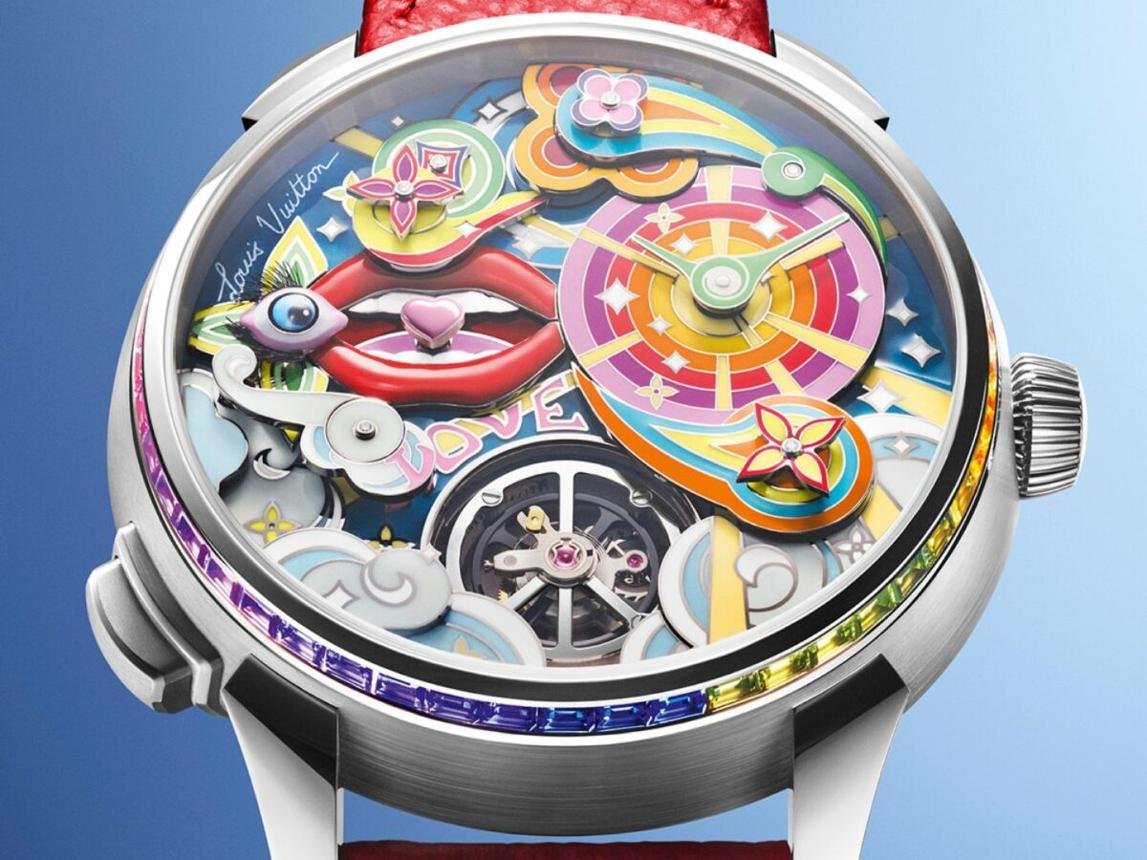
Category: Artistic Crafts
Louis Vuitton’s Tambour Taiko Arty Automata demonstrates that contemporary haute horlogerie does not always have to follow traditional design conventions.
Bold, colourful and playful, the watch combines artistic creativity with an impressive level of mechanical complexity.
Its dial features 20 miniature decorative elements arranged across four levels, alongside 23 colours of Grand Feu enamel. Creating the intricate design required more than 250 hours of handwork.
The movement includes a flying tourbillon and seven animated features.
One of its most entertaining functions is activated by pressing a button at the eight o’clock position. Four Monogram Flowers begin to rotate, while the heart and eye motifs come to life. The word LOVE also transforms into MOVE.
Adding another layer of creativity, the tourbillon features a peace symbol and completes one rotation every minute.
The watch is also a genuine example of Louis Vuitton’s in-house watchmaking capabilities. La Fabrique du Temps Louis Vuitton developed and manufactured the movement, while La Fabrique des Arts handled the artistic elements.
Even the white-gold rotor features miniature painting.
It is a remarkable combination of watchmaking, animation and decorative artistry.
6. MING x JN Shapiro – 37.06 Lightning
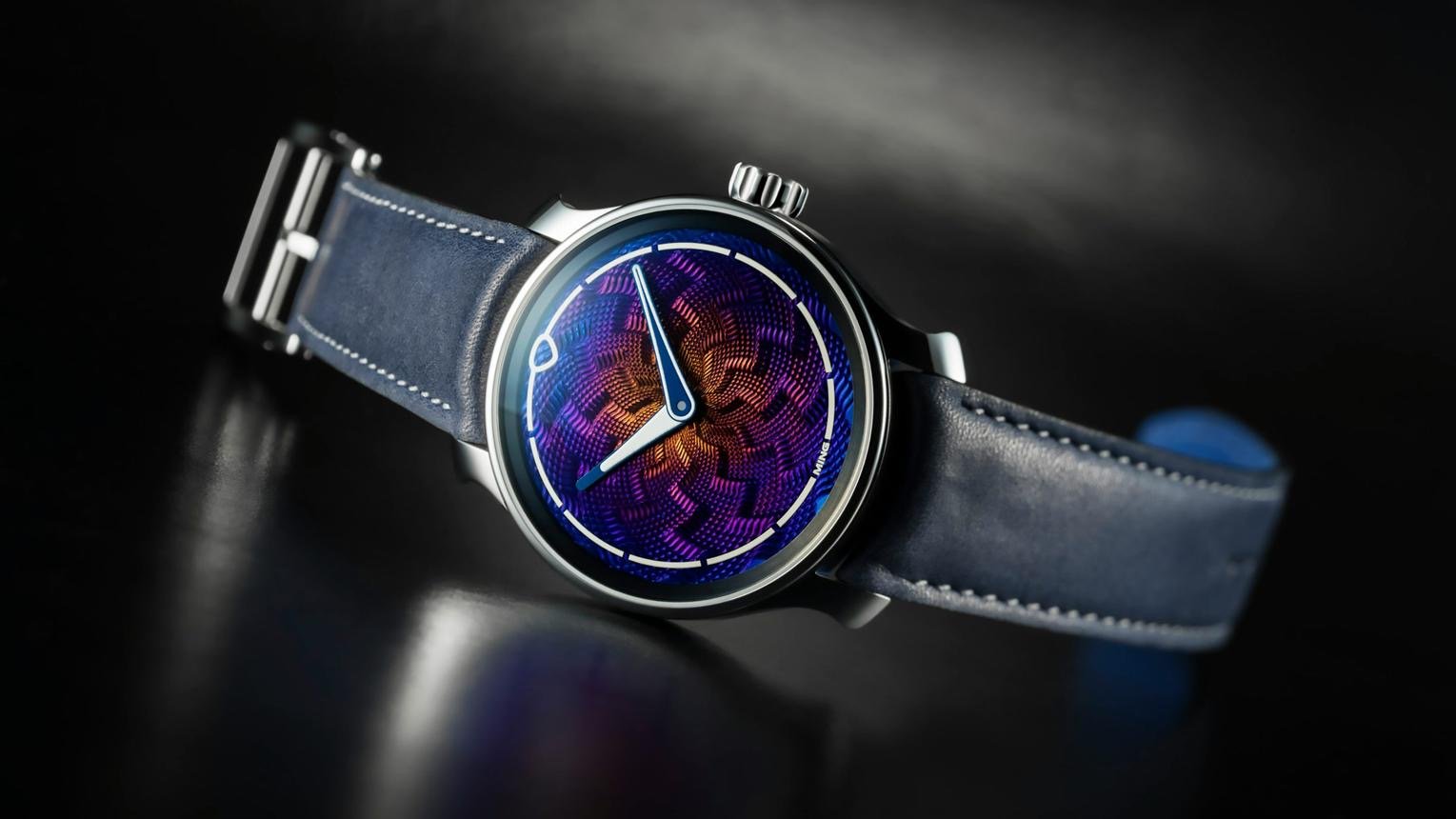
Category: Petite Aiguille
Another standout collaboration brings together Malaysian watchmaker Ming Thein and American independent watchmaker Joshua Nathan Shapiro, founder of JN Shapiro.
The 37.06 Lightning marks their first cross-continental collaboration and combines two distinct approaches to craftsmanship.
The process begins in Los Angeles, where Shapiro uses a traditional rose engine to engrave a distinctive guilloché pattern into each titanium dial. The design, known as Lightning, creates a rhythmic pattern across the surface.
The dials are then transported to Kuala Lumpur, where Thein applies heat using a butane torch to produce their final colours.
The process requires considerable precision. Approximately one in three dials survives the treatment, as excessive heat can damage the titanium or reveal unwanted variations in the guilloché pattern.
This demanding process means every finished dial is unique.
Inside, the watch features a manual-winding Sellita movement developed exclusively for MING.
Although the 37.06 Lightning is not a limited edition, its production remains restricted by the time and skill required to create each dial.
It is a particularly interesting example of how independent watchmakers can combine traditional techniques with contemporary creativity.
7. Rexhep Rexhepi – Chronograph Flyback
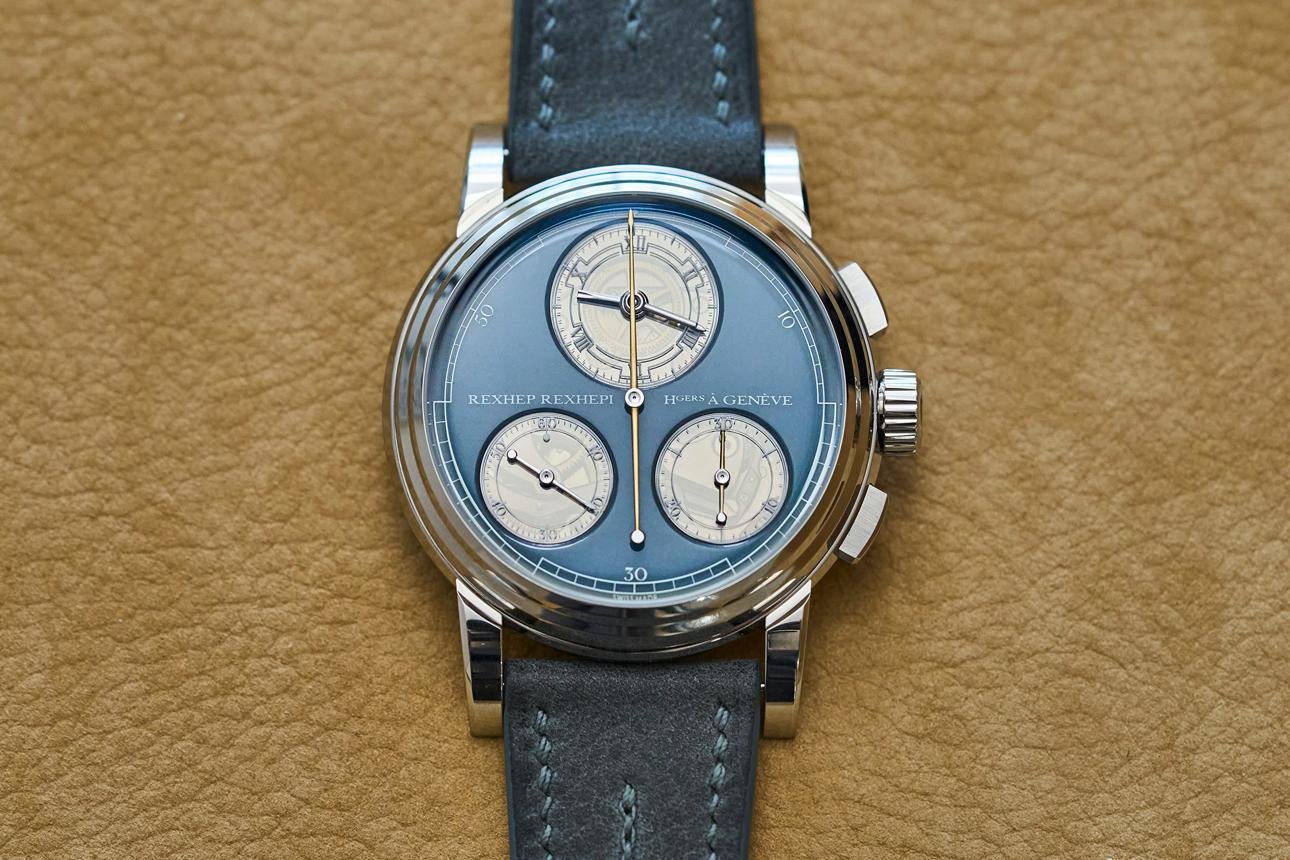
Category: Chronograph
Rexhep Rexhepi has established a strong reputation among serious watch collectors, and his Chronograph Flyback offers a clear demonstration of his approach to traditional watchmaking.
The Kosovan watchmaker set out to create a flyback chronograph that was both technically sophisticated and comfortable to wear. His goal was to develop a slim, compact timepiece that could easily fit beneath a dress shirt.
To achieve this, he developed a movement featuring an integrated chronograph mechanism.
The finished watch measures just 9.7mm in thickness, making it notably slimmer than several established competitors.
For comparison, the first-generation A. Lange & Söhne Datograph, produced between 1999 and 2012 and widely regarded as a benchmark in flyback chronograph design, measured 12.8mm thick. Later versions measured 13.1mm or more.
The dial maintains a restrained aesthetic, combining storm-blue Grand Feu enamel with smoked sapphire counters.
However, the real craftsmanship becomes apparent when examining the movement.
It features German silver plates and bridges, hand-bevelled wheels, black polishing, Geneva stripes, perlage and intricate engraving. Even components hidden from everyday view receive the same careful finishing.
The result is a beautifully balanced timepiece that combines understated elegance with traditional haute horlogerie craftsmanship.
A Celebration of Creativity and Watchmaking Excellence
The GPHG 2026 nominees demonstrate just how diverse modern watchmaking has become.
From Audemars Piguet’s revival of historical design to BEHRENS’ unconventional mechanical displays, Chopard’s artistic clockmaking and MING’s international collaboration, this year’s selection celebrates creativity in many different forms.
Perhaps most importantly, the nominees reflect the growing influence of independent watchmakers and emerging creative voices from across the world.
With two Singaporeans among the 2026 jurors and Asian independent brands receiving international recognition, this year’s awards also highlight the region’s expanding contribution to the global watchmaking conversation.
Ultimately, the GPHG is about more than deciding which watch is the best. It is an opportunity to recognise the people, ideas and craftsmanship pushing the boundaries of what a timepiece can be.