

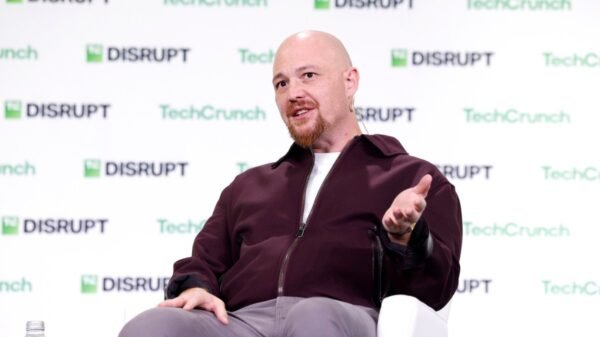



































Replit, the AI-powered coding platform widely used by developers and startup founders, has made OpenAI its preferred AI partner, according to CEO and co-founder Amjad Masad. The decision reflects a combination of cost considerations, model performance and the strength of the companies’ partnership.
Speaking at TechCrunch Disrupt, Masad said Replit was no longer working with Anthropic as a partner. However, subsequent clarification revealed that Anthropic’s Claude models remain available on the platform, even as OpenAI’s models become the default choice.
Replit announced its partnership with OpenAI in August, but the company had not previously indicated that its relationship with Anthropic was changing.
“I think ChatGPT is better now,” Masad said, explaining that Replit evaluates AI models using internal benchmarks to measure their performance on tasks such as building applications from scratch. He added that the company’s assessments, alongside pricing and partnership considerations, influenced its decision to favor OpenAI.
Anthropic Models Remain Available on Replit
Despite Masad’s comments at Disrupt, Anthropic has not been entirely removed from Replit’s platform. The company provides a browser-based development environment that allows users to create and deploy applications, with AI models supporting much of the coding process.
Following the event, Masad clarified that users can still select Claude and other supported models. OpenAI, however, is now the preferred provider for powering Replit Agent.
“Replit remains model agnostic,” Masad told TechCrunch, explaining that customers retain the ability to choose Anthropic’s Claude or other available models. He said OpenAI was selected as the preferred partner because of its performance, economics and commercial relationship with Replit.
The change could nevertheless reduce Replit’s spending on Anthropic technology. Since many users continue with a platform’s default settings rather than manually selecting an alternative, OpenAI could receive a larger share of model usage.
Before partnering with OpenAI, Replit relied on Anthropic’s Claude models to power its platform. The relationship was credited with helping Replit achieve substantial revenue growth, and Masad said the company had recently been among Anthropic’s five largest customers.
Conflicting Accounts Over the Partnership
There are differing accounts of whether Replit and Anthropic have formally ended their partnership.
While Masad’s remarks at Disrupt suggested the relationship had ended, a person familiar with the arrangement disputed that characterization, telling TechCrunch that the partnership remained in place.
Replit’s own documentation, blog posts and social media activity also indicated that it continued to support and promote Anthropic’s models in the weeks leading up to the announcement.
A blog post published in late September identified Claude Fable 5 and Claude Fable 5.1 as models running in Replit Agent’s production environment. Around the same time, a Replit product employee discussed Anthropic’s Opus 5.5 model in a post on X.
These details suggest that the change may concern which provider receives preferred or default status rather than a complete break between the two companies.
Enterprise Customers Drive Replit’s Growth
Masad also discussed Replit’s expanding enterprise business during his appearance at Disrupt, revealing that larger organizations are contributing an increasing share of the company’s revenue.
Although Replit has not disclosed its annual recurring revenue, Masad said enterprise contracts accounted for approximately 2% of revenue last year. He estimated that the figure had climbed to around 15% this year, while business-to-business customers now generate more than half of the company’s revenue.
In a separate conversation backstage, Masad told TechCrunch that he expects enterprise and government customers combined to account for more than half of Replit’s revenue in 2027.
The shift highlights Replit’s efforts to expand beyond individual developers and startup teams to serve larger organizations adopting AI-assisted software development.
Masad Highlights the Importance of AI Safety
Beyond partnerships and revenue growth, Masad emphasized the need for robust infrastructure and safeguards as businesses deploy AI agents.
He compared AI agents to people who require a suitable working environment to perform effectively. For AI systems, that environment includes reliable orchestration, error recovery, security controls, sandboxing, networking, identity management and authorization.
Masad argued that these systems are essential to ensuring AI agents can operate safely and complete tasks reliably.
The issue is particularly relevant to Replit, where AI agents help users build and deploy software. As these tools take on increasingly complex tasks, safeguards must ensure that agents operat