































From affordable 1080p gaming cards to powerful GPUs built for 4K gaming, AI and professional creative work, these are TechRadar’s top graphics card recommendations for 2026.
Choosing the right graphics card can make a major difference to your PC’s gaming and creative performance. However, with so many models available from AMD, Nvidia and Intel, finding the right balance between price, power and performance can be challenging.
Major GPU generations typically arrive every three to four years, although manufacturers regularly introduce smaller improvements to existing architectures. This means the best graphics cards do not necessarily change overnight.
TechRadar’s recommendations are based on extensive testing, including real-world gaming, synthetic benchmarks and creative workloads. The selection ranges from high-end options such as Nvidia’s GeForce RTX 5090 to more affordable alternatives like Intel’s Arc B580.
The AMD Radeon RX 9070 XT takes the overall top spot, offering impressive gaming performance at a comparatively attractive price. Nvidia remains a strong choice for buyers who need advanced creative capabilities, AI performance and features such as DLSS.

(Image credit: Future / John Loeffler)
1. Best Overall: AMD Radeon RX 9070 XT
The AMD Radeon RX 9070 XT stands out as one of the most compelling graphics cards available in 2026. It delivers impressive 1440p and 4K gaming performance while competing with much more expensive Nvidia hardware.
Its specifications include 16GB of GDDR6 memory, a 2,400MHz core clock, 4,096 shaders and a total graphics power rating of 304W. It features HDMI 2.1b and DisplayPort 2.1a outputs, with a recommended 700W power supply.
One of its biggest advantages is its ability to approach the gaming performance of Nvidia’s RTX 4080 at roughly half the launch price. In testing, it came within 7% of the RTX 4080 while outperforming every previous-generation AMD card.
The RX 9070 XT also delivered smooth frame rates in demanding games, including at 4K resolution. Its 16GB of VRAM and PCIe 5.0 support add to its appeal.
Power consumption is one consideration. Testing recorded peak draws of up to 309W, meaning buyers should ensure their PC case has enough room for a triple-fan graphics card and adequate cooling and power delivery.
Creative professionals and AI users may also want to consider Nvidia alternatives. Although AMD has improved its performance in these areas, the RX 9070 XT still trails competing Nvidia cards in many non-gaming workloads.
Best for: Gamers seeking high-end performance without paying premium Nvidia prices.

(Image credit: Future / John Loeffler)
2. Best Budget Graphics Card: Intel Arc B580
Intel’s Arc B580 is a standout option for budget-conscious gamers, particularly those looking for strong 1440p performance without spending a fortune.
The card features 12GB of GDDR6 memory, a 2,670MHz core clock, 2,560 shaders and a 190W power rating. It uses a single 8-pin power connector and has a recommended 450W PSU.
At its original recommended price of under $250, £250 or AU$450, the B580 delivered impressive results in testing. It offered performance that competing AMD and Nvidia cards struggled to match at the same price.
Its strengths include affordable pricing, solid gaming performance and a well-designed reference card. Intel also appears to have addressed many of the driver and compatibility problems associated with its earlier Arc Alchemist graphics cards.
However, the B580 is primarily a gaming GPU. Its ray-tracing performance remains behind Nvidia’s offerings, while creative applications and AI workloads are not its strongest areas.
For buyers who want an inexpensive card for video editing, 3D work or AI applications, an Nvidia alternative may be a better investment.
Best for: Gamers who want affordable 1440p performance.
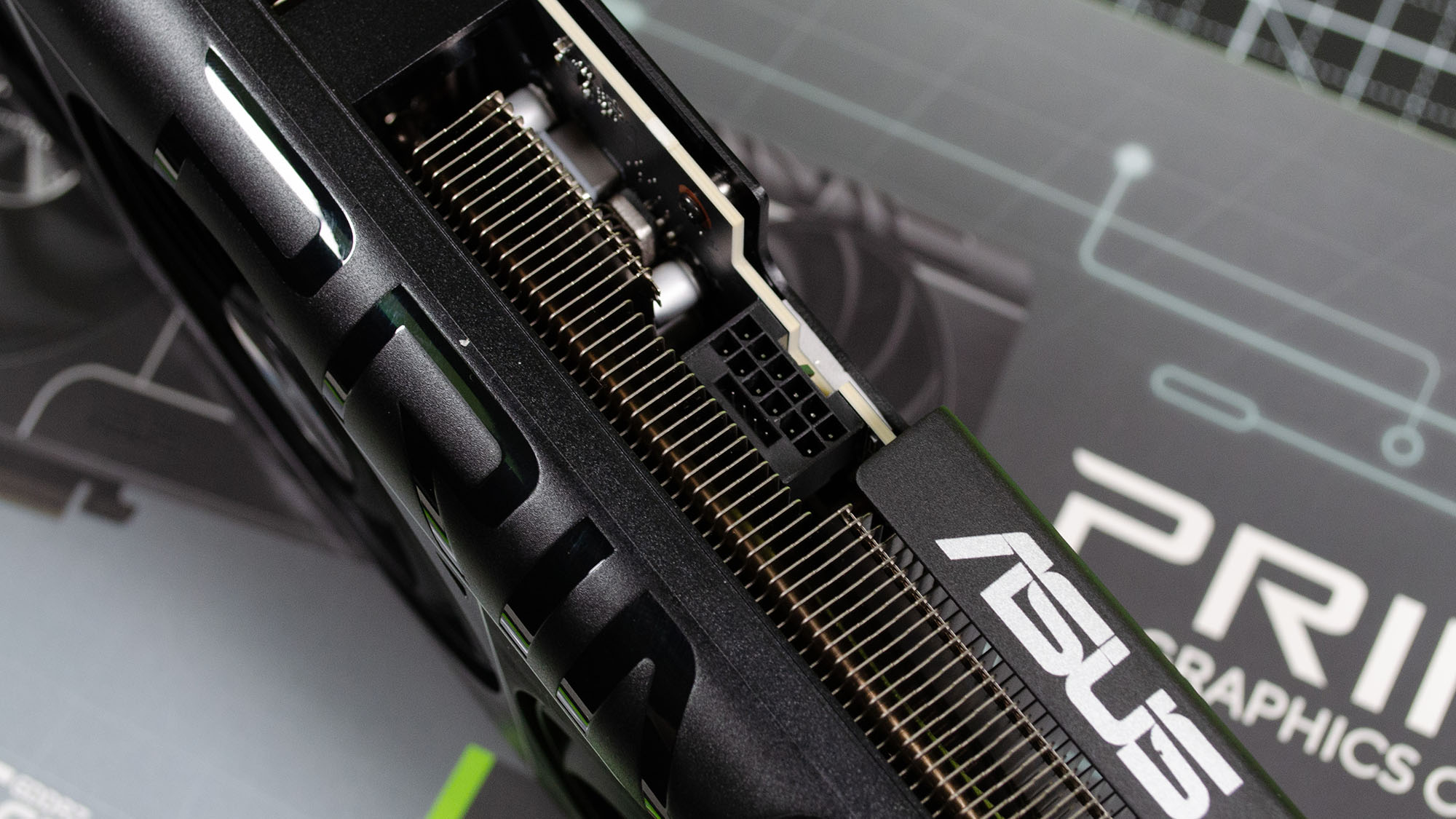
(Image credit: Future / John Loeffler)
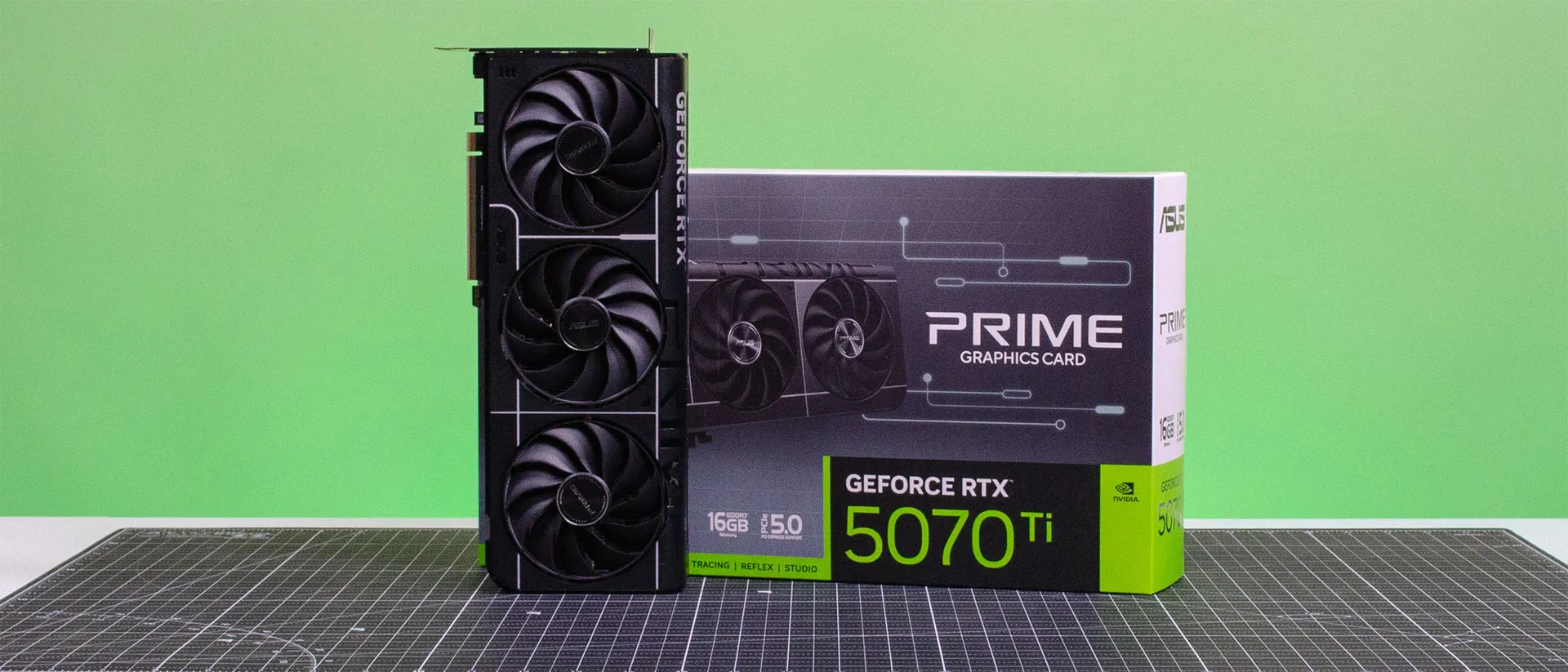
3. Best Nvidia Graphics Card Overall: GeForce RTX 5070 Ti
The Nvidia GeForce RTX 5070 Ti offers an appealing combination of gaming performance, creative capabilities and modern GPU technology.
Equipped with 16GB of GDDR7 memory, 8,960 shaders and a 300W total graphics power rating, it delivers performance approaching the previous-generation RTX 4080 Super.
Its support for DLSS 4 and Multi-Frame Generation is another major advantage, particularly for gamers using high-resolution displays.
Testing showed that the RTX 5070 Ti could deliver close to 90 frames per second on average at 4K, with a minimum frame rate of approximately 65fps. It also performed strongly in creative applications, including 3D modelling and video editing.
For users upgrading from an RTX 3090, the performance improvement could be substantial.
The main concern is pricing. The card does not have a Founders Edition version sold directly by Nvidia, leaving pricing largely in the hands of third-party manufacturers and retailers. Stock shortages and scalping can also make it difficult to find at its recommended price.
Despite these challenges, it remains one of the strongest all-round choices in Nvidia’s current lineup.
Best for: Buyers who want premium 4K gaming and strong creative performance without moving up to the RTX 5080 or RTX 5090.
4. Best Gaming Graphics Card: Nvidia GeForce RTX 5080
The GeForce RTX 5080 is a powerful choice for gamers seeking high-end 4K performance.
It comes with 16GB of GDDR7 memory, 10,752 shaders and a 360W power rating. Its features include PCIe 5.0, DLSS 4 and Multi-Frame Generation.
The RTX 5080 delivers excellent gaming results, even before using Nvidia’s frame-generation technology. It is also a strong option for creative workloads, where Nvidia GPUs continue to have an advantage over much of the competition.
However, its improvement over the RTX 4080 and RTX 4080 Super is relatively modest. Testing found gains of approximately 8% to 13%, depending on the comparison.
That means existing RTX 4080 and RTX 4080 Super owners have little reason to upgrade unless they specifically want the newer DLSS 4 Multi-Frame Generation features.
Pricing and availability are additional concerns. The RTX 5080 is highly sought after, and limited stock has contributed to inflated prices at some retailers.
For buyers upgrading from older RTX 30-series cards or many AMD models, however, it can represent a significant performance improvement.
Best for: Enthusiasts looking for powerful 4K gaming and strong creative performance.
5. Best Graphics Card for Creative Professionals: Nvidia GeForce RTX 5090
The Nvidia GeForce RTX 5090 is the most powerful graphics card featured in this selection, making it particularly attractive to professionals working in 3D rendering, video production and machine learning.
Its specifications include 32GB of GDDR7 memory, 21,760 shaders and a 575W total graphics power rating. Nvidia recommends a 950W power supply.
The RTX 5090’s performance advantage is especially noticeable in professional applications. Its 3D rendering performance is approximately 30% to 40% faster than the RTX 4090, while its larger memory capacity provides additional room for demanding projects.
The card also features a substantial increase in multiprocessors, including CUDA and Tensor cores, which are important to many professional creative and AI workflows.
Gaming performance is equally impressive. It is capable of native 8K gaming and can handle demanding native 4K gaming with ray tracing enabled at maximum settings.
However, its price and power consumption make it difficult to recommend to ordinary gamers. With power draw reaching approximately 575W, it requires a suitable power supply and a system designed to handle its demands.
For professionals whose work depends on graphics performance, the investment may be easier to justify.
Best for: 3D artists, video production professionals, AI researchers and buyers who want the highest available performance.
6. Best 1440p Graphics Card: Nvidia GeForce RTX 4070 Super
The Nvidia GeForce RTX 4070 Super remains a compelling midrange option for gamers targeting 1440p resolution.
It features 12GB of GDDR6X memory, a boost clock of 2,475MHz and a 220W power rating. It also supports DLSS 3 with Frame Generation and Nvidia Reflex.
Compared with the standard RTX 4070, the Super version offers more processing resources and a faster base clock while maintaining the original model’s launch price.
Its ray-tracing performance is one of its biggest strengths. Nvidia’s mature ray-tracing technology and CUDA support also make it useful for people who want to explore creative applications alongside gaming.
However, the 12GB memory capacity limits its ability to handle demanding 4K gaming. Buyers primarily interested in 4K should consider the RTX 5070 Ti or RTX 5080 instead.
The AMD Radeon RX 7900 GRE can also deliver stronger conventional gaming performance in some situations, particularly for users who do not prioritise ray tracing or creative applications.
Despite the competition, the RTX 4070 Super remains a versatile midrange choice.
Best for: Gamers who want strong 1440p performance, ray tracing and some creative-work capabilities.
7. Best 1080p Graphics Card: Intel Arc B570
The Intel Arc B570 is designed for buyers who want inexpensive 1080p gaming performance.
It comes with 10GB of GDDR6 memory, 2,304 shaders and a 150W power rating. Its recommended power supply is 450W.
The B570 offers impressive value for its price, delivering performance close to more expensive competitors such as the AMD Radeon RX 7600 and Nvidia RTX 4060 in many 1080p gaming situations.
It also supports Intel XeSS upscaling and Frame Generation, helping it achieve higher frame rates in supported games.
Ray tracing is available, although its performance still trails Nvidia’s offerings.
The biggest limitation is its suitability for 1440p gaming. While its 10GB of VRAM is useful for a budget card, demanding games at higher resolutions require substantial compromises in visual quality.
Its creative performance is also limited, although AV1 video encoding may be useful to streamers who want an inexpensive way to offload some video processing.
For buyers who can stretch their budget, Intel’s Arc B580 is a stronger all-round option.
Best for: Budget-conscious gamers focused primarily on 1080p gaming.
8. Best Last-Generation Nvidia Graphics Card: GeForce RTX 4090
Although it belongs to an earlier generation, the Nvidia GeForce RTX 4090 remains an extremely powerful graphics card.
It features 24GB of GDDR6X memory, 16,384 shaders and a 450W total graphics power rating. Nvidia recommends an 850W power supply.
The RTX 4090 can handle demanding games at native 4K with ray tracing and is also an excellent option for professional 3D graphics applications such as Maya and Blender.
In testing, it significantly outperformed the RTX 3090, delivering between two and four times the performance in synthetic benchmarks and up to 100% better frame rates in some games.
DLSS 3 and Frame Generation further improve its gaming capabilities, while the rollout of DLSS 4 to the RTX 40 series adds another layer of functionality.
However, the card is expensive, physically large and requires careful attention to its 16-pin power connector and cable management.
For buyers who can find it at a reasonable price, the RTX 4090 remains a worthwhile high-performance option.
Best for: Buyers seeking powerful last-generation Nvidia hardware for gaming and professional creative work.
9. Best Last-Generation AMD Graphics Card: Radeon RX 7900 XTX
AMD’s Radeon RX 7900 XTX continues to offer excellent 4K gaming performance despite being released in 2022.
The card comes with 24GB of GDDR6 memory, 6,144 shaders and a 355W power rating. It uses two standard PCIe 8-pin power connectors rather than a 16-pin connection, and AMD recommends a 750W power supply.
Its large memory capacity and DisplayPort 2.1 support make it a strong option for demanding gaming setups. Few games can seriously challenge its native 4K performance, while AMD’s FSR upscaling technology can help improve frame rates when ray tracing is enabled.
The RX 7900 XTX remains competitive with newer graphics cards, including Nvidia’s RTX 5070 Ti, particularly in 4K gaming.
Its weakness is creative and AI performance. Nvidia’s CUDA ecosystem and Tensor cores give competing Nvidia cards an advantage in many professional applications, including 3D modelling and machine learning.
Nevertheless, buyers primarily interested in high-resolution gaming may find the RX 7900 XTX an attractive option.
Best for: Gamers who want powerful 4K performance and substantial VRAM without relying on Nvidia’s 16-pin power connection.
How to Choose the Right Graphics Card
Before buying a graphics card, consider the resolution of your gaming monitor. The resolution you intend to use will determine how much GPU performance and video memory you need.
For 1080p gaming
Look for a graphics card with at least 8GB of VRAM. Models such as the AMD Radeon RX 7600 and Nvidia RTX 4060 are suitable options, while 10GB cards such as the Intel Arc B570 offer additional memory capacity.
For 1440p gaming
A minimum of 12GB of VRAM is recommended. Options include the Nvidia RTX 5070, AMD RX 9070 and Intel Arc B580.
This resolution is often considered a sweet spot for PC gaming, providing a sharper image than 1080p without the demanding hardware requirements of 4K.
For 4K gaming
For modern games at native 4K, aim for at least 16GB of VRAM. A 256-bit memory bus is also preferable for processing demanding high-resolution textures.
Cards such as the Nvidia RTX 4080 Super, RTX 5080, AMD RX 7900 XTX and AMD RX 9070 XT are among the recommended options.
For creative work and AI
Nvidia is generally the stronger choice for professional creative and AI workloads. Its CUDA ecosystem and dedicated hardware provide advantages in applications used for 3D modelling, video production and machine learning.
How TechRadar Tests Graphics Cards
Every graphics card is tested under consistent conditions to ensure meaningful comparisons.
The testing process includes synthetic benchmarks, creative-performance assessments and approximately seven to 10 games tested at different settings and resolutions.
Cards are evaluated using current drivers, and previously reviewed models are retested regularly as software updates become available.
The same processor, memory configuration, motherboard and SSD are used across tests. This helps isolate the graphics card’s performance rather than allowing differences in other hardware components to influence the results.
Which Graphics Card Is the Most Energy Efficient?
GPU efficiency can be measured in different ways. Two important considerations are maximum power consumption and performance per watt.
Maximum power draw matters because a graphics card that demands more electricity than a PC’s power supply can provide may cause the system to crash.
Performance per watt, meanwhile, measures how much processing power a GPU delivers relative to the electricity it consumes. This is particularly useful for buyers concerned about energy costs and long-term running expenses.
Frequently Asked Questions
Which graphics card is best for gaming?
The right choice depends primarily on your budget and monitor resolution.
For 4K gaming, the Nvidia RTX 5080 offers excellent performance without requiring the substantial investment associated with the RTX 5090. AMD’s RX 9070 XT is a strong alternative, while Intel’s Arc B580 is an attractive budget option.
For 1080p gaming, the Nvidia RTX 4060, AMD RX 7600 and Intel Arc B570 are worth considering.
What is the most powerful graphics card?
The Nvidia GeForce RTX 5090 is the most powerful graphics card in this selection. It features 32GB of GDDR7 memory, a 512-bit memory bus and more than 20,000 shader cores.
Its capabilities make it particularly attractive to creative professionals and users with demanding gaming requirements.
Is a GTX or RTX graphics card better?
RTX graphics cards are newer than Nvidia’s older GTX models. The RTX series introduced dedicated hardware for real-time ray tracing and supports Nvidia’s DLSS technology, which uses AI-assisted upscaling to improve gaming performance.
What GPU do you need for 4K gaming?
For modern AAA games running at native 4K without DLSS or FSR, a graphics card with at least 16GB of VRAM is generally recommended.
Cards with 12GB can still run some 4K games when upscaling and adjusted graphics settings are used, but performance varies.
GPUs with less than 12GB of VRAM are unlikely to deliver a reliable modern 4K gaming experience without significant visual compromises.
Final Verdict
The best graphics card depends on what you intend to do with your PC.
The AMD Radeon RX 9070 XT is the strongest overall value recommendation, combining high-end gaming performance with a more accessible price than many premium Nvidia alternatives.
Intel’s Arc B580 offers an impressive budget option, while Nvidia’s RTX 5070 Ti provides a strong balance of gaming and creative performance.
For enthusiasts seeking more powerful 4K gaming, the RTX 5080 is a compelling choice. Professionals working with demanding creative applications and AI workloads will find the RTX 5090 particularly impressive.
Ultimately, matching your GPU to your monitor resolution, workload and budget is the best way to get the most value from your next graphics card purchase.