































As Brazil heads toward its presidential election on October 4, renewed concerns are emerging over how social media companies handle election disinformation and content moderation, with more than 150 million eligible voters potentially affected.
An August experiment by Amnesty International highlighted some of the challenges. The organization submitted 15 election-related advertisements to Facebook to test Meta’s ability to detect disinformation. Fourteen contained false or misleading information, but Meta approved eight of them. Amnesty said seven other advertisements were rejected not specifically because they contained disinformation, but because they appeared to involve elections or social issues and required identity verification.
Brazil has spent years developing a more interventionist approach to online platforms. Its regulatory efforts have addressed areas including platform liability, duty-of-care obligations, child safety and deadlines for removing certain content. The country’s approach has increasingly emphasized digital sovereignty and constitutional principles.
But the debate raises a broader question: how should governments address harmful information without undermining platforms that provide open and public access to reliable knowledge?
From misinformation to reliable information
Removing false information is one response to the problem, but it does not necessarily create reliable information in its place. Reliable public knowledge also depends on transparent systems for producing, reviewing and accessing information.
Nonprofit projects such as Portuguese-language Wikipedia and Wikidata operate without advertising and rely on open editorial processes and volunteer participation. Their supporters argue that such services represent an important part of the internet’s public-interest infrastructure.
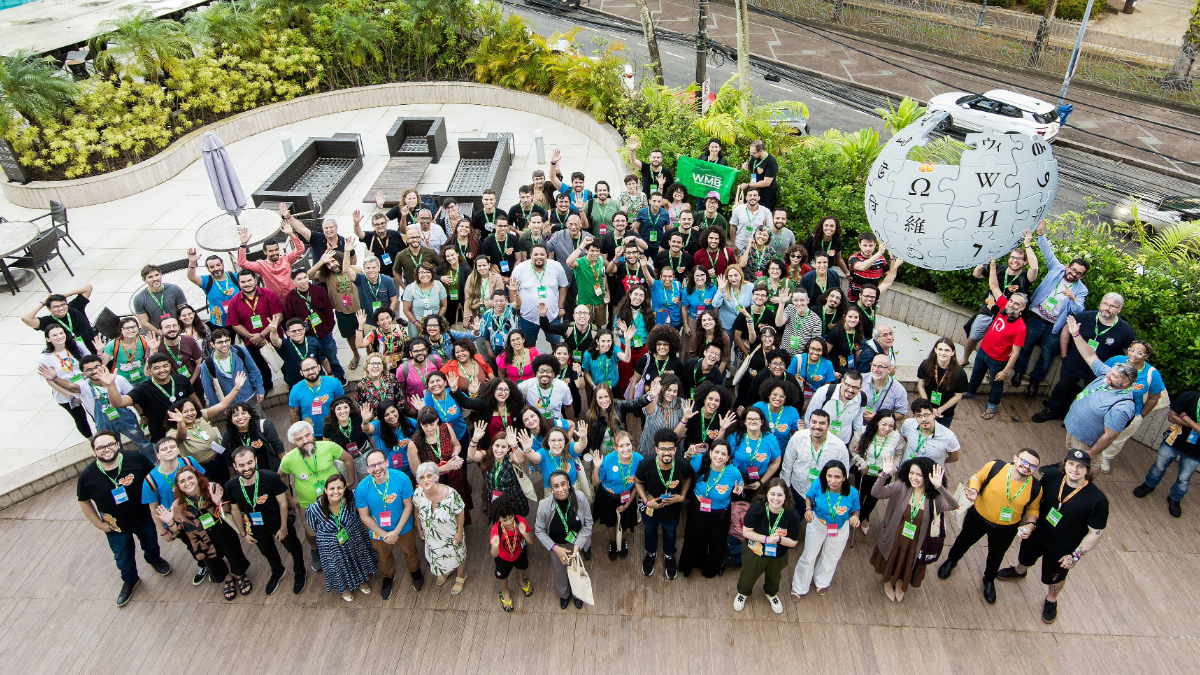
Wikimedia Brasil, the independent Brazilian chapter of the Wikimedia movement, says its experience with regulation over the past six years demonstrates the risks of applying rules designed for commercial social networks to nonprofit, community-governed platforms.
How Wikimedia Brasil became involved in policy
Brazil’s experience with online political manipulation predates its current regulatory framework. Social media played a role in amplifying the 2013 protests, while investigations in 2018 highlighted coordinated WhatsApp messaging campaigns associated with Jair Bolsonaro’s presidential campaign. More recent elections have brought additional concerns involving polarization, foreign interference and AI-generated content.
For Wikimedia Brasil, the policy environment changed significantly in 2020 when Bill 2630, commonly referred to as Brazil’s “Fake News Bill,” began advancing through Congress.
The legislation proposed measures including traceability requirements, content-moderation responsibilities and new platform liability rules. Wikimedia Brasil argued that applying those obligations uniformly could create significant difficulties for a volunteer-run project with a different governance and financial model from commercial technology companies.
Rather than opposing platform regulation altogether, Wikimedia Brasil worked with civil society organizations, including the Digital Rights Coalition, to seek an exception specifically addressing Wikipedia and similar projects. The proposal was incorporated into a revised version of the legislation.
Although Bill 2630 ultimately stalled, the debate exposed what Wikimedia describes as the problem of treating the internet as a collection of identical platforms.
One internet, very different platforms
The argument is that social media networks, encrypted messaging services, open-source repositories and nonprofit knowledge projects can have fundamentally different purposes, governance structures and financial models.
Wikipedia, for example, relies on volunteers who create and review articles through discussion and community consensus. Rules requiring centralized or automated moderation could therefore conflict with the way the encyclopedia operates.
There is also a financial distinction. Unlike large commercial platforms that generate revenue through advertising and extensive data collection, Wikipedia operates without advertising. Wikimedia argues that compliance requirements designed around the resources of major technology companies could divert money and personnel away from maintaining infrastructure and supporting volunteers.
Brazil’s evolving legal framework illustrates this tension.
Under the 2014 Marco Civil da Internet, platforms were generally protected from liability for user-generated content unless they failed to comply with judicial orders to remove material. In 2025, Brazil’s Supreme Federal Court partially found Article 19 of the law unconstitutional. Decree No. 12,975/2026 subsequently implemented the ruling through a duty-of-care framework overseen by Brazil’s National Data Protection Authority.
The resulting rules provide some differentiation between platforms. Compliance requirements can vary according to factors including the type of service, the degree of control a provider exercises over user-generated content and its economic scale.
Child-safety rules create another challenge
Brazil’s Digital Statute for Children and Adolescents, known as ECA Digital, has created another area of concern for Wikimedia and other public-interest projects.
The law includes broad age-verification requirements. Wikimedia has argued that applying such requirements to educational and collaborative platforms could create pressure to collect personal information from users who would otherwise be able to access public knowledge without identification.
During consultations on the law’s implementation, the Wikimedia Foundation called for requirements to reflect the actual risks posed by individual platforms and supported exemptions for digital public goods from age-verification requirements.
Wikimedia Brasil has also worked with civil society groups through campaigns such as “Conhecimento é Direito,” or “Knowledge Is a Right,” to explain to policymakers how technology legislation can affect nonprofit digital infrastructure as well as commercial platforms.
A different regulatory model
Based on its experience, Wikimedia Brasil and its supporters have proposed several principles for future internet regulation.
1. Recognize digital public goods
Rather than relying solely on user numbers, market share or platform size, regulators could consider factors such as nonprofit status, advertising models, open-source technology, free access, transparent editorial practices and community governance.
Such a category could distinguish public-interest infrastructure from commercial social networks before regulations are applied.
2. Match obligations to actual risk
Regulatory requirements could also reflect how a platform operates and the risks created by its business model.
Platforms that rely heavily on personal-data collection, behavioral profiling and engagement-driven recommendation systems may require different oversight from services that use transparent, human-led editorial processes without profit-driven algorithmic amplification.
3. Preserve community governance and pseudonymity
Wikimedia also argues that regulation should account for the importance of context in content moderation. Automated systems can struggle to distinguish between educational material, historical documentation, scientific discussion and satire.
The organization has additionally raised concerns about mandatory age verification and identity tracking. Such requirements could create new databases of personal information and potentially expose volunteers who contribute to politically sensitive or controversial subjects.
Brazil’s broader policy lesson
Brazil’s experience demonstrates the difficulty of regulating a diverse digital ecosystem through a single framework. The country’s election provides another opportunity to examine how effectively current rules address disinformation while preserving access to independent sources of public knowledge.
For Wikimedia and other digital-public-goods advocates, the issue is not whether online harms should be addressed, but whether regulation can distinguish between commercial platforms and nonprofit services that operate under fundamentally different models.
As governments around the world consider new rules for social media, AI and online safety, Brazil’s regulatory experience offers a case study in the challenge of balancing platform accountability with the preservation of open, community-driven digital infrastructure.