
























Apple may be preparing to introduce its first touchscreen MacBook Pro. Although the move would appear to contradict Steve Jobs’ long-standing position, his history suggests he was never as unwilling to change his mind as some people believe.
If the latest rumors are accurate, Apple could unveil its first touchscreen MacBook Pro as soon as next week. The move would mark a significant shift for a company that has spent more than a decade insisting that touchscreens belong on iPads and iPhones, not traditional Mac laptops.
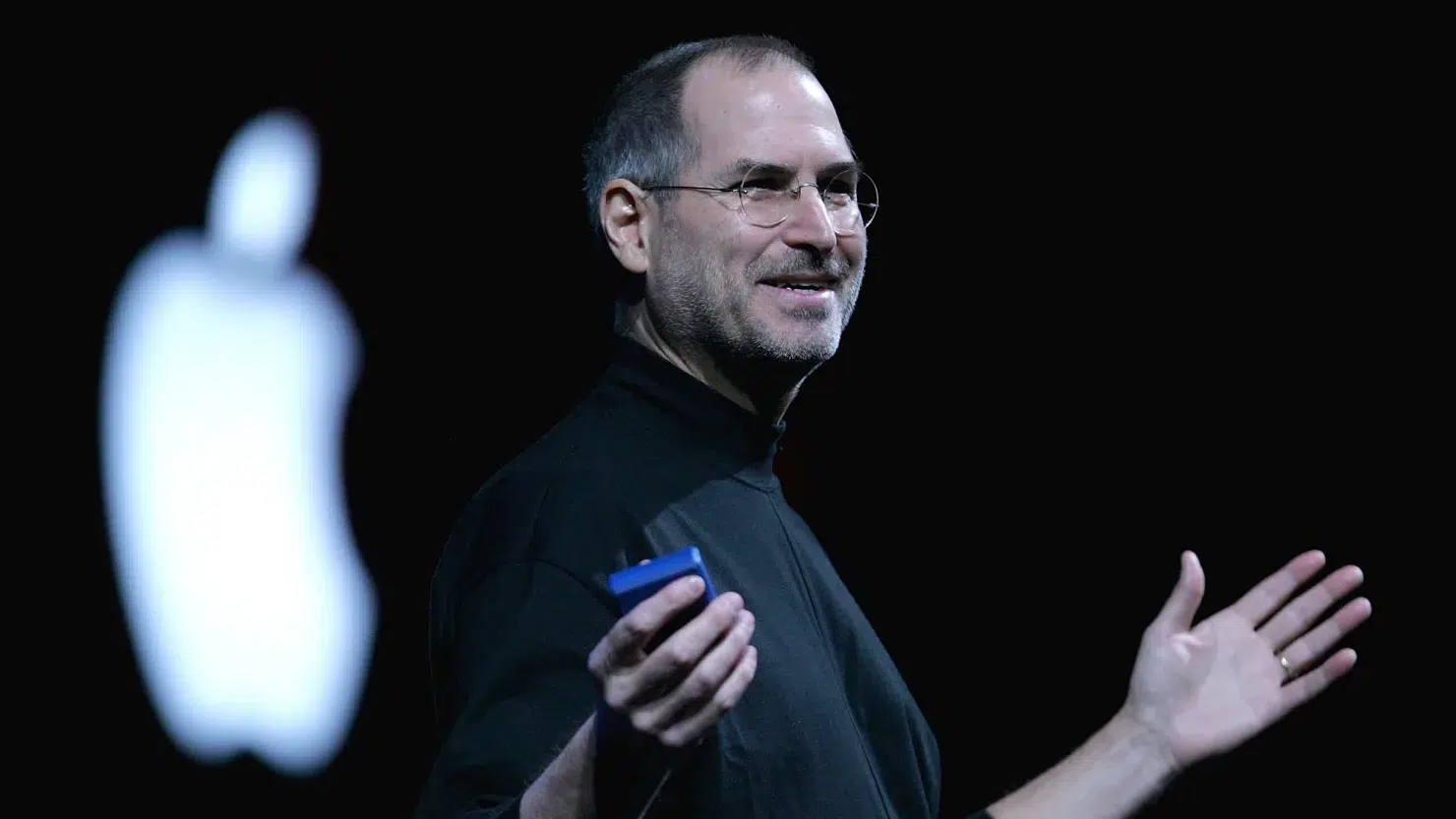
Steve Jobs, Apple’s late co-founder, was particularly dismissive of the idea. But while a touchscreen MacBook might seem to contradict his philosophy, there are good reasons to believe he could have embraced the technology if the right solution came along.
Why Steve Jobs rejected touchscreen MacBooks
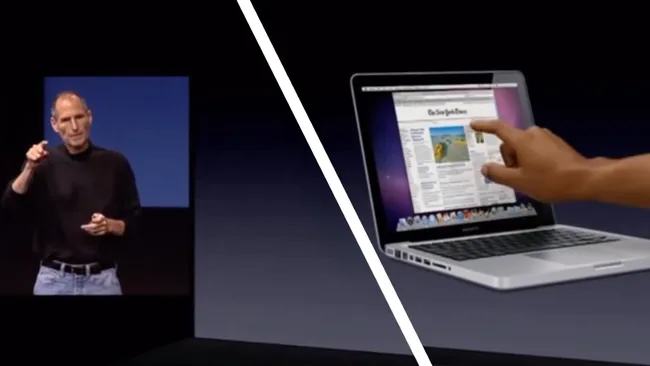
During an Apple product event in October 2010, Jobs explained why the company had no intention of putting a touchscreen on a conventional laptop.
He argued that using a touchscreen on a vertically positioned display was uncomfortable and impractical. Although the concept might look impressive during a demonstration, he believed extended use would quickly lead to arm fatigue.
“Touch surfaces don’t want to be vertical,” Jobs explained, arguing that touchscreens worked best when positioned horizontally. That, he said, was why Apple had invested so heavily in developing its multitouch trackpads.
His position was straightforward: reaching up to interact with a laptop display was ergonomically inferior to using a trackpad.
The timing is worth noting. Jobs made those comments just 10 months after introducing the original iPad. Although Apple’s tablet demonstrated the potential of touch-first computing, Jobs clearly believed the experience should remain separate from the traditional laptop format.
Microsoft would later popularize hybrid devices such as the Surface Pro, which combined touchscreen functionality with detachable keyboards and tablet-style flexibility. Other PC manufacturers followed with convertible laptops whose displays could fold back into tablet mode.
Apple, however, largely stuck to its original position.
Apple spent years defending that decision
Even when Apple introduced the Touch Bar on the MacBook Pro in 2016, the company stopped short of adding touch functionality to the main display.
The Touch Bar offered a narrow strip of context-sensitive controls above the keyboard, providing some of the flexibility associated with touch interfaces without turning the entire screen into a touchscreen.
Apple executives continued to argue that a conventional touchscreen laptop was not the right approach.
Phil Schiller, Apple’s former global head of marketing, explained that the company had repeatedly explored the possibility but had ultimately concluded that its initial instincts were correct.
That position became part of Apple’s identity. While competitors experimented with touchscreen laptops and convertible designs, the MacBook remained focused on its keyboard, trackpad and traditional display.
But technology and user expectations change. If Apple does introduce a touchscreen MacBook Pro, it would suggest that the company now sees a compelling reason to revisit an idea it once rejected.
Would Steve Jobs have opposed the change?
At first glance, the answer might seem obvious. Jobs was famously opinionated, and his comments about touchscreen laptops were unusually emphatic.
Some Apple enthusiasts may argue that such a product would never have appeared while he was alive. Others might point to current leadership, including CEO John Ternus, as the driving force behind a decision that breaks with Apple’s established design philosophy.
A project of this scale would likely involve years of development and multiple levels of executive approval. If the rumored MacBook becomes reality, responsibility for the decision would extend beyond any single engineer or executive.
But assuming Jobs would have rejected the idea forever overlooks an important part of his character: he could change his mind when circumstances warranted it.
Jobs was willing to abandon his own assumptions
Jobs’ career was full of moments when Apple’s eventual products challenged expectations that he or the company had previously expressed.
Apple was not initially known for wanting to build a mobile phone, yet it eventually introduced the iPhone, transforming the smartphone industry.
The App Store and third-party applications also became central to the iPhone experience, despite earlier skepticism about how much Apple needed to rely on outside developers.
Likewise, video playback became a major feature of the iPod after initially appearing to be an unnecessary complication.
These examples do not mean Jobs would automatically have supported every new product category. Rather, they show that his public statements were not necessarily permanent rules.
Jobs believed in creative reinvention. In a 1985 interview with Playboy, he described the importance of moving forward without becoming overly attached to one’s past work or identity. His broader philosophy emphasized the willingness to discard previous assumptions when a better idea emerged.
For Jobs, innovation was not simply about defending a position. It was about creating products that worked exceptionally well.
The technology has to justify the change
Jobs was known for demanding products that met his expectations, even when that meant changing specifications late in development. The original iPhone’s switch from a plastic screen cover to glass is one example of how he pushed for a better result when the initial design fell short.
That approach offers a useful way to think about a potential touchscreen MacBook.
The question is not whether Jobs once said that vertical touchscreens were uncomfortable. He clearly did. The more important question is whether Apple has found a way to make touchscreen interaction useful enough to justify reconsidering that position.
Touchscreen laptops have continued to evolve since Jobs’ 2010 comments. Hybrid designs, improved software interfaces and changing user habits have helped establish a market for computers that combine conventional laptop controls with direct interaction on the display.
A touchscreen MacBook would not necessarily mean Apple had abandoned its commitment to ergonomics. It could instead indicate that the company believes it can add touch functionality without compromising the experience that MacBook users expect.
Of course, the success of such a device would depend on how Apple implements the feature. A touchscreen that encourages awkward, repetitive reaching could validate Jobs’ original concerns. One that makes specific tasks easier while preserving the benefits of a trackpad and keyboard could offer a different result.
A touchscreen MacBook could still be true to Apple’s philosophy
If Apple unveils a touchscreen MacBook Pro, there is no need to treat the decision as a rejection of Steve Jobs’ legacy.
Jobs was a forceful advocate for his ideas, but he was also a relentless product innovator. His willingness to challenge established assumptions was central to Apple’s success.
It is impossible to know exactly how he would react to a touchscreen MacBook today. He might criticize its ergonomics, demand changes to its interface or embrace it after seeing a convincing demonstration.
But it is equally plausible that he would welcome a solution that made the Mac more useful without undermining what people already liked about it.
The rumored announcement, if it happens, would represent a notable departure from Apple’s long-standing approach to laptop design. Yet it could also reflect something deeply consistent with the company’s history: the willingness to reconsider an old decision when new technology makes a better experience possible.
Rather than asking whether a touchscreen MacBook violates Jobs’ principles, the more revealing question is whether Apple can make one genuinely worth using.
If it can, even Jobs might have called the result magical.