






















Apple’s second-generation smart speaker is faster, more responsive and stylish in a new deep-green finish. But its most anticipated Mac speaker feature remains unreliable, and Siri’s major AI upgrade has yet to arrive.
When Apple introduced the $149 HomePod Mini 2 at its Welcome Home event last month, the announcement initially felt underwhelming. Six years after the original $99 HomePod Mini debuted, the new model appeared to offer little more than a faster processor, updated lighting effects and improved AirPlay connectivity. Apple had also left the speaker hardware unchanged while increasing the price by $50.
After spending a couple of days testing two units at home, however, the second-generation Mini has proved more appealing than expected. Its biggest improvement is speed: music starts playing within seconds, and smart home commands are handled far more quickly than on the original model.
For anyone accustomed to waiting several seconds for a HomePod to respond, that difference alone could make the upgrade worthwhile. Here are three features that stand out, along with one disappointment.
1. Siri is faster and less talkative
The most significant upgrade to the HomePod Mini 2 is expected to be its new Siri AI experience, although Apple has not made that available yet. The company says the feature will arrive in a future software update.
Even without the AI upgrade, the existing voice assistant is noticeably more responsive. The Mini 2 regularly answers requests in under three seconds, thanks to its newer S10 processor, replacing the original model’s S5 chip, and Wi-Fi 6E connectivity, an upgrade from Wi-Fi 4.
In testing, asking Siri to play Taylor Swift resulted in music starting within seconds. It correctly identified the winner of this year’s World Series in under two seconds and handled commands such as switching off lights and opening window shades in less than three seconds.
That is a considerable improvement over the first-generation Mini, which can take as long as 10 seconds to complete certain requests.
More complicated questions still expose the limitations of the current Siri experience. When asked who might win the US midterm elections, for example, the assistant simply offered to display web results on an iPhone. The more advanced Siri AI experience is still pending.

Apple’s second-generation HomePod Mini is a nice upgrade, but the biggest improvement hasn’t arrived yet. | Photo: Jennifer Pattison Tuohy / The Verge
Another welcome change is Siri’s reduced chatter. On the original Mini, a smart home command might trigger responses such as “Okay, Jen” or “One sec,” followed by a verbal confirmation. The Mini 2 often carries out the request without saying anything. It is not completely silent in every situation, but the quieter interaction makes everyday use more pleasant.
2. The green finish looks exceptional, and the sound remains impressive
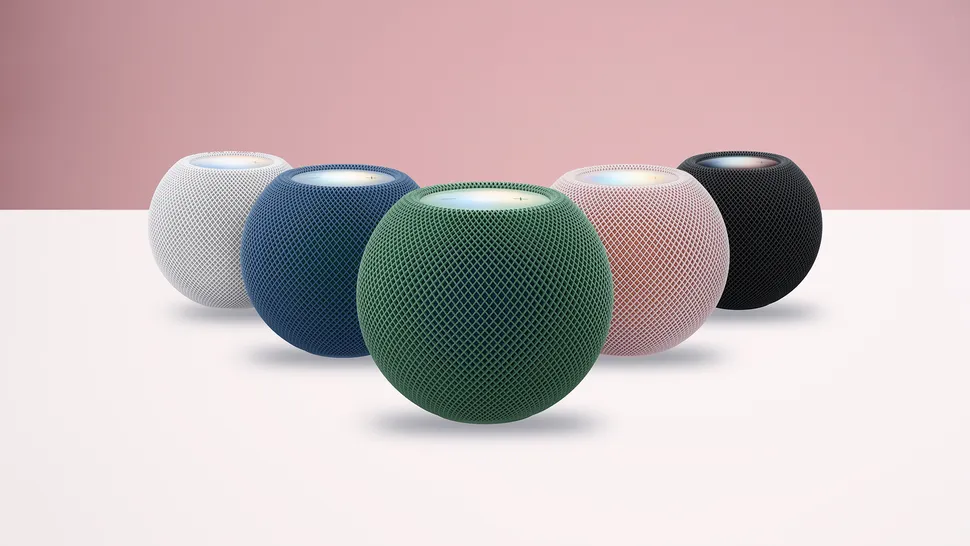
The new deep-green finish is one of the HomePod Mini 2’s most attractive features. It gives the compact speaker a sophisticated appearance that fits comfortably into different rooms and interior styles.
Other smart speakers have their own appealing colors. Amazon’s Echo Dot Max comes in a playful purple, while Google’s Home Speaker has an understated pale green. Apple’s darker green, however, feels particularly refined.
The new color selection also includes pink, blue and black. The pink is quite subtle, while the blue is very close to the original Mini’s blue finish. Black will appeal to those who prefer a neutral look, although the white version may require frequent dusting to stay clean.
The green model is especially striking in a home office. Two units positioned on a walnut Nanoleaf monitor stand create an attractive setup, while the matching pale-green power cable adds a coordinated touch. The speaker itself looks almost identical to its predecessor, although the base now features an embossed Apple logo rather than a painted one.
Apple has not changed the speaker hardware, but the Mini 2 continues to deliver impressive audio for its size. It handles the bass in Bad Bunny’s music well and produces clear midrange frequencies and vocals.
A pair configured for stereo listening also provides room-filling sound in a home office. At $300 for two speakers, the setup is not inexpensive, but the audio performance is convincing.
3. Touch controls can finally be disabled
The ability to lock the HomePod’s touch controls is a small but meaningful improvement.
Accidentally touching the top of a HomePod can trigger music playback at inconvenient moments. One late-night incident involving an accidental touch caused music to start blaring in the bedroom at 3AM.
Apple has addressed this with a new setting in the Home app that allows users to disable the top controls. The feature works across both older and newer HomePod models, making it a useful quality-of-life update for existing owners as well as new buyers.
The top of the speaker also gains a visual feature called Sound Glow. When music is playing, its LEDs illuminate in colors inspired by the album artwork.
It is a subtle effect that adds a little visual interest, but its usefulness is limited. Sound Glow works only with Apple Music and Apple Podcasts, and it does not substantially change the listening experience. It is also compatible with the first-generation Mini and second-generation HomePod.
The biggest disappointment: Mac speaker integration does not work properly
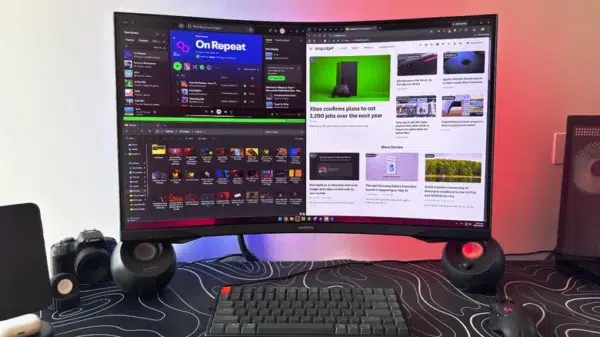
Beyond the improved performance, one of the most anticipated additions is the HomePod Mini 2’s ability to serve as a Mac’s default speaker through what Apple describes as a responsive, persistent AirPlay connection.
The feature is designed to create a direct wireless connection between a Mac and a HomePod, allowing users to select one speaker or a stereo pair as their computer’s regular audio output. It also works with the second-generation HomePod.
Apple has additionally expanded its home entertainment options. Two or four HomePod Mini 2 speakers can now be used in a surround sound configuration with the new Apple TV 4K.
Unfortunately, the Mac integration did not work during testing.
The test setup included a Mac Mini M4 with Wi-Fi 6E support, running the public release of macOS 27.2, alongside HomePods updated to HomePod Software 27.2. Despite meeting the stated requirements, the Mac’s Sound settings did not provide an option to select a HomePod through AirPlay as the default audio output.
Instead, the speakers connected like conventional AirPlay devices, bringing the usual problems: occasional audio artifacts, connection dropouts and delays with notification sounds. The Mac also reverted to its built-in speakers whenever it restarted or when Siri was activated on the HomePod.
Trying the feature with a stereo pair made no difference. Both speakers continued to operate through standard AirPlay rather than the promised persistent connection.
A hands-on report from 9to5Mac suggested that, when the feature is active, the HomePod should appear as a default system output device in System Information. Users should also see an option to enable it under “Play sound effects through” in the Mac’s Sound settings. Neither appeared during testing, and other users have reportedly experienced similar issues.
Resetting both HomePods after they updated to version 27.2 did not resolve the problem. The reviewer also contacted Apple for assistance but had not received a response at the time of publication.
The Mac integration has considerable potential, particularly for people who want a wireless desktop speaker setup without the limitations of standard AirPlay. For now, though, it feels unfinished.
More upgrades are still on the way
After just two days of testing, the HomePod Mini 2 already appears to be a more substantial upgrade than its initial announcement suggested. The faster processor and improved responsiveness make a meaningful difference to everyday use, even without the promised Siri AI features.
Apple still needs to address the Mac pairing problem, which currently prevents one of the speaker’s headline additions from delivering on its promise.
A full review is planned once the Siri AI update becomes available. The Mini 2 will also be compared with Apple’s upcoming $299 HomeView smart display, a larger smart home device that doubles as a home hub and adds a screen for more functionality.
At $149, however, the HomePod Mini 2 remains Apple’s least expensive way to get a home hub with Thread and Matter support.
The new model has plenty going for it, especially its speed, improved voice interactions and attractive green finish. Its biggest improvements are already noticeable, but its most ambitious features are still waiting to catch up.