




































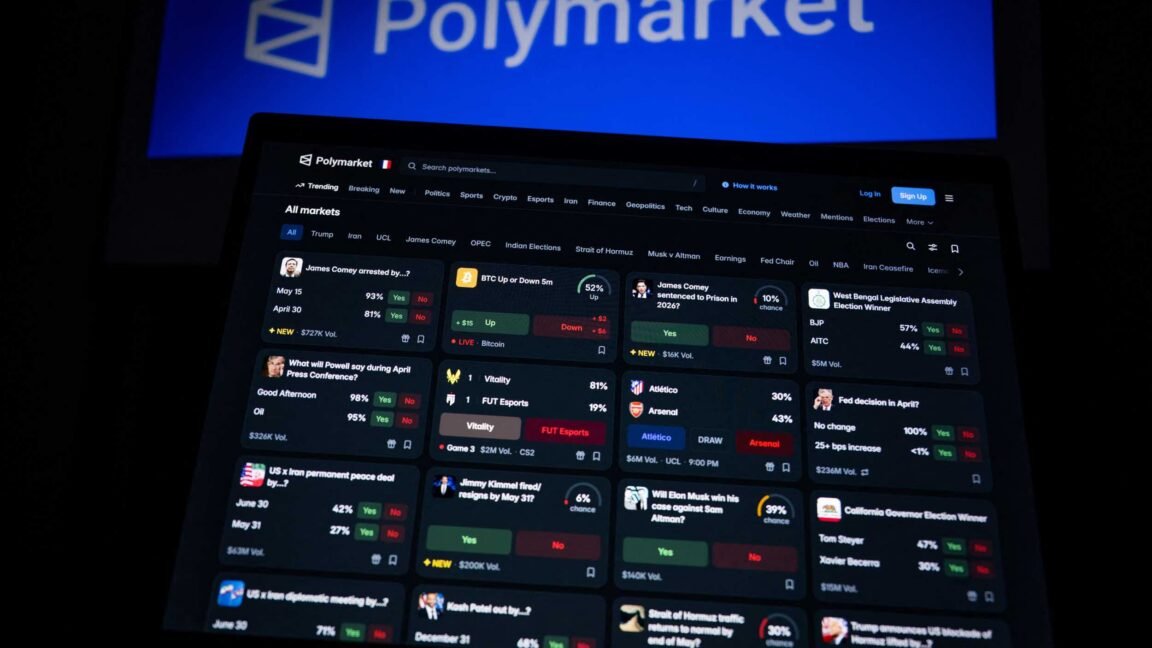
U.S. Defense Secretary Pete Hegseth has warned military personnel against using confidential government information to make money through prediction markets, stressing that such activities could compromise military operations and create serious legal consequences.
In a memo dated October 20, Hegseth instructed senior Pentagon officials and other military leaders to ensure that personnel understand the risks of using nonpublic information for financial gain. The document, titled “Do Not Compromise Military Operations for Personal Financial Gain,” makes clear that the restrictions apply across financial platforms, including prediction market operators Polymarket and Kalshi.
The directive prohibits military personnel from engaging in transactions based directly or indirectly on information that has not been made public. The restriction covers both classified and unclassified information obtained through official duties.
Violations could result in administrative penalties, disciplinary action or criminal prosecution under the Uniform Code of Military Justice and applicable federal laws.
Hegseth warned that financial incentives can interfere with sound judgment and create conflicts between personal interests and official responsibilities. Using privileged information to profit from military developments, the memo suggests, could undermine operational security and public confidence in the armed forces.
Soldier accused of making $410,000 from prediction market bets
The Pentagon’s warning comes amid growing scrutiny of prediction markets, where users wager on the outcomes of political, military and other real-world events.
In April, a U.S. Army soldier was arrested and charged over allegations that he used confidential information to place bets on Polymarket concerning the timing of the capture of Venezuelan President Nicolás Maduro. The soldier allegedly made approximately $410,000 from the trades.
The case raised concerns about whether people with access to sensitive government information could exploit their positions to gain an unfair advantage in prediction markets.
Separately, a report by the Anti-Corruption Data Collective allegedly identified 152 suspicious cryptocurrency wallets placing long-shot bets on military and defense-related markets. According to the report, the wallets collectively won about $8 million.
Although unusual betting patterns do not automatically establish insider trading, such activity has intensified calls for greater oversight of prediction platforms.
Suspicious bets raise questions about access to government information
Other incidents have added to concerns about potential insider activity.
An Associated Press report described new Polymarket accounts placing bets on a possible U.S.-Iran ceasefire shortly before President Donald Trump announced one in April. The bets reportedly generated hundreds of thousands of dollars in profits, prompting concerns about whether some traders had access to advance information.
The White House also warned staff against using confidential information for prediction market wagers.
In another reported case, an aide who worked on Trump’s teleprompter team allegedly earned $100,000 on Kalshi by betting on remarks the president would make.
These incidents have drawn attention to the potential overlap between government employees’ professional access and their ability to profit from political or military developments.
Prediction markets face growing regulatory pressure
Prediction markets have expanded under the Trump administration’s comparatively light-touch approach to regulation. Platforms such as Polymarket and Kalshi allow users to trade contracts tied to the likelihood of future events, including elections, economic announcements and international conflicts.
However, their growing popularity has triggered disputes over how they should be regulated.
The platforms have argued that the Commodity Futures Trading Commission has exclusive authority over their markets. Some state regulators, meanwhile, have sought to apply state gambling laws and other restrictions. Courts have reached differing conclusions in related disputes, and states have sought support from the U.S. Supreme Court as the legal battle continues.
The Pentagon’s memo does not resolve those broader regulatory questions. Instead, it focuses on the conduct of military personnel and the responsibility to protect information obtained through government service.
The central message is clear: military members must not use access to sensitive information to gain a financial advantage, regardless of the platform involved.
As prediction markets continue to expand, the challenge for government agencies and regulators will be to distinguish legitimate trading from activity that exploits privileged information or threatens national security. Allegations in the reported cases remain subject to the relevant legal processes and should not be treated as proof of guilt.